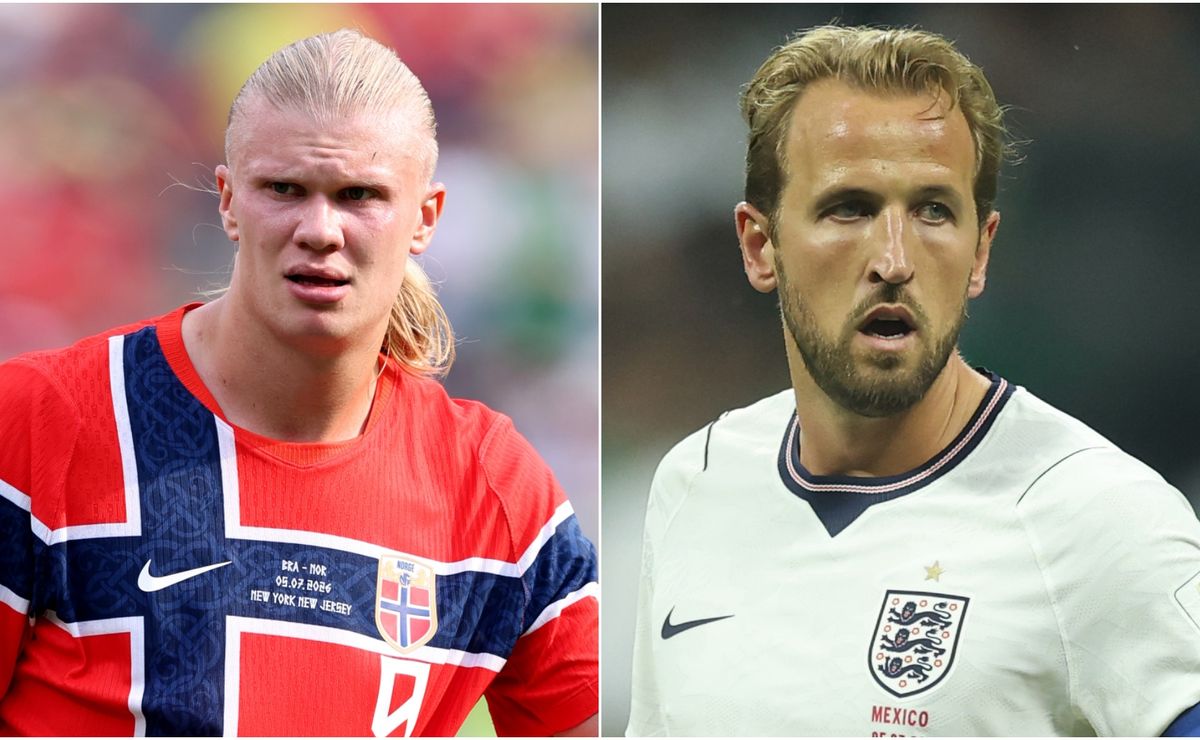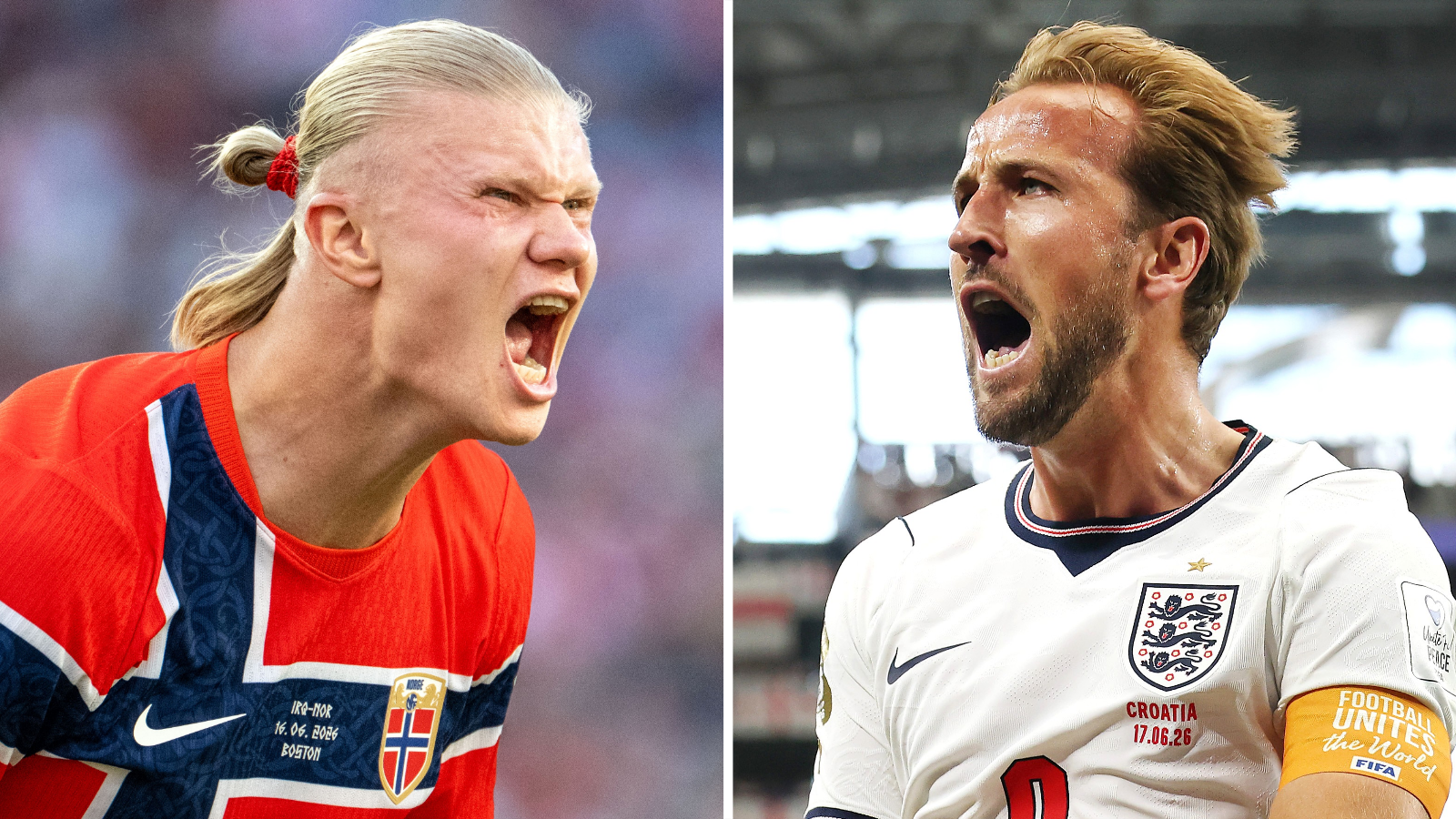
The FIFA World Cup has delivered plenty of drama, but Norway vs England might come down to one simple matchup. Erling Haaland against Harry Kane. Two strikers, two styles, and one Golden Boot both of them are desperate to win.
Both men arrive in outstanding form and both have carried their nations to this stage. Their goal tallies are remarkably close, but the way they have scored them tells two very different stories about how Norway and England got here.
On raw numbers, Haaland has the edge. The Norway striker has scored seven goals in just four matches. That is an average of 1.75 goals per game, with a goal every 51 minutes in what has been a sensational debut World Cup campaign.
Kane has six goals in five appearances, averaging 1.2 per match and scoring every 74 minutes. Context matters though. Two of Kane’s six goals have come from the penalty spot against Croatia and Mexico. All seven of Haaland’s strikes have arrived from open play.
Haaland’s breakout moment came in the Round of 16, where he scored twice against Brazil to fire Norway into the quarter-finals. His efficiency has been exceptional. He has scored seven times from 18 shots for a conversion rate of 39 percent. His expected goals figure stands at 4.3, meaning he has outperformed the model by almost three goals.
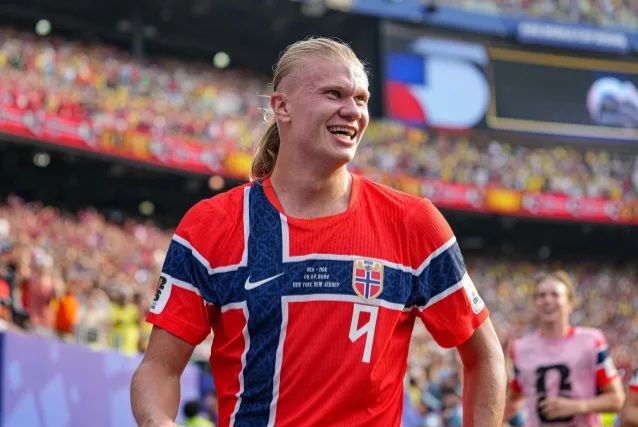
No player at this World Cup has converted more big chances than Haaland, with six. He has also missed five, the joint-most alongside Kylian Mbappe, which shows how often Norway create for him.
Kane’s numbers are different but still elite. He has recorded an expected goals of 3.4 from approximately 19 shots, converting at an impressive rate of 32 percent. He has not been as wasteful in front of goal, but he has been far more involved everywhere else.
That is where the comparison shifts. Over the years Kane has grown into as much a creator as a goalscorer, and this World Cup has highlighted it. The Bayern Munich striker has averaged 10.2 completed open-play passes per 90 minutes, 0.7 through balls per 90, and a pass completion rate of 72 percent. He is also the only one of the pair to register an assist, setting up Jude Bellingham against Mexico.
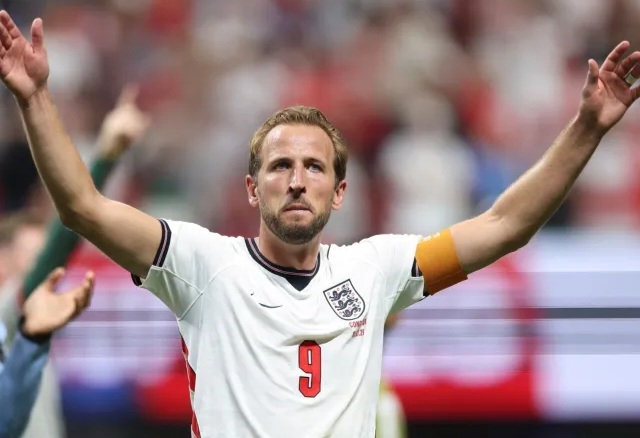
Haaland, by contrast, is yet to provide an assist and has not attempted a through ball during the tournament. He averages just 7.5 completed open-play passes per 90 minutes.
Even so, Haaland still edges Kane for chances created per 90 minutes, averaging 1.5 compared to Kane’s 0.9. It shows that his direct running continues to create danger even when he is less involved in the build-up.
The pair have recorded almost identical numbers of touches per match, with Kane averaging 25.4 and Haaland 25.0. The difference is what they do with them. The Norwegian scores once every 14.3 touches of the ball compared to Kane’s 21.2.
In the air the gap is even wider. Haaland has dominated, winning close to 78 percent of his aerial duels during the tournament. Kane remains a significant aerial threat inside the penalty area, with three of his six goals coming via headers, but overall he has won 38 percent of his aerial duels.
Judged purely on goalscoring output and finishing, Haaland comes out on top. Seven goals in four matches, a 39 percent conversion rate, an expected goals overperformance of almost three goals, and outstanding aerial numbers all underline how clinical he has been.
Kane, however, remains the more complete centre-forward. England’s captain contributes far more in possession, links play effectively, creates opportunities for teammates, and has still managed to score six goals while operating in a role that demands greater involvement away from the penalty area.
Norway vs England is not just a quarterfinal. It is a clash between two giants. One is a pure finisher operating at a historic scoring rate. The other is a playmaker who still finds the net. With the Golden Boot on the line and a semi-final place at stake, the next 90 minutes could decide which version wins out.