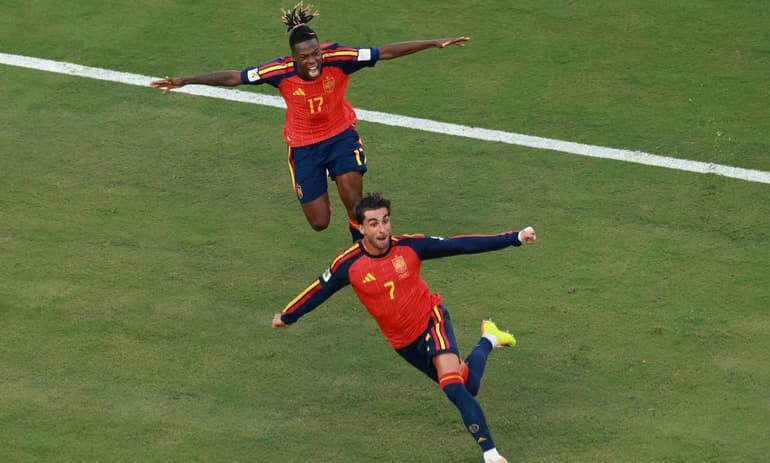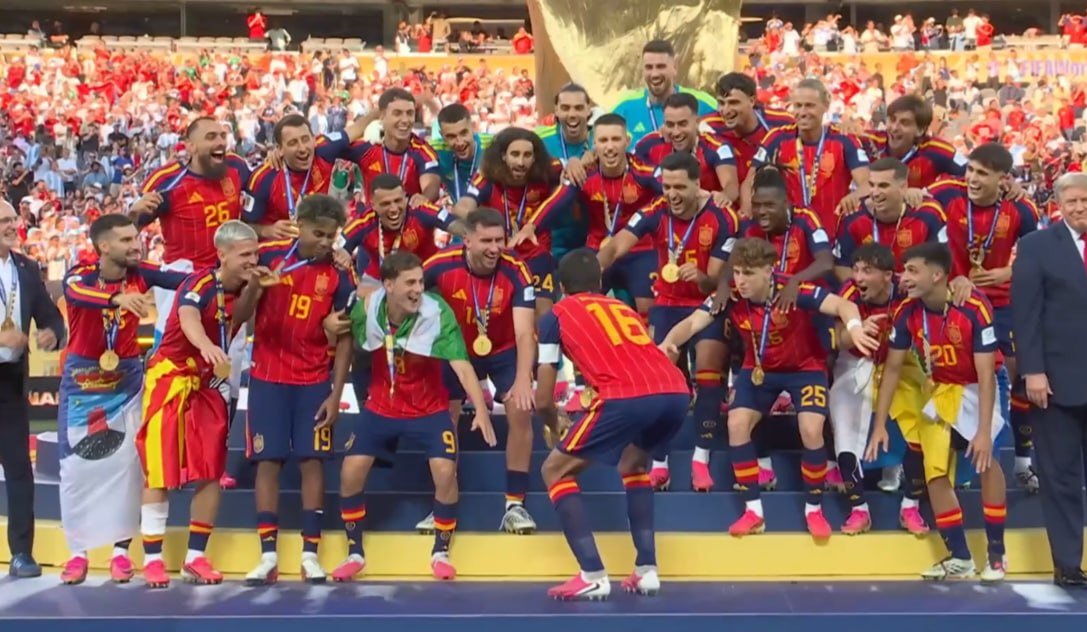
Spain’s 2026 FIFA World Cup triumph came with more than glory. It came with money, a lot of it.
FIFA paid Spain $50 million, about Sh6.46 billion, for winning the tournament in North America. It is the largest winners’ prize in World Cup history and the headline figure in a record $871 million total payout distributed across the expanded 48-team competition.
The 2026 edition, hosted across the United States, Canada and Mexico, was the first to feature 48 teams. With more games, more sponsors, and bigger broadcast deals, FIFA used the opportunity to significantly increase prize money at every stage.
Spain Takes The Biggest Winners’ Cheque In History
Spain defeated Argentina in the final to claim their second World Cup title, and with it, the biggest prize check FIFA has ever written.
The Spanish federation received $50 million for finishing first. Runner-up Argentina earned $33 million, about Sh4.27 billion. The England team that finished third took home $29 million, roughly Sh3.75 billion, while the fourth-placed France side collected $27 million, about Sh3.49 billion.
For context, the winners in Qatar 2022 received $42 million. The jump to $50 million in 2026 represents an 19% increase and sets a new benchmark for future tournaments.
The money goes directly to the national federations. How it is spent is up to each country, but FIFA expects a portion to be reinvested in grassroots football, youth development and coaching.
Payouts Increased At Every Stage Of The Tournament
FIFA didn’t just raise the winners’ prize. It increased payments across the board to reflect the expanded format.
Teams that finished between 5th and 8th each received $19 million, about Sh2.46 billion. Those ranked 9th to 16th earned $15 million each, around Sh1.94 billion. Nations that finished 17th to 32nd secured $11 million apiece, roughly Sh1.42 billion.
Even teams eliminated in the expanded group stage, those finishing 33rd to 48th, walked away with $9 million each, about Sh1.16 billion.
Under the old 32-team format, teams that exited in the group stage received $9 million in 2022. In 2026, that same figure now applies to 16 additional teams, meaning more countries benefited from seven-figure payouts.
$1.5 Million Guaranteed To Every Team Before The Tournament
Before the first match was played, FIFA had already distributed $72 million.
All 48 qualified nations received a $1.5 million preparation grant, about Sh194 million each. The grant was designed to cover training camps, friendlies, travel, accommodation and other logistics in the months leading up to the World Cup.
For football powerhouses, the grant is a helpful top-up. For smaller nations, it is transformative. It allowed federations with limited budgets to prepare properly, hire better staff, and give players the best possible chance to compete.
FIFA said the upfront payment was part of its commitment to competitive balance in an expanded tournament.
Record $871 Million Total Distribution
When you combine the prize money and preparation grants, the total financial distribution for the 2026 World Cup reached $871 million.
That dwarfs the $440 million paid out in prize money alone at Qatar 2022. The increase is driven by three factors. The expansion to 48 teams, 104 matches instead of 64, and record commercial revenue from sponsors and broadcasters across three host nations.
FIFA reported that the 2026 World Cup generated its highest-ever commercial income, and the governing body chose to share a larger slice with member associations.
Speaking after the final, FIFA officials described the new model as investing in the global game and ensuring that the benefits of expansion were felt from the group stage to the final.
The Business Behind The Biggest Payout
The 2026 World Cup was always going to be different. Three host countries, 16 host cities, and a month-long tournament designed for maximum commercial reach.
Broadcasters paid more for access to additional games. Sponsors paid more for visibility across three major markets. Ticket sales also surged because of stadium capacities in the U.S.
FIFA took that revenue and redistributed it. The message was clear, expansion should not just mean more games, it should mean more money for the teams playing them.
Critics had warned that expanding to 48 teams would water down quality. On the pitch, the tournament delivered competitive matches and new stories, albeit controversial officiating at times, but again, that's not uncommon in football. Off the pitch, it delivered record money.
Spain leaves with the trophy and $50 million. Argentina leaves with $33 million and pride. And every other team leaves with a check big enough to change their federation’s next four years.