Meta is quietly testing robots inside its massive data centers to automate the physical work that has traditionally kept its global cloud running, a move that could reduce staffing needs as the company pours billions into AI infrastructure.
The pilots are running in Meta's campuses in Altoona, Iowa and New Albany, Ohio, two hubs at the heart of its AI infrastructure expansion.
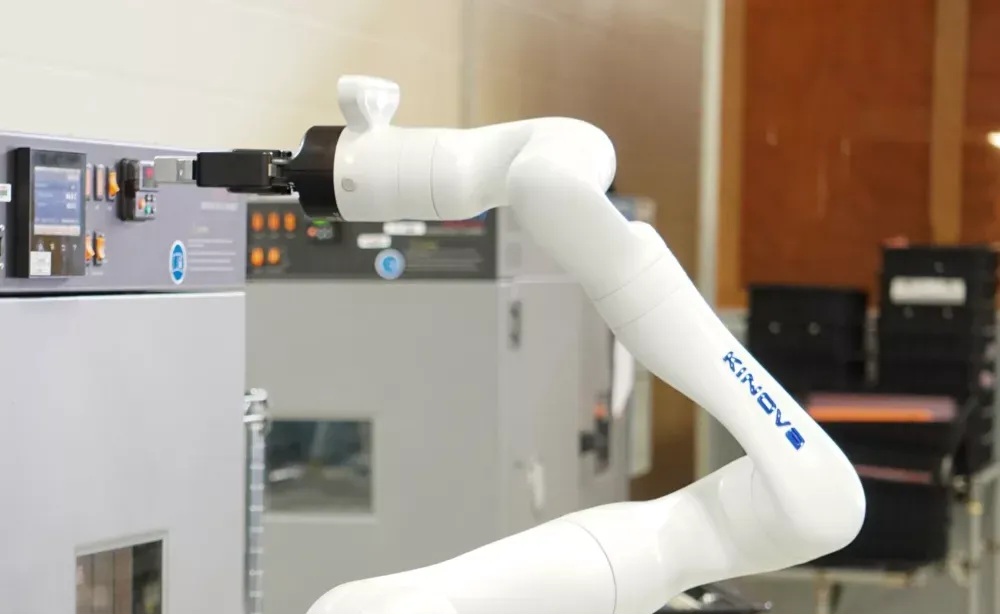
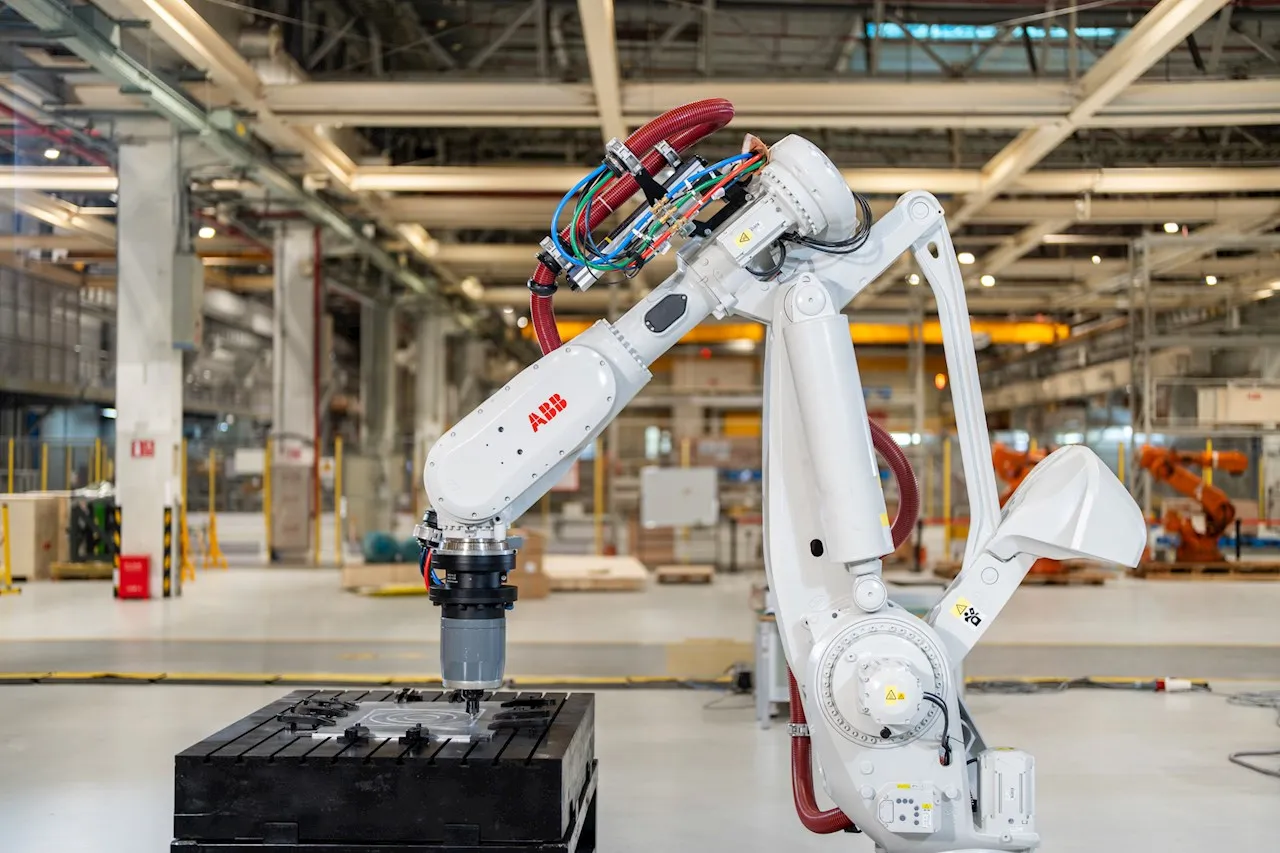
According to workers, Meta is evaluating hardware from Kinova, the Canadian maker of the Gen3 robotic arm, ABB, the Swiss automation giant, and Watney Robotics, a San Francisco startup that started as a laundry-folding demo in 2023 and pivoted to data centers early last year.
In one experiment, a Kinova Gen3 arm is being tested to power cycle servers, cutting and restoring power when they lock up. A separate robot is being tested to swap networking cables, one of the most common and repetitive tasks for site technicians.
At some facilities, Meta has already deployed a simpler device described as a "finger" or pointy stick that can remotely press the power button on a Mac Mini or other appliance when prompted by a remote human operator.
In Altoona, dual-armed Watney robots are handling some cabling work under human supervision, while in Ohio, ABB units are reseating parts.
"We thought those of us performing the physical tasks were safe for a while, but not anymore. It's coming for us all, unfortunately." one data centre worker said.
Another worker estimated that if the cable-swapping bot succeeds, it could replace up to 80% of some people's workloads, even though it still cannot match human speed today.
Cabling is difficult because data centers are built around dense, human-oriented infrastructure. Many systems were designed for hands, not machine grippers, and the task often requires reaching into tight spaces, manipulating delicate connections and avoiding accidental disconnections of nearby equipment.
That physical reality is one reason robotics vendors have struggled. Even when robots can mimic a basic motion, reliability in a live data center is a much higher bar than success in a lab demo.
Meta declined to comment on the specific tests. Spokesperson Francis Brennan told the press that the company is investing heavily in hiring and training, and that America's infrastructure boom means it needs "more workers, not fewer."
The company points to a free trades-training program launched this year with guaranteed jobs in Louisiana, Ohio, Indiana and Texas, and its pledge to invest $1 billion into its data center host towns, part of a record $145 billion capex budget for AI in 2026.
Eric Xu, Meta's senior manager for robotics, said at a conference last year that putting robots in data centers is a long-term goal to speed up incident response, monitor environmental conditions and handle preventative maintenance. Early prototypes risked damaging hardware, but maturation of AI vision models has made the work economically viable.
Yet the robotics push comes at a tense moment inside Meta. In May 2026, the company laid off 8,000 employees, 10% of its workforce, to fund its AI buildout, canceled 6,000 open roles and reassigned 7,000 more into AI.
At the same time it rolled out the Model Capability Initiative (MCI), which captured keystrokes, clicks and browsing activity of U.S. employees to train AI agents to replicate their work.
More than 1,600 employees signed a petition calling it a "data extraction factory" before it was paused after performance data became accidentally visible to all staff.
Staff also worry that even if robots don't fully replace them, Meta is shifting toward a "smart hands" model, hiring lower-paid, lower-skilled technicians in cheaper hubs like Denver who simply follow real-time instructions from an AI agent when robots hit a snag, rather than experienced troubleshooting technicians.
Meta's approach mirrors a broader industry vision. Nvidia CEO Jensen Huang describes future data centers as AI factories run by people, software agents and robots. Microsoft co-founder Bill Gates this week proposed taxing robots and AI tokens, arguing tax rules make machines cheaper than employees.
Meta's robots remain supervised and narrow in scope for now, but workers say the direction is clear.
"The robots still need people to supervise them and perform difficult repairs, but their development could determine whether the company's expanding data center footprint creates jobs or replaces them," one worker said.
Meta has not said when the pilots might move to production.
The company is not alone. Microsoft, Google and Amazon have each disclosed or discussed robotics efforts connected to their data center or infrastructure operations. The industry’s interest is growing because AI infrastructure is no longer just about chips and power; it is also about keeping huge fleets of servers functioning with minimal downtime.
Microsoft has said it is exploring robotics for economically valuable tasks such as replacing faulty server racks. Amazon has discussed robots for recycling parts. Google has also invested in robotics for data center-related operations. The common thread is a search for physical automation in environments where every minute of interruption can be costly.
Robotics hardware is becoming less expensive, while the AI models that help robots perceive and act in the world improve quickly, a combination that is making tasks once considered too delicate or variable look increasingly plausible.