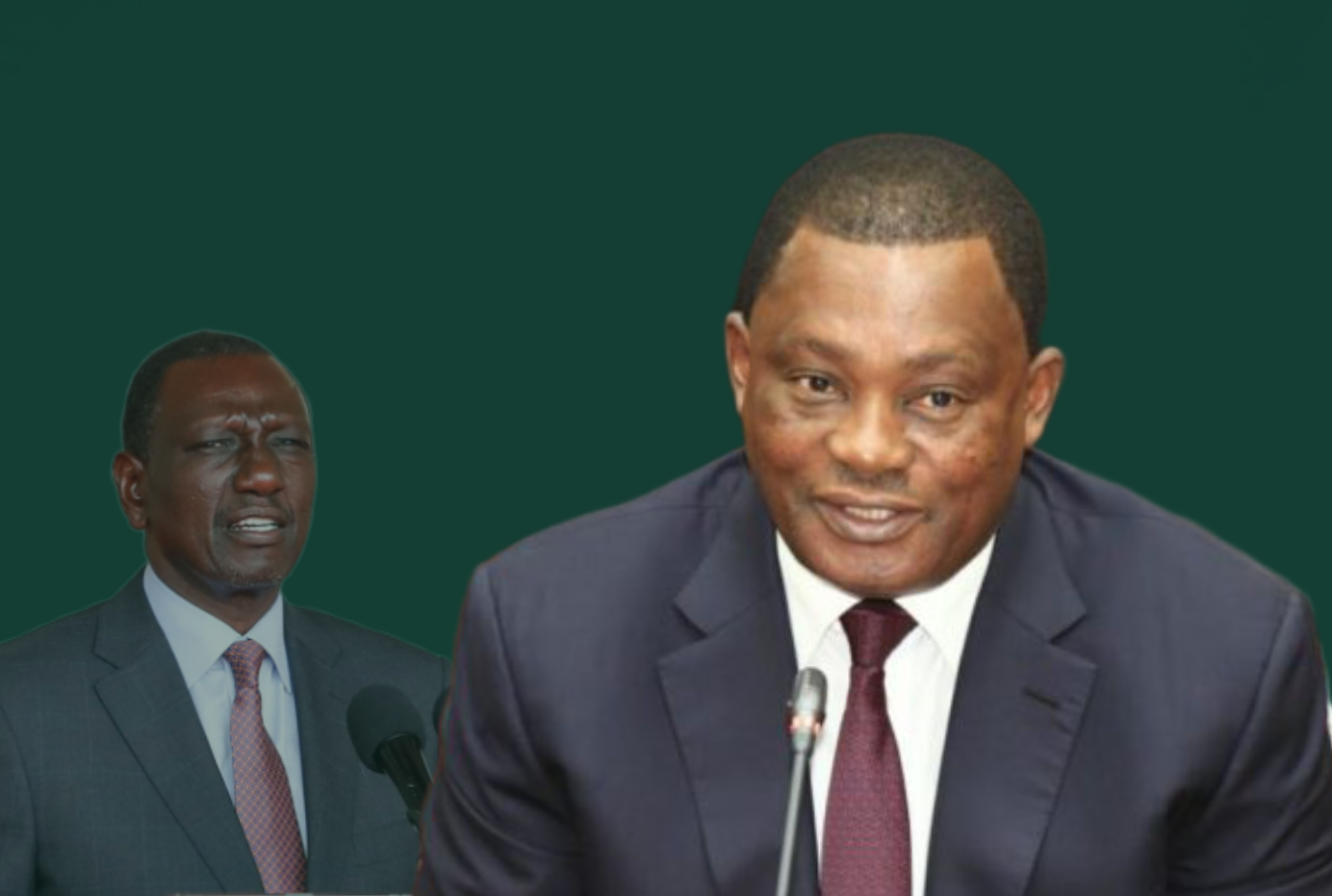
Former Public Service Cabinet secretary Justin Muturi has challenged Parliament to consider exercising its constitutional powers to impeach President William Ruto, under Article 145 of the Constitution, citing the President’s own admission of illegal abductions.
Speaking amid growing national outrage over alleged human rights violations, Muturi appeared to sympathize with the recent wave of Gen Z-led protests that targeted Parliament, suggesting that their frustration with the current political leadership might be justified.
“Maybe the Gen Z actually had a point when they decided to overrun Parliament,” Muturi said. “There is no reason why Parliament should not exercise their power under Article 145 and impeach the President because he has violated the Constitution — in his own admission — that people have been abducted and returned.”
Earlier this week, President William Ruto assured Kenyans that recent abductions reported across the country will not happen again, affirming his administration’s commitment to upholding the rule of law and protecting human rights.
Ruto said all individuals who had been abducted were safely returned to their families and emphasized that such incidents would not be tolerated going forward.
Ruto made the revelation while responding to questions raised by journalists during the joint press briefing with Finland's President Alexander Stubb on Monday, February 12.
However, he did not reveal those who were behind the abductions. Nonetheless, he added that accountability measures were being put in place to ensure that such incidents do not occur again.
"All the people who disappeared or who were abducted in what you said (Gen Z protests) have been brought back to their families and their homes. I have given firm instructions that nothing of that kind of nature will ever happen again. It was my commitment as I became President that the extrajudicial disappearance of Kenyans would not be part of what we are doing as a nation." Ruto said.
The President’s comments on the abductions — widely seen as an attempt to show responsiveness to public pressure — have instead opened up a storm of questions about state-sanctioned violations, potential abuse of security agencies, and the extent of executive knowledge or complicity in these operations.
Muturi, raised sharp questions about the President’s knowledge of the operations, asking: “Who ensured that they were returned to their families, because you seem to know?”
He described the political landscape as business oriented rather than as a way to serve the people. Muturi remarked that those in leadership positions did not try to understand the grievances of the Gen Z during last year’s protests citing it as the public being tired of excesses within leadership.
The former Cs, also called on President William Ruto to resign, saying he has lost the moral ground to lead.
In a bold statement, Muturi said, "Mr. President, please do the honorable thing and resign. You have demonstrated that you are unfit to hold the highest office in the land. You have become an incorrigible liar. Kenyans know it, and it is deeply hurting for citizens to see their President telling lies in broad daylight."
He also revealed that Ruto has ignored his calls since January, adding, "I do not miss it."
The Constitution of Kenya, under Article 145, allows the National Assembly to impeach the President on the grounds of a gross violation of the Constitution or any other law, where sufficient evidence exists. Muturi’s invocation of this article marks a dramatic escalation in political rhetoric and could stir renewed calls for accountability within Kenya’s top leadership.
Muturi, once a key ally of President Ruto and now a vocal critic, joins a growing chorus of civil society leaders, legal scholars, and opposition figures demanding transparency and justice over what many are calling extrajudicial actions.