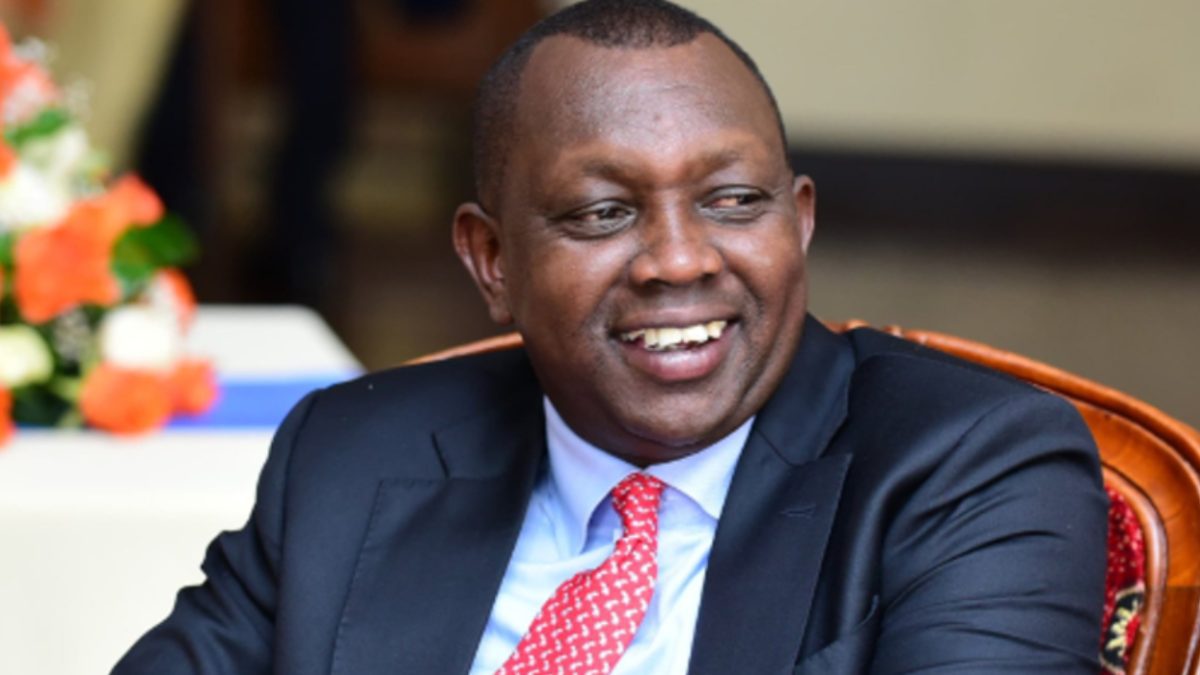
Kapseret Member of Parliament (MP) Oscar Sudi has drummed up support for the Kenya-Kwanza administration and the Ruto-Raila broad-based government (BBG) pact, challenging residents of the Nyanza region to reject attempts to abandon the government.
Speaking in Muhoroni on Saturday, September 27, 2025, Sudi stressed that the region was not destined to be in the opposition, stating that the region stands to benefit by staying put under the broad-based system.
“We are now friends and united as a country and with the Nyanza region because we are all in the government. You have even seen its Baba who is looking after the president and helping him to run the country,” he stated.
“Never ever get out of the government, the government is good and you have to stay in It. You cannot be in opposition all the time. You were not destined to be in opposition,” said Sudi.
The vocal lawmaker, further expressed confidence that the region could produce the country’s president in 2032.
“In 2032, the president can come from here in Nyanza. We can vote for you as we did during the 2007 elections,” he stated.
Kenyans sceptical of Ruto-Raila broad-based government.
His remarks come in the wake of a new survey by Trends and Insights for Africa (TIFA) revealing that many Kenyans oppose the Ruto-Raila broad-based government (BBG), saying it prioritises personal interests over the public good.
The poll released earlier on Thursday, shows that despite efforts to present the coalition as a unifying force, scepticism remains high among citizens across the country.
According to the findings, 37 per cent of respondents believe the BBG puts leaders’ personal gain ahead of public interest.
Another 27 per cent said they reject the arrangement because it undermines democracy and weakens the role of the opposition. A further 17 per cent argued that the government is irrelevant to people’s daily needs and development priorities.
Other reasons cited include fears that the BBG fosters corruption (8 per cent), lack of trust in the leaders involved (5 per cent), and potential human rights violations (3 per cent).
The survey, conducted between August 23 and September 3, 2025, interviewed 2,024 Kenyans by telephone in both Kiswahili and English. Respondents’ contacts had been collected earlier through face-to-face household interviews.
The poll carries a margin of error of +/-2.17 per cent and covered nine regions: Central Rift, Coast, Lower Eastern, Mt Kenya, Nairobi, Northern, Nyanza, South Rift, and Western.
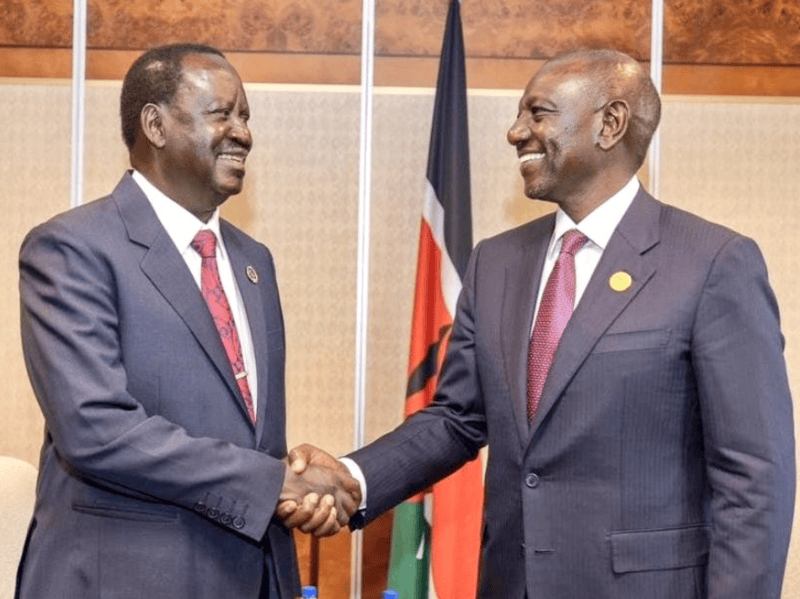
The BBG was formed on March 7, 2025, after President William Ruto and opposition leader Raila Odinga signed a memorandum of understanding at the Kenyatta International Convention Centre.
The coalition between the United Democratic Alliance (UDA) and the Orange Democratic Movement (ODM) was presented as a way to confront challenges such as corruption, debt, and political instability.
The formation of the broad-based government followed President Ruto’s move on July 11, 2024, when he dismissed almost his entire cabinet after weeks of mass protests against proposed tax hikes and graft scandals.
The new arrangement was pitched as a more inclusive and stable framework for governance.
While critics see the coalition as self-serving, President Ruto has defended it as a step toward unity and national progress.
“No community, county, or region will be sidelined by the Broad-Based Government,” he said during a recent address in Nanyuki. He added that unity of purpose will help unlock the country’s true potential.