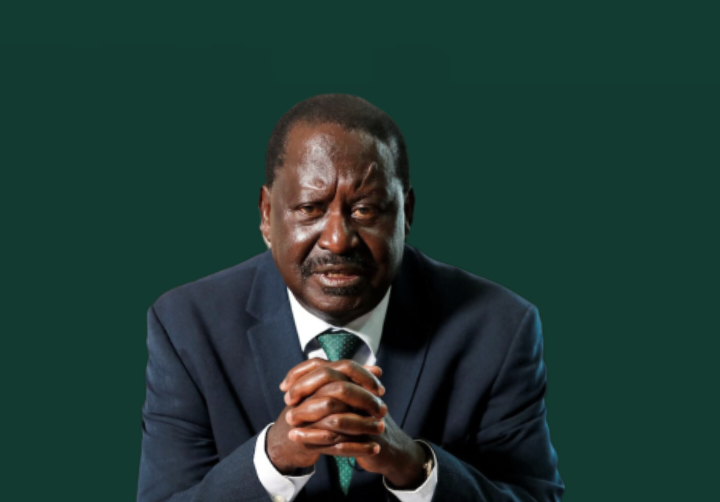
Raila Odinga’s life has shaped Kenya's political sphere for decades. From a six-year incarceration after the 1982 coup attempt to an unprecedented Supreme Court election nullification in 2017, Raila’s arc mirrors Kenya’s own turbulent journey toward pluralism and constitutional reform.
Here is a breakdown of the key dates in his political life.
His detention (1982–1988): In 1982, following a failed Kenya Air Force coup attempt against President Daniel arap Moi, Raila was detained without trial. He spent six years behind bars, emerging as a symbol of defiance against one-party rule. That ordeal would become the crucible of his pro democracy identity and the foundation of his political legend.
Multiparty politics (1992): With the return of multiparty politics, Raila won the Lang’ata parliamentary seat on a FORD Kenya ticket in 1992. The election marked his formal entry into mainstream politics and cemented his role in the fledgling opposition.
KANU- NDP pact (1997–2001): After a fallout in the opposition, Raila formed the National Development Party (NDP) and finished third in the 1997 presidential race. In a striking tactical shift, he later merged NDP with the ruling KANU under Moi, taking his movement into the heart of a party he had long opposed.
Breaking away to make a president (2002): The KANU-NDP alliance unravelled when Moi anointed Uhuru Kenyatta as successor. Raila led a KANU split, formed the Liberal Democratic Party (LDP) and joined the National Rainbow Coalition (NARC).
His “Kibaki Tosha!” endorsement became a rallying cry that helped propel Mwai Kibaki to the presidency, ending KANU’s four-decade grip on power.
The Orange wave and ODM’s birth (2005): In the 2005 constitutional referendum, Raila led the “No” (Orange) campaign against a government-backed draft. The victory triggered a rupture with Kibaki and birthed the Orange Democratic Movement (ODM), the vehicle that would define Raila’s political future.
Disputed election (2007–2008): Raila’s 2007 presidential bid ended in crisis when the Electoral Commission declared Kibaki the winner amid claims of fraud. Post-election violence rocked the country. A Kofi Annan-brokered accord produced a grand coalition with Raila as Prime Minister (2008–2013)—a rare power-sharing arrangement meant to steady the nation.
A new constitutional order (2010): From the Prime Minister’s office, Raila championed the drive for a new constitution. The document, approved in a 2010 referendum and enacted that August, reshaped Kenya’s governance through devolution and expanded rights.
Presidential race (2013, 2017): Raila lost the 2013 presidential race to Uhuru Kenyatta in the first general election under the new constitution. In 2017, he ran again and successfully petitioned the Supreme Court to nullify the presidential result—an African first. He boycotted the rerun, which Kenyatta won, but the legal precedent redefined electoral jurisprudence.
Handshake and BBI (2018): On March 9, 2018, Raila and President Kenyatta stunned the country with a public truce dubbed the “Handshake.” The détente cooled political temperatures and birthed the Building Bridges Initiative (BBI), an ambitious but ultimately unsuccessful constitutional reform project.
Another near miss (2022): Backed by Uhuru, Raila made a fifth presidential run under the Azimio la Umoja coalition. He lost narrowly to William Ruto, challenged the result, and ultimately accepted the court’s decision—an outcome that underscored the maturing, if still contested, rules of Kenya’s democracy.
A continental bid falls short (2024): Pivoting beyond national politics, Raila sought the chairpersonship of the African Union Commission in 2024, signalling continental ambitions. He lost to Djibouti’s Mahmoud Ali Youssouf, closing another chapter in a career defined by resilience and reinvention.
Master of Handshakes.
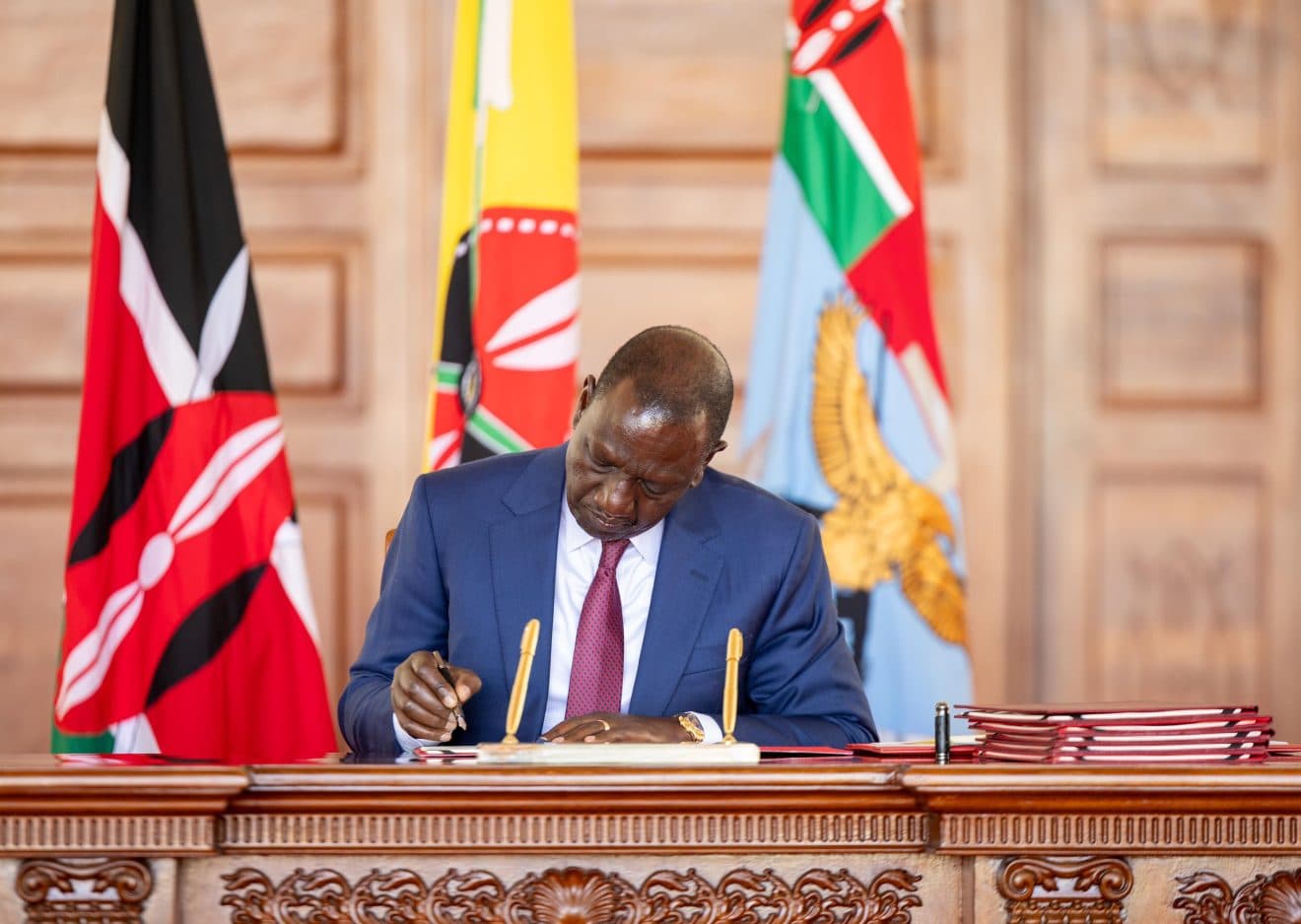
The signed cooperation between President Ruto and Raila Odinga to work together under the broad-based government arrangement solidified Odinga as the master of handshakes with his once political foes.
Ruto’s “handshake” with Odinga came after the March 2018 pact between the ODM leader and former President Uhuru Kenyatta which ushered in political calmness following the acrimonious 2017 General Election.
It was one of three previous ‘handshakes’ for Odinga since the one brokered by the late former UN Secretary-General Kofi Annan in 2008 and 20 years since another with former president Daniel Arap Moi in 1998.
Odinga’s first political truce or pact was in 1998 with Moi after the 1997 General Election. Kibaki, who came second, protested the outcome of the poll and took a petition to the Court of Appeal, which he lost on a technicality for not personally serving Moi.
Odinga, who came third, surprised friends and foes when he met Moi at his Kabarak home a day after the election and agreed to co-operation between Kanu and NDP. He was also not to contest Kanu’s win besides halting all planned demos.
As a result of the cooperation, Odinga was appointed to the lucrative Ministry of Energy as minister and his close allies got government jobs.
Political Analysts said Odinga’s ability to enter into pacts with each president even after assurances that there would be no such pacts made him a tactful and cunning politician.
The Kanu-NDP deal that Odinga brokered later matured into a merger in 2002 and its strengthened bromance consummated at the Moi International Sports Centre, Kasarani during the Kanu national party elections where Odinga was elected secretary-general as then vice president, the late Prof George Saitoti, the late Joseph Kamotho were unceremoniously expended.
It is at Kasarani that Moi and Odinga shook hands, the first of the many ‘handshakes’ for the former Prime Minister.
However, Moi had other ideas. Despite Odinga sacrificing his liberation credentials, he ended up the loser as his hope of succeeding Moi ended up in smoke after Moi chose Uhuru Kenyatta as his preferred successor.
The Kanu cooperation failed him and he later led a bitter walkout from Kanu alongside most of Moi’s former allies who turned into disgruntled elements, including Saitoti and Kamotho, to form the Liberal Democratic Party (LDP) ahead of the next elections in which he sought a joint opposition candidate to take on Kenyatta.
Odinga had initially agreed with former powerful cabinet minister Simeon Nyachae to back his Ford People candidature, but backpedalled and declared ‘Kibaki Tosha’ at a rally in Uhuru Park paving the way for a Kibaki presidency.
After the 2007 bitterly contested election that plunged the country into ethnic strife, taking international mediators for the two sides to reach a truce, there was a ‘handshake’ between Kibaki and Odinga at Harambee House, brokered by Koffi Annan.
Come the 2017 contest, Odinga boycotted a fresh election ordered by the Supreme Court after his successful challenge to Kenyatta’s win and the country yet again faced the prospect of plunging into widespread chaos before he had a handshake with Kenyatta.
His last political manoeuvre, came with a handshake between the Late Prime Minister and his opponent turned ally, President Ruto, after a cooperation to join the Kenya-Kwanza government, following Gen Z protests.
In March 2024, President William Ruto and Odinga officially signed a political pact signalling an endeavour to work together in one government. The deal between Ruto’s ruling United Democratic Alliance (UDA) party and Odinga’s ODM was signed at the Kenyatta International Convention Centre (KICC). Both appended their signatures to a Memorandum of Understanding (MoU) while flanked by their respective party officials.
Odinga, defended the move insisting his priority was putting the country’s interests first, describing the handshake necessary for peace.
As the country celebrates a life well lived, a political enigma has fallen but remains deeply intertwined in the country’s political fabric.
Across four decades, Raila has been a detainee and deal maker, street mobiliser and state reformer. His legacy stretches from the cells of Nyayo House to the pages of the 2010 Constitution, from the roar of mass rallies to the quiet calculus of coalition politics. Whether on the front lines of protest or inside the rooms where bargains are struck, his presence has shaped Kenya’s democratic story—contested, consequential, and still unfinished.
Beyond national politics, Odinga’s influence extended across Africa. As African Union High Representative for Infrastructure Development, he helped shape regional initiatives.
Throughout his life, he championed constitutional reforms, multiparty democracy, and social justice, leaving an indelible mark on Kenya and the continent.