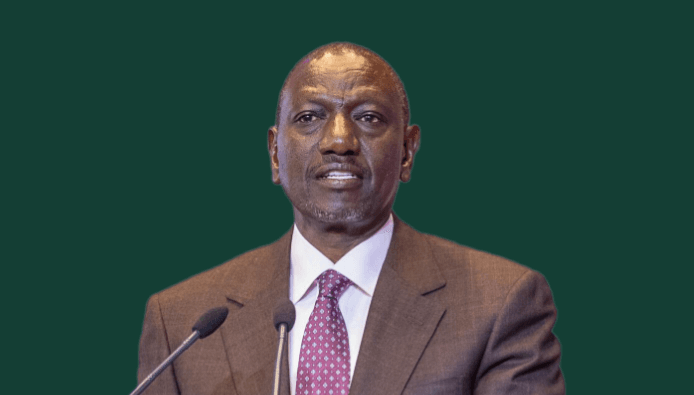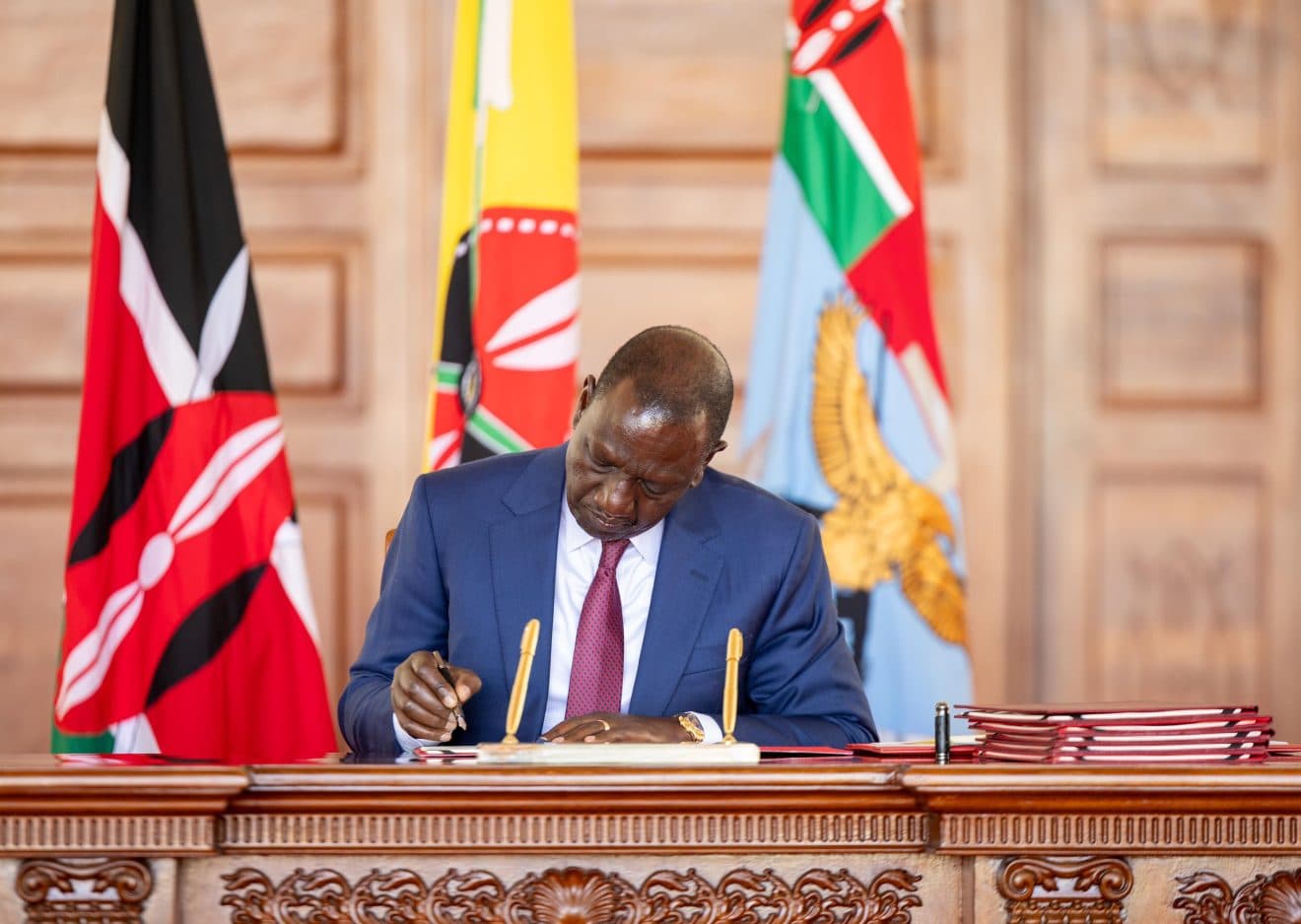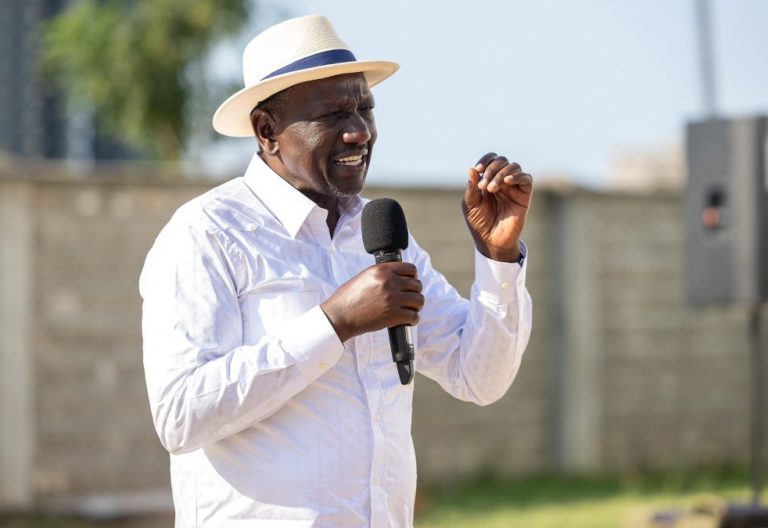
Kenya's President William Ruto has blushed off opposition gimmicks and 'one-term' chants, stating his path to re-election faces little competition - one he can beat without breaking a sweat.
Speaking in Kakamega county on Thursday, 30th October, the head of state claimed that his main opponent in the 2027 would have been the late ODM party leader- Raila Amolo Odinga, and with Raila’s contention out of question after his passing - the opposition stands no chance.
"Nataka niwaulize watu wa Malaba, mkiniona mimi, yaani wale watu tunashindana nao ni wale? Eeeh... mtu ningeshindana na yeye ni Raila Odinga. Lakini sasa wale, nitawamalizia asubuuuui na mapema, very early in the morning", said Ruto, exuding confidence he will triumph over the United Opposition and any other Presidential aspirant come 2027.
The President went ahead to state that his confidence in a win is firmly rooted on the opposition's lack of 'agenda'.
He echoed sentiments he made on Monday in Molo, Nakuru county, when he challenged the country’s opposition leaders, urging them to desist from empty rhetoric and reveal their plans for the nation.
The President, stated that the county had lagged because of leaders focusing on meaningless politicking rather than important developmental projects.
He hit out at his critics, saying that they should come out with their plans for the country and not only focus on faulting his regime.
“We want those criticising the government to tell us their plans. They should stop going round with empty words criticising our plans, yet they are not saying what their plan for the country is,” he added.
The President affirmed that the nation is in need of visionary leaders who can help its path of prosperity and growth.
“Kenya has lagged because most of our leaders are useless. They prefer engaging in retrogressive politics and non-issues such as Kasongo and wantam. To change and transform this nation, we need visionary leaders and those with good plans." he added.
Ruto’s remarks, come weeks after he said that Kenya has the capacity to retrace the economic transformation undertaken by other economic giants.
While citing how countries like China and Singapore had transitioned from third world to first world, the head of state stated it was possible to imitate the journey with good planning and fighting against corruption.
“We can make this country greater than what we have today. I am confident, and I believe in the potential of this nation. Countries like Singapore, China, and Malaysia were where we are years ago but made the right decisions and are now in the first world, and we are still where we were. I want to tell the people of Kenya, we can change this country if we work together. If we have a plan and if we eliminate ethnic and political divisions. If we eliminate corruption and theft of public property,” he stated.
The president further stated the transformational journey will be realized, hitting out at naysayers who he claims remain pessimistic about the nation’s prospects.
“There are many naysayers and those who don’t believe in this country. Those who are very negative, but God will shame those who are against Kenya. I’m confident we can take this country into the future,” he added.
Meanwhile, he also emphasised his administration has made progress, despite finding the country in an economic coma, but has since recovered and is on the right growth projectory.
However, the President's enthusiasm is not shared across the country, as more Kenyans continue to struggle financially under his government.
A new survey by Trends and Insights for Africa (TIFA) has revealed a sharp decline in the number of Kenyans who say they are financially secure, underscoring the mounting strain on households amid high taxation, soaring food prices, and stagnant incomes.
According to the findings, only 7% of Kenyans now feel they are financially stable, compared to 25% a year ago. The dramatic fall signals that more households that were previously able to cope have now slid into hardship, joining the growing majority that report serious difficulty meeting their basic needs.
The study provides statistical backing to what many Kenyans have been voicing for months: that the economy is biting harder and daily survival has become increasingly difficult.
TIFA’s findings mirror the lived realities across towns and villages where food, fuel, and electricity prices continue to climb, often outpacing incomes. Families that once considered themselves “just managing” now report having to cut meals, delay paying rent, or depend on credit and loans to get through the month.
The collapse from 25% to 7% in those who feel financially secure highlights the pace at which Kenyans are being squeezed. “We are no longer talking about poverty as something affecting only the most vulnerable,” one economist who reviewed the findings told Julisha Media. “This is now a middle-class crisis, with professionals, small traders, and salaried workers all saying they cannot make ends meet.”
The survey comes against the backdrop of widespread criticism of recent government policies, as Kenyans argue that the policies have drained already limited disposable incomes.
Kenya Kwanza’s bottom-up model faces pressure
The findings land at a sensitive time as President William Ruto’s Kenya Kwanza administration marks its third year in office. Since its election, the government has consistently promoted the bottom-up economic model, promising to empower hustlers, boost small-scale businesses, and create jobs.
Officials argue that the reforms currently underway—ranging from tax realignment to new credit facilities for SMEs—are long-term measures designed to strengthen the economy and reduce living costs.
However, for ordinary Kenyans, the promised relief remains elusive. Instead, public perception is that life has become harder than before.
The survey also exposes a growing trust gap between government assurances and public sentiment. While Treasury officials insist inflation is stabilizing and growth forecasts remain positive, ordinary citizens tell a different story.
“When you hear government say things are improving, and then you go to the supermarket and everything has doubled in price, you know something is wrong,” a civil servant in Kisumu told Julisha.co.ke
The gap is further widened by rising unemployment, especially among youth, and limited wage growth in both public and private sectors. Many Kenyans who had stable jobs are now struggling with debt, while casual laborers face reduced opportunities.
The economic strain could have significant political implications as the country inches closer to the 2027 General Election. Already, opposition leaders have seized on the opportunity to criticize the Kenya Kwanza administration’s economic record, accusing it of burdening citizens while failing to deliver tangible relief.