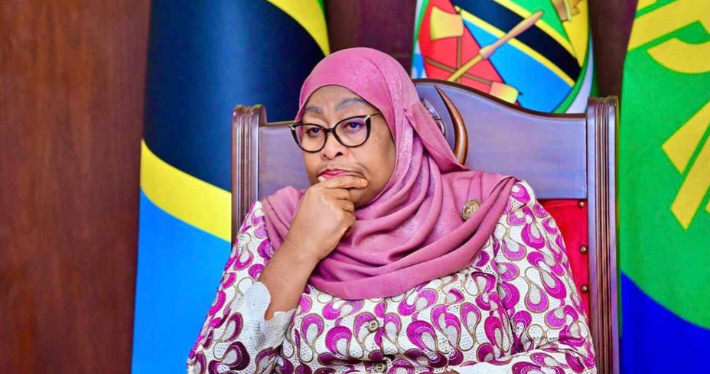
When Samia Suluhu Hassan became Tanzania’s President in 2021, she inspired hope. Known for her calm demeanor and reformist promises, she initially signaled a shift from the heavy-handed leadership of her predecessor. She pledged to open democratic spaces, respect the opposition, and support freedom of expression. Just as fast as the promises came, so did they go, as Suluhu veered away from the democratic ideals she initially promoted.
People used to believe Tanzania was peaceful, steady, and safe. But that peace doesn’t feel real anymore. The nation now faces fear, censorship, and rebellion. Protests erupted as the country’s general election got underway. The government responded with force, unleashing Police and military personnel on the citizenry, multiple deaths reported.
Weeks after the disputed elections, the United States has announced that it is “comprehensively reviewing” its relationship with the Government of Tanzania.
In a statement attributed to Principal Deputy Spokesperson Thomas Pigott, the US explained that the review was prompted by the Tanzanian government’s ongoing repression of religious freedom and free speech, persistent obstacles to US investment, and concerning violence against civilians in the days before and after the elections.
The statement noted that the US cannot ignore actions that jeopardise the safety of its citizens or the security and stability of the region. Consequently, the future of America’s bilateral relationship with Tanzania “will be based on its actions.”
“These actions have put American citizens, tourists, and US interests in Tanzania at risk, and threatened to undermine the mutual prosperity and security that have defined our partnership for decades,” the statement said.
It added: “The United States values its longstanding partnership with the people of Tanzania, which has brought prosperity to our populations and security to the region. Recent actions by the government of Tanzania, however, raise grave concerns about the direction of our bilateral relationship and the reliability of the Tanzanian Government as a partner.”
The US statement came hours after UN human rights experts condemned what they described as widespread and systematic human rights violations in Tanzania following the general elections.
The experts said the violations included allegations of hundreds of extrajudicial killings, enforced disappearances, and mass arbitrary detentions targeting protesters, opposition figures, and civil society across the country.
In their statement, the experts estimated that at least 700 people were extrajudicially killed after the elections, though other estimates suggest thousands of potential victims.
Chilling reports allege that bodies have disappeared from morgues and that human remains are being incinerated or buried in unmarked mass graves.
“Family members who identified remains were reportedly forced to sign false statements about the cause of death to receive the bodies. The government must provide information on the fate and whereabouts of all disappeared persons and ensure the identification and dignified return of the remains to their families,” the experts said.
They added: “All restrictions on media coverage must be lifted, as they are incompatible with Tanzania's international obligations.”
The experts also highlighted that the complete internet shutdown imposed from October 29 to November 3, 2025, “severely curtailed the ability of human rights defenders and journalists to carry out their work and document violations.”
They urged the Tanzanian government to conduct a “prompt, impartial, independent, thorough, and effective investigation into all reported killings, enforced disappearances, and other human rights violations.”
Ahead of planned demonstrations on December 9, 2025, the experts called on Tanzanian authorities and security forces to prevent further violations and to protect the right to peaceful assembly.
“The experts are in contact with the government on this issue and expressed their readiness to provide technical assistance to Tanzanian authorities,” they said.
Tanzania shot into international limelight after widespread protests on October. The protests broke out in response to the government’s attempt to strong arm the country’s national election.
In the run-up to the vote, president Suluhu Hassan had her two principal opponents excluded from the ballot: ACT-Wazalendo’s Luhaga Mpina, who had been disqualified from the race twice at the behest of government officials, and Tundu Lissu, leader of Chadema, the country’s main opposition party. Lissu is currently standing trial for treason.
Hassan’s regime did not merely set the opposition at a disadvantage; it closed the window for electoral competition. With the exclusion of the leading opposition candidates, Hassan romped to victory against the sixteen remaining minor candidates. It wasn't just a small-margin win, Suluhu was declared the winner with a 97.6 Percent margin of total votes cast. Her Chama Cha Mapinduzi (CCM) party also retained its overwhelming majority in the country’s parliament.
This is all a far cry from the 2015 presidential election, in which Chadema’s candidate, Edward Lowassa, overcame a series of electoral disadvantages to come in a strong second, with 40 percent of the vote, to the CCM’s John Pombe Magufuli. The regime’s actions amount to an attempt to consolidate a return to authoritarian rule that has been in progress since 2014. The protests signal Tanzanians’ rejection of their country’s descent into authoritarianism.
The demonstrations took place across a string of neighborhoods in Dar es Salaam, Tanzania’s largest city. More broke out in Mwanza, Dodoma, Mbeya, and a number of towns besides. Chants of “We do not want CCM,” rung out amid the demonstrations. And online activists popularized a new nickname for Hassan: Idi Amin Mama, in allusion to Idi Amin, the notorious Ugandan military dictator of the 1970s.
With both Lissu and Mpina out of the way, Hassan ran for the presidency free of challenges and competition from her principal opponents. Chadema, the leading opposition party, was banned from participating in elections due to its refusal to sign an ethics code after Lissu’s arrest. A separate injunction issued by the High Court temporarily barred Chadema’s leaders from participating in political activities and using party resources until a frivolous case from a former party official was heard.
Alongside these formal exclusions from electoral competition, Hassan’s regime increased the intensity of everyday repression. Protests were not tolerated, police brutality against protesters became the norm, and the pace at which activists are arrested has accelerated. In parallel, covert state violence intensified. Activists were herded into the backs of vans, tortured, and then dumped on roadsides.
President Samia Suluhu Hassan came into office promising democratic reforms. Four years later, it was clear she is more of a performer than a reformer. Far from delivering on her promises to unwind Tanzania’s authoritarian machinery, she has relied on the repressive tools we know so well. With brutal resolve, the ruling party sought not merely to win an election, but to annihilate the opposition.
With the independence day looming and activists vowing to hold protests, all eyes will be on Tanzania and Suluhu's administration response.