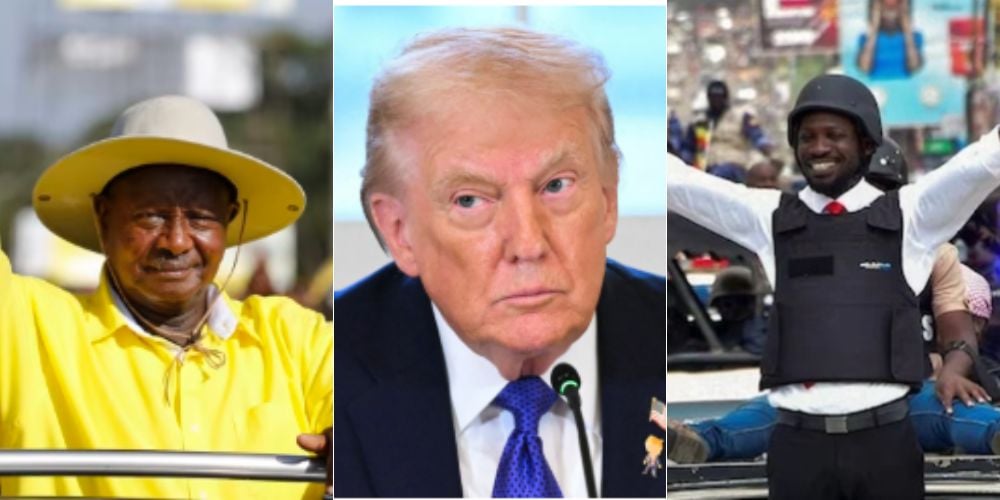
Kampala, January 16 ; The United States Embassy in Uganda has issued a security alert to its citizens in the East African nation, following the country’s presidential elections, as early vote counts showed President Yoweri Museveni holding a commanding lead amid reports of violence and heightened security activity.
In a statement on Friday, January 16, the Embassy warned American citizens to exercise heightened caution and avoid large public gatherings across Uganda.
"Uganda held presidential elections on Thursday, January 15, 2026. Official results are pending. There are reports of security forces using teargas and firing into the air to disperse gatherings," the Embassy stated.
The diplomatic mission urged U.S. citizens to take several precautionary measures during this period of electoral uncertainty.
"U.S. citizens are encouraged to exercise enhanced caution, avoid large public gatherings, and limit unnecessary movements," the advisory read.
The Embassy provided specific actions for American nationals to follow, including monitoring local media for updates, avoiding crowds and demonstrations, keeping a low profile, remaining aware of their surroundings, and carrying charged mobile phones with emergency contact numbers programmed in.
Americans were also advised to carry proper identification, including a U.S. passport with a current Ugandan visa, at all times.
The security alert comes as vote counting continues following Thursday's presidential election.
Preliminary results released by Uganda's Electoral Commission on Friday showed incumbent President Yoweri Museveni holding a commanding lead with 76.25 percent of votes tallied from approximately half of the polling stations.
His main challenger, pop star-turned-politician Robert Kyagulanyi, alias Bobi Wine, trailed with just 19.85 percent, while six other candidates shared the remaining votes.
However, the electoral process has been marred by serious allegations of irregularities and violence. Bobi Wine's National Unity Platform (NUP) party has reported that the opposition leader is currently under house arrest, with military and police forces surrounding his residence.
According to NUP, security officers unlawfully entered Wine's compound by jumping over the perimeter fence and have erected tents within the property, effectively confining both Wine and his wife.
"He is under house arrest. The Military and police surrounded his house last evening. He is not allowed to interact with his agents," stated Benjamin Katana, NUP's head of Finance.
However, police spokesperson Kituuma Rusoke told reporters he was unaware of Wine’s alleged house arrest, saying the deployment was linked to security considerations.
Rusoke later told local broadcaster NBS that as a presidential candidate, Wine was “a person of interest,” adding that the heavy security presence was for his own protection.
On election day, Wine had raised multiple concerns about the electoral process, alleging widespread violations including complete internet shutdowns, massive ballot stuffing, abduction of polling officials, and systematic voting machine failures across the country.
"The world needs to know what is happening in Uganda on election day. The Internet is switched off. Massive ballot stuffing reported everywhere," Wine stated on Thursday.
The opposition leader also claimed that several NUP officials, including the party's Deputy President for the Western Region, had been arrested, while numerous polling agents and supervisors were either abducted or forcibly removed from polling stations.
The United Nations Human Rights Office said ahead of the vote that Uganda’s election was taking place in an environment of “widespread repression and intimidation.”
During the campaign period, Bobi Wine’s rallies were repeatedly disrupted by security forces using tear gas and live ammunition, incidents that resulted in at least one death and hundreds of arrests. Ugandan authorities said the actions were responses to lawless behaviour.
The election was also affected by logistical challenges, with some polling stations opening up to four hours late due to what officials described as technical difficulties.
An internet shutdown imposed earlier in the week limited the flow of information, delaying reports of violence and drawing criticism from international institutions.
Museveni, who has been in power since 1986, told reporters after voting that he expected to win with 80 percent of the vote “if there’s no cheating,” a result that would grant him a seventh term in office. He currently holds the third-longest tenure of any African leader.