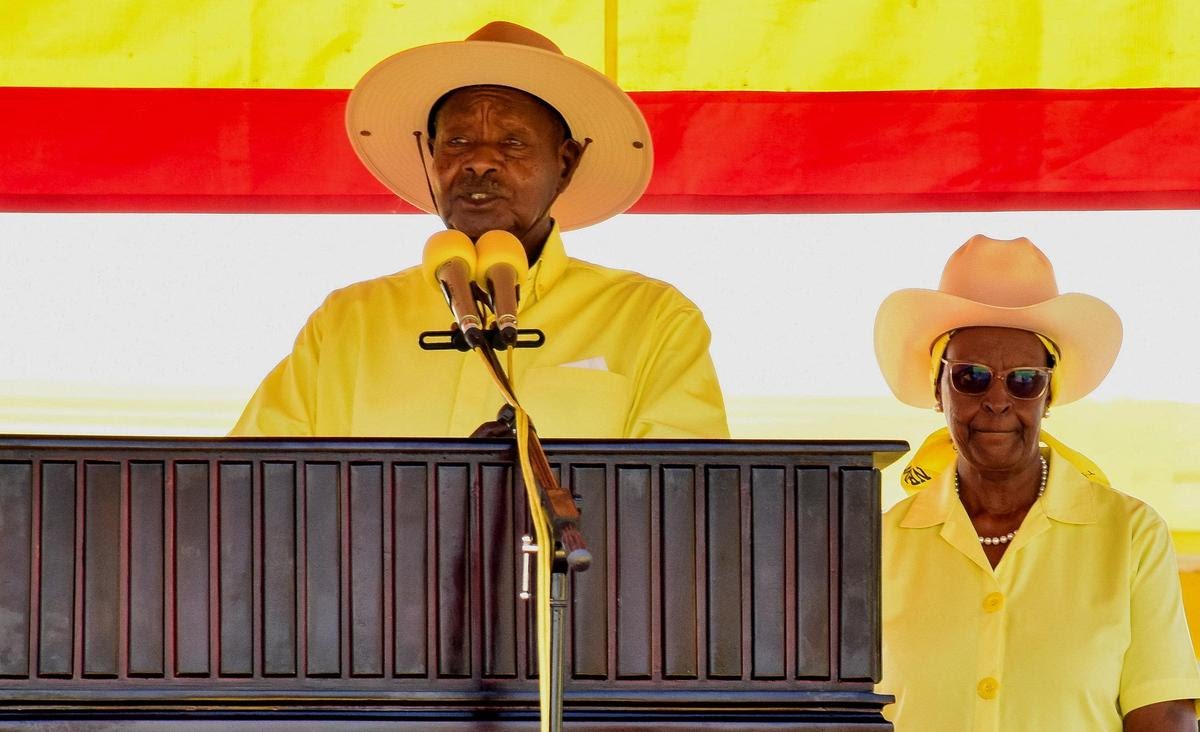
Ugandan President Yoweri Museveni has won a 7th term in office, fighting off a challenge by former singer Bobi Wine — who was just a child when Museveni came into power back in 1986.
The nation's electoral commission announced on Saturday that Museveni received 7.9 million votes out of the total tally. The commission said Museveni, 80, maintained a decisive lead over his challengers, extending his nearly four-decade grip on power.
However, Wine is alleging that the vote was rigged, as election officials face questions over how results were tallied amid an Internet blackout.
Ahead of Thursday's election, Museveni's government shut down social media outlets — including Facebook, Instagram and Twitter— in Uganda. It also sent military vehicles into the streets. Soldiers and police were out in force in the capital of Kampala.
The vote took place in a calm but intimidating atmosphere, with the streets of Kampala, the capital, and surrounding areas guarded by armored vehicles. Few observers were present and internet access was blocked throughout the country.
Bobi Wine was quick to reject the results, Friday, even before their proclamation by the Electoral Commission, considering them to be the results of the “worst electoral fraud in the country’s history”.
Born Robert Kyagulanyi Ssentamu, Wine became a pop star with music that blends Afrobeat with sounds borrowed from reggae and dancehall. He then turned toward politics, winning a seat in parliament. Wine would go ahead to contest for the top-seat, losing to Museveni in the previous general election, one that was also marred by allegations of fraud.
As with the 2021 elections, supporters of Museveni’s leading challenger, Wine, have reported abductions, arbitrary detention and violence at the hands of security forces. Wine faced similar setbacks in 2021, when he first ran for president. He was often roughed up by the police, clothes ripped from his body, and dozens of his supporters were jailed.
Museveni's rise to the top seat wasn't uneventful either. Museveni was born in 1944 to cattle farmers and attended missionary schools. While studying political science and economics at the University of Dar es Salaam (B.A., 1970) in Tanzania, he became chairman of a leftist student group allied with African liberation movements. When Idi Amin came to power in Uganda in 1971, Museveni returned to Tanzania in exile. There he founded the Front for National Salvation, which helped overthrow Amin in 1979.
Museveni held posts in transitional governments and in 1980 ran for president of Uganda. When the elections, widely believed to have been rigged, were won by Milton Obote, Museveni and former president Yusufu Lule formed the National Resistance Movement (NRM); Museveni led the NRM’s armed group, the National Resistance Army, which waged a guerrilla war against Obote’s regime. The resistance eventually prevailed, and on January 26, 1986, Museveni declared himself president of Uganda.
Museveni has ruled Uganda since 1986 by repeatedly rewriting the rules to stay in power. Term and age limits have been scrapped, rivals jailed or sidelined, and state security forces are a constant presence at Opposition rallies.
Decades ago, Mr. Museveni criticised African leaders who overstayed their time in power. Years later, Ugandan lawmakers did the same thing for him when they jettisoned the last constitutional obstacle — age limits — for a possible life presidency.
His son, Army chief Muhoozi Kainerugaba, has asserted his wish to succeed his father, raising fears of hereditary rule as Mr. Museveni has no recognisable successor in the upper ranks of the ruling party, the National Resistance Movement.
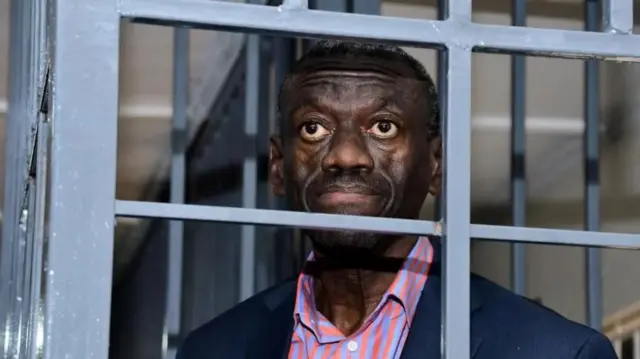
Mr. Museveni has been elected seven times now, nearly all of those polls marred by violence and allegations of vote rigging. He has since fallen out with many of the comrades who fought alongside him, including some who say he betrayed the ideals of their bush-war struggle. One of them is Kizza Besigye, once Mr. Museveni's personal doctor, who has been jailed for over a year and repeatedly denied bail after facing treason charges.
Mr. Besigye was Uganda's most prominent Opposition leader before the rise of Mr. Wine, 43, who presents a different challenge for Mr. Museveni as the face of youthful hope for change. Mr. Wine has a large following among working-class people in urban areas, and his party has the most seats of any Opposition party in Parliament.
In the 2021 election, Mr. Wine secured 35% of the vote, while Mr. Museveni, with 58%, posted his worst-ever result, establishing Mr. Wine as a serious challenger for power.
Yet Mr. Museveni dismisses Mr. Wine as an agent of foreign interests and questions his patriotism. “Mr. Kyagulanyi and his evil foreigners that back him fail to understand that Uganda is a land of spiritual and political martyrs,” Mr. Museveni said in his New Year's Eve address.
During Campaings, Security forces, notably the military, repeatedly broke up Mr. Wine's campaign rallies, sending his supporters scampering into ditches and swamps, firing teargas canisters and beating up attendees. Mr. Museveni, in contrast, campaigned without disruption and can go wherever he wants. Some charge that the election is simply a ritual to keep Mr. Museveni in power, not a fair exercise that could possibly lead to a change of government in the east African nation of 45 million.
Mr Museveni’s disputed win gives him another five-year elective term, setting the incumbent on course to lead Uganda for a cumulative 44 years of uninterrupted rule since 1986. He gained 72% of the vote, the election commission announced, against 25% for his closest challenger Bobi Wine.