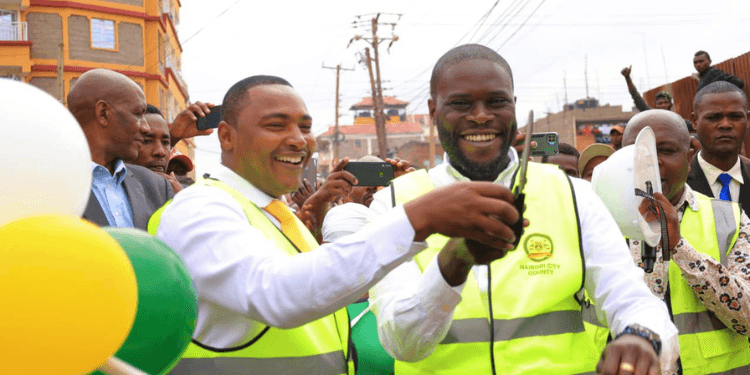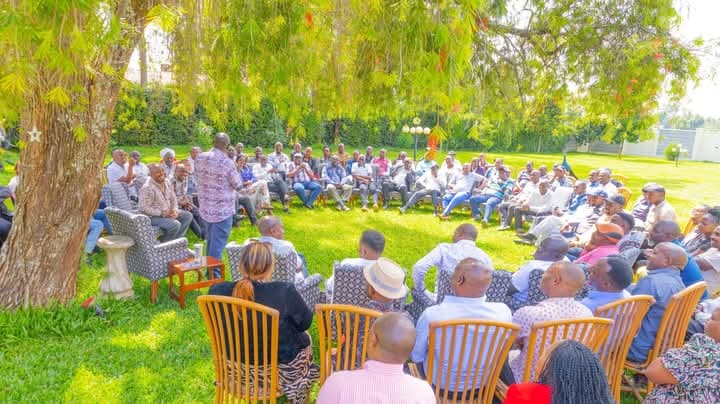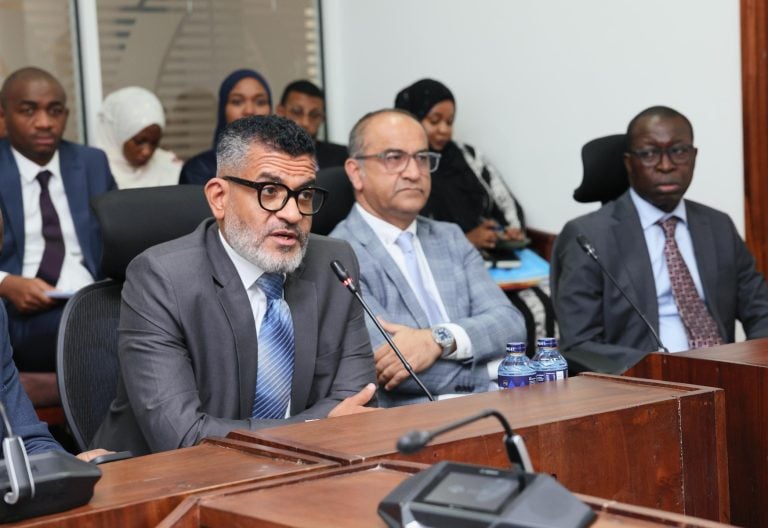
The Mombasa County Executive, led by Governor Abdulswamad Nassir, came under heavy scrutiny as senators grilled officials over serious audit failures in health facilities and the county’s water company.
The Senate County Public Investments and Special Funds Committee, chaired by Senator Eddy Oketch, examined audit reports that revealed widespread financial mismanagement, weak oversight, and non-compliance with the law across several county institutions.
Tensions flared when it emerged that Coast General Teaching and Referral Hospital had failed to submit its financial statements to the Auditor-General within the legally required timelines. Senators said the omission had persisted for several years, effectively shielding the county’s largest referral hospital from scrutiny.
“This is not an isolated lapse, it is a recurring act of non-compliance,” Senator Godfrey Osotsi said, warning that failure to submit accounts undermines public accountability and violates the Public Finance Management (PFM) Act.
The committee chair cited provisions of the law that criminalise such failures, cautioning that accounting officers risk prosecution, fines or imprisonment. Calls were made for individual responsibility, with senators questioning why no criminal action had been taken despite repeated audit flags.
Governor Abdulswamad told the committee that two officers linked to the lapses had been suspended and were undergoing internal disciplinary processes. However, several senators dismissed the measures as insufficient, arguing that internal sanctions could not replace statutory penalties outlined in law.
While the committee opted to consider written submissions from several Level Four hospitals, Coast General was ordered to regularise its audit status in the next audit cycle without exception.
Focus then turned to MOWASSCO, where senators noted recent audit reports reveal a troubling financial situation.
The utility was described as technically insolvent, with negative working capital of nearly Sh2 billion and accumulated losses exceeding Sh2.2 billion. Senators were also concerned by non-revenue water levels of 62 per cent, more than double the regulatory threshold, translating into billions of shillings in lost income.
The most serious concern, however, centred on revelations that untreated sewage is being discharged directly into the ocean due to non-functional treatment plants.
Senators warned that the situation posed immediate risks to public health, marine life and livelihoods dependent on coastal waters, including fishing and tourism. One senator described the practice as an unfolding human rights crisis, noting that residents, especially children, were being exposed to contaminated environments.
In response, Governor Abdulswamad pointed to ongoing rehabilitation works funded by development partners, with completion timelines set for late 2026. The explanation drew scepticism, with senators questioning how long residents would continue bearing the consequences of systemic failures.
The committee resolved to conduct a field visit to Mombasa in April to independently assess the situation and track compliance with its directives.