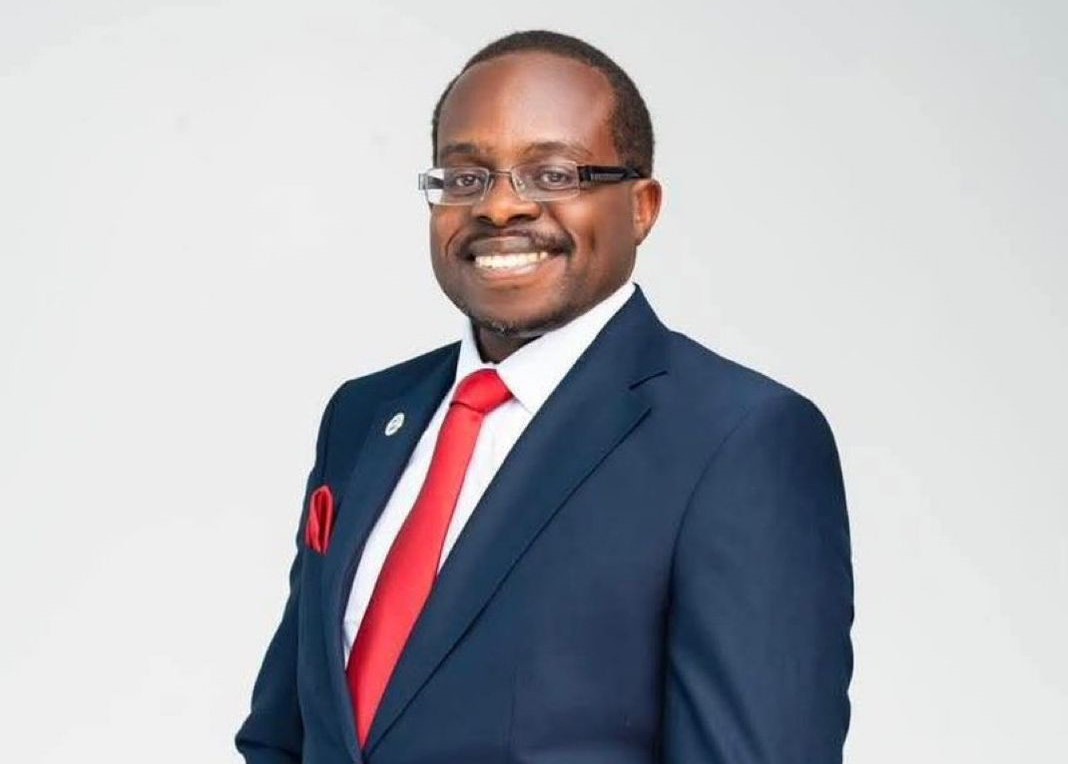
Senior Counsel Charles Kanjama has been elected the 52nd President of the Law Society of Kenya (LSK), succeeding Faith Odhiambo. He will serve a two-year term at the helm of the professional body representing advocates in the country.
Kanjama won the presidency after securing 3,728 votes, defeating Peter Wanyama, who garnered 2,616 votes, and former LSK Vice Chairperson Mwaura Kabata who came third after receiving 2,086 votes in a closely contested election held on Thursday. He will be deputised by lawyer Teresia Wavinya Nicholas.
Kanjama takes over from Faith Odhiambo, who was elected LSK President on March 1, 2024. Faith’s tenure was marked by advocacy for protesters’ rights to demonstrate peacefully and for the release of those detained during the anti-finance bill protests in Kenya.
The Independent Electoral and Boundaries Commission (IEBC) managed the elections, with over 18,000 registered lawyers eligible to vote. The campaigns were highly scrutinised, with candidates’ independence, financial backing and professional engagements under the spotlight.
Kanjama faced criticism over his representation of the Judicial Service Commission (JSC), while Wanyama’s work for county governments raised concerns over conflicts of interest ahead of the 2027 general elections. Kabata was also questioned over past allegations regarding case withdrawals during his tenure.
During NTV’s LSK presidential debate, Wanyama disclosed spending Sh12 million on his campaign, Kanjama spent Sh6 million and Kabata Sh5 million.
The candidates presented contrasting visions. Kabata focused on continuity, modernisation, and sustained activism with an emphasis on institutional stability and ethical leadership.
Wanyama emphasised reforms, economic opportunities and mentorship for young advocates while Kanjama’s manifesto highlighted institutional preparedness, safeguarding independence, member protection and governance.
Charles Kanjama is a constitutional lawyer with over 20 years of experience. He is the Managing Partner at Muma & Kanjama Advocates, a certified arbitrator and mediator, and a former chairman of LSK Nairobi Branch. He earned an LLB from the University of Nairobi in 2001, a postgraduate diploma from the Kenya School of Law in 2002, and was admitted to the bar in 2003. In 2022, he was admitted to the Senior Counsel Bar.
Kanjama’s manifesto focused on five pillars: integrity and independence, rule of law, practice and welfare, building the institution, and engagement, accountability and governance.
Key commitments include completing Wakili Towers through transparent procurement, establishing an LSK Training Institute, championing a Judiciary Enforcement Police Unit, publishing an annual Rule of Law Report, improving young lawyers’ welfare, supporting in-house and mid-bar lawyers, and strengthening engagement with branches, chapters, and legal associations.
He emphasised that LSK’s presidency requires immediate preparedness, the ability to defend independence, govern resources transparently, and protect advocates’ daily practice.
“Safe hands in this moment are not a matter of rhetoric. They can be tested against three nonnegotiable safeguards: the ability to defend the independence of the Society; the ability to govern its resources with integrity and transparency; and the ability to protect advocates in the everyday realities of practice,” Kanjama said in his manifesto.
Kanjama’s track record includes institution-building, defending constitutionalism, law reform, professional standards, judicial engagement, devolution and mentorship.
He oversaw the operationalisation of the LSK Nairobi Branch, led the Nairobi Legal Awards Trust, convened committees addressing corporate and court practice, and engaged with the judiciary to reduce delays and improve accountability.
He pledged that his leadership will focus on measurable outcomes, transparency, accountability, and structured member engagement.
“Strong institutions are not built by individuals acting alone. They are built through collective judgment, shared responsibility, and disciplined coordination. The office of President of the Law Society of Kenya is not that of a solo performer, but of an orchestral conductor,” he said.
Kanjama’s presidency begins at a pivotal time for LSK, as the society prepares to play a constitutional role during the 2027 general elections while completing significant institutional projects like Wakili Towers and expanding professional training for members.
The polls were supervised by the LSK Elections Board and conducted by the Independent Electoral and Boundaries Commission (IEBC) at High Court stations across the country.
The collaboration between LSK and the IEBC follows a strategic partnership aimed at strengthening electoral processes and addressing systemic weaknesses exposed during recent elections.
Faith Odhiambo leaves behind a respectable legacy, one that Charles Kanjama is capable of continuing. The LSK election is often viewed as a microcosm of Kenyan national politics. The society has historically been the last line of defense against executive overreach. Kanjama will be expected to lead the charge on constitutionalism as the country heads toward the 2027 general election.