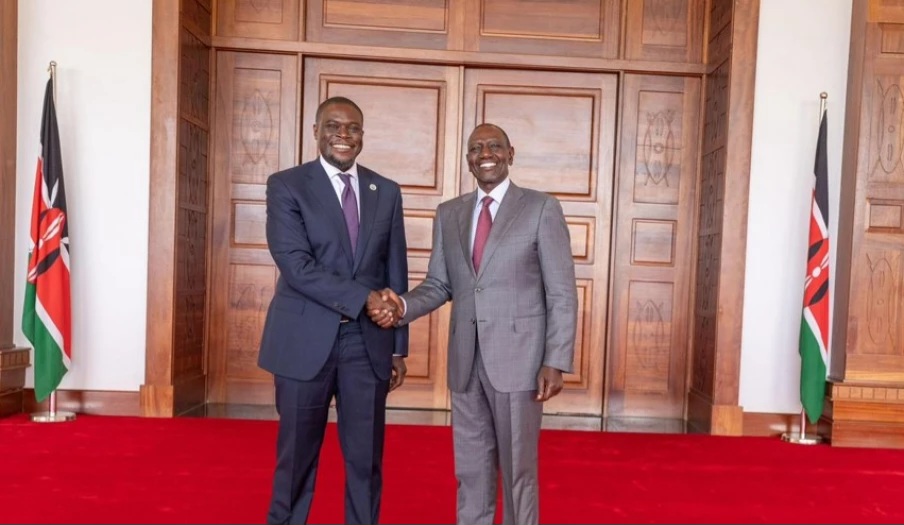
A specially constituted 21-member ad hoc committee of the Nairobi County Assembly has initiated rigorous public hearings to scrutinize the controversial KES 80 billion cooperation agreement forged between Governor Johnson Sakaja and the National Government.
The political and economic architecture of Kenya's capital is currently under intense microscopic review. Following a dramatic special sitting, the Nairobi County Assembly has activated a high-stakes legislative mechanism to dissect the colossal cooperation agreement signed between the county administration and President William Ruto's government.
The pact, designed to inject approximately KES 80 billion into the city's ailing infrastructure, has ignited a firestorm of debate regarding autonomy, accountability, and the future of devolution.
Tasked with an aggressive 11-day timeline, the 21-member ad hoc committee—chaired by Assembly Speaker Kennedy Ng'ondi—must unravel the intricate details of the agreement, facilitate comprehensive public participation, and deliver a definitive verdict. The outcome will either solidify a transformative developmental partnership or derail one of the most ambitious urban renewal strategies in Nairobi's history.
The Promise of a Modern Metropolis
Proponents of the deal, including a significant bloc of Ward Representatives led by Minority Leader Anthony Kiragu, argue that the agreement is the silver bullet Nairobi desperately needs. Operating on a constrained annual budget of roughly KES 40 billion to serve over seven million residents, the county is chronically underfunded. The proposed cash injection is earmarked for critical sectors: water and sanitation, healthcare upgrades, affordable housing, and the expansion of the transport network.
Supporters draw parallels with global mega-cities like Paris and New York, where municipal administrations heavily leverage national government support to fund massive infrastructural projects. "How can Nairobi attain the standards of other world cities if we set aside a cooperation framework that brings an additional KSh 80 billion in funding and instead focus on divisive politics?" the MCAs questioned in a joint statement.
Fears of Autonomy Erosion and Impeachment Threats
Conversely, the agreement has triggered deep-seated anxieties among skeptics who view the pact as a stealthy usurpation of devolved powers by the National Executive. Critics, notably Kileleshwa MCA Robert Alai, accuse Governor Sakaja of surrendering the county's hard-won independence.
The Impeachment Specter: Dissatisfaction with the governor's leadership style and the pact has revived threats of impeachment. Dissenting MCAs claim to have collected 55 signatures, inching closer to the threshold required to table an ouster motion.
Constitutional Mandates: The review process hinges on Section 6 of the Urban Areas and Cities Act, forcing the committee to ascertain whether the agreement violates the constitutional boundaries separating national and county functions.
Implementation Oversight: To allay fears of financial mismanagement, the agreement proposes an Implementation Committee chaired by the Governor, intended to ensure transparency in the deployment of the billions.
The public hearings represent the ultimate democratic stress test for the agreement. Residents, civil society groups, and legal experts are converging to present their memoranda, scrutinizing every clause to protect the city's interests.
As the clock ticks on the 11-day mandate, the Assembly stands at a crossroads. Will Nairobi embrace the financial windfall at the potential cost of absolute autonomy, or will it fiercely protect its devolved status and reject the national government's intervention? The committee's impending report will dictate the trajectory of the "Green City in the Sun."