




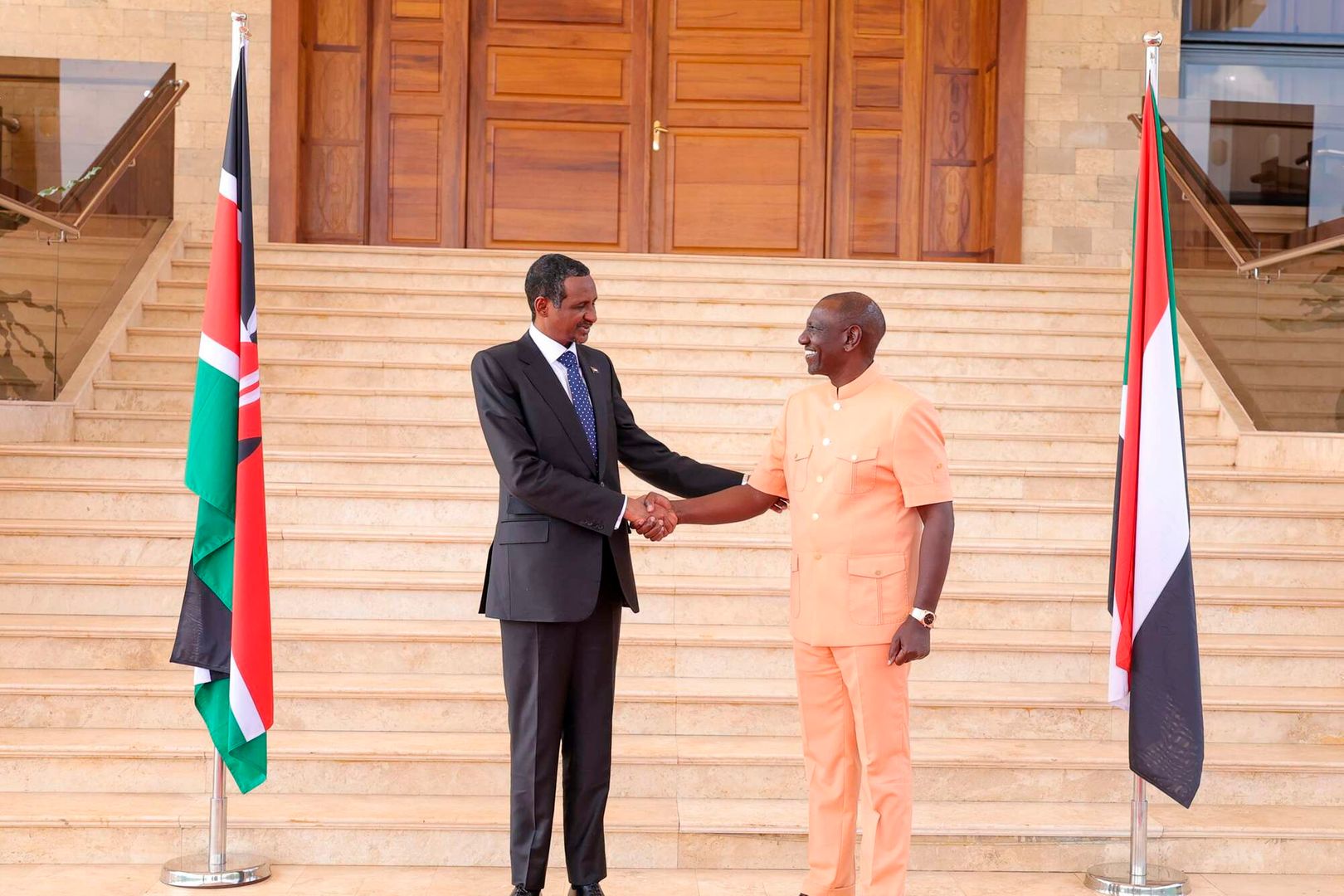
A New York-based Human Rights Foundation has ignited a firestorm in Nairobi, issuing a stern call for international accountability after fresh evidence surfaced linking the Kenyan government to the facilitation of travel documents for senior figures within Sudan’s Rapid Support Forces. At the center of this geopolitical storm is the disclosure that Algoney Hamdan Dagalo, the brother of RSF commander Mohamed Hamdan Dagalo, known as Hemedti, reportedly holds a valid Kenyan passport, an asset that has become a flashpoint for accusations of sanctions evasion and broken neutrality.
This revelation is not merely a bureaucratic lapse it is a profound challenge to Kenya’s standing as a mediator in the Sudanese conflict and a critical test of its immigration and national security protocols. The presence of a Kenyan passport in the hands of a sanctioned individual—one implicated in an ongoing conflict that the United Nations and other international bodies have described as having the hallmarks of genocide—threatens to fundamentally erode the trust Nairobi has sought to build with regional partners and international observers. As the international community intensifies its scrutiny, the silence from the Interior Ministry and the Directorate of Immigration is speaking louder than any official statement could, deepening the perception that the machinery of the state has been compromised.
The Anatomy of an International Scandal
The controversy centers on the identification of Algoney Hamdan Dagalo as a holder of Kenyan passport number AK1586127. This detail was brought to the public consciousness not through an intelligence leak, but through an update in the United States Treasury Department’s Office of Foreign Assets Control sanctions list. The inclusion of this specific travel document in the sanctions file is a stark reminder that in modern asymmetrical warfare, mobility is as critical as firepower. By securing a passport from a sovereign nation, sanctioned actors can move capital, access banking systems, and maintain operational bases far from the front lines of the Darfur theater.
For the Human Rights Foundation and other advocacy groups, the issuance of this document represents a deliberate, albeit covert, pivot in Kenya’s foreign policy. The implications are far-reaching:
Sanctions Evasion: The passport allegedly allows high-ranking RSF officials to bypass international travel restrictions imposed by the United States and the European Union.
Diplomatic Strain: Khartoum has repeatedly accused Nairobi of harboring RSF leadership, leading to the recall of its ambassador and a crippling ban on Kenyan tea exports, which has cost the agricultural sector millions in lost revenue.
Sovereignty Concerns: Critics argue that the subversion of the national population register to issue documents to foreign paramilitary figures undermines the integrity of Kenya’s citizenship processes.
Credibility Crisis: As Kenya attempts to position itself as a neutral arbiter in the Intergovernmental Authority on Development (IGAD) peace process, the appearance of collusion with one side of the conflict sabotages these diplomatic efforts.
The Regulatory Tightrope
Under the Kenyan Citizenship and Immigration Act, the threshold for obtaining a passport is rigorous, involving layers of security vetting by the National Intelligence Service and final approval by the Cabinet Secretary. The emergence of a passport linked to the brother of a prominent warlord suggests that these firewalls were either bypassed or overridden. This creates a significant constitutional crisis: if the systems designed to protect the integrity of the Kenyan identity can be so easily compromised, the entire edifice of national security is effectively hollowed out.
Economists and political analysts observe that this scandal is occurring against the backdrop of strained economic conditions. The loss of the Sudanese tea market, a key destination for Kenyan exporters, has already exerted downward pressure on the sector. The perception of the administration facilitating the movement of RSF commanders further alienates Khartoum, ensuring that restoration of trade ties remains a distant prospect. Meanwhile, the administration’s continued defense of its engagement with the RSF—framed as an attempt to facilitate dialogue—is increasingly difficult to reconcile with the reality of the weapons and logistical support allegedly being procured through these very channels.
Voices From the Frontline of Accountability
The outcry has transcended partisan lines. Former Chief Justice David Maraga and various opposition figures have publicly demanded the revocation of the document and an independent probe by the Ethics and Anti-Corruption Commission. They argue that the failure to act not only implicates the state in the atrocities being committed in El Fasher but also exposes ordinary Kenyan citizens to greater scrutiny when they travel abroad. If the Kenyan passport is perceived globally as a tool for sanctions evasion, international border control agencies are likely to subject all Kenyan travelers to more rigorous, time-consuming, and humiliating security checks.
The government’s response, characterized by what many call a deafening silence, has done little to calm the waters. Despite repeated inquiries from the press and demands for transparency, officials have yet to provide a detailed explanation of how the passport was processed. This hesitation is viewed by observers as a tacit admission that the process was not a simple administrative error, but a calculated, albeit disastrous, policy maneuver. For the millions of displaced Sudanese facing a humanitarian catastrophe, the ease with which their persecutors can navigate the world using a third-party nation’s passport is a bitter realization of how international sanctions regimes can be systematically undermined.
As the international community weighs the prospect of further pressure on Nairobi, the question for the administration is whether the perceived strategic benefits of aligning with the RSF outweigh the long-term cost of diplomatic isolation and the degradation of Kenya’s global reputation. The passport scandal is now more than a domestic political headache it is a litmus test for the government’s commitment to the rule of law and international norms in an era of deepening global instability. For a nation that prides itself on its democratic credentials and its role as a regional anchor, the path forward requires immediate, transparent, and corrective action, or the fallout may linger for years to come.