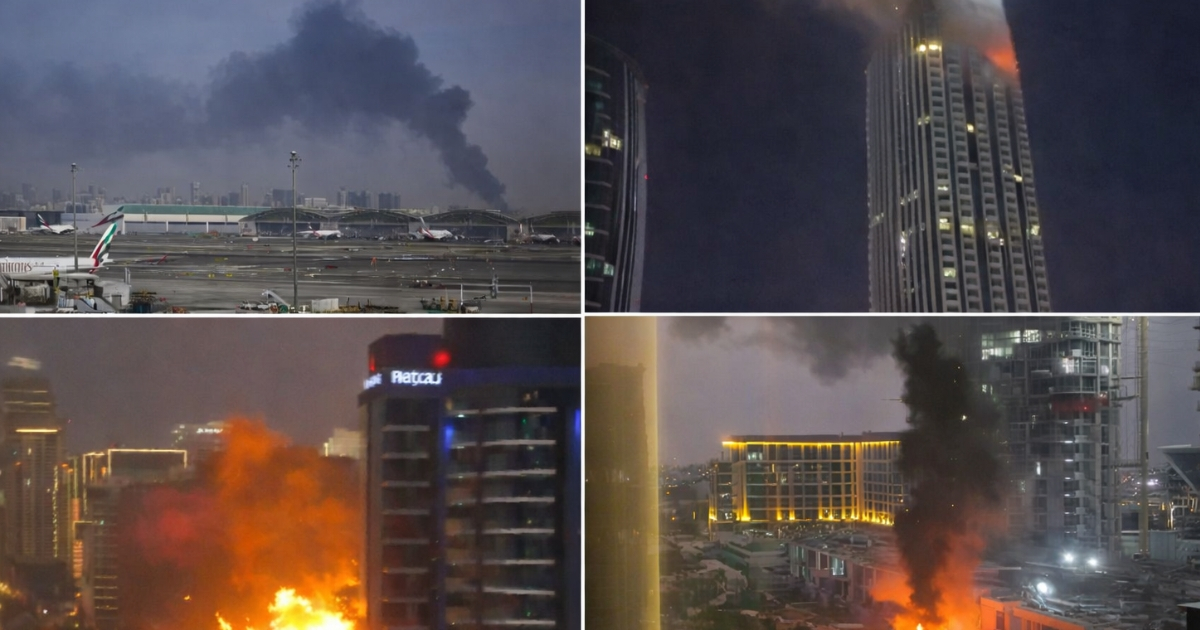
As reports confirmed targeted strikes by Iranian forces against critical infrastructure in the United Arab Emirates, the immediate impact was not just physical destruction in the Gulf, but the systemic destabilization of a colossal, shadow economy of Kenyan political wealth.
For years, Dubai has served as the preferred offshore vault for the Kenyan political class, a glittering sanctuary where opaque real estate holdings transformed suspicious earnings into legitimate, high-yield assets. The current security volatility in the UAE has shattered the illusion of a perfect safe haven, forcing Nairobi’s elite into a scramble to protect hundreds of millions of dollars in property that is suddenly viewed as a liability rather than a legacy.
The geopolitical reality of the strike has fundamentally altered the risk profile for foreign investors in the UAE. For Kenyan politicians, who often hold these assets through shell companies or proxies to avoid domestic scrutiny, the difficulty of liquidating or insuring these properties has skyrocketed overnight. Insurance premiums for commercial and residential real estate in high-risk zones are projected to surge by at least 40 percent in the coming weeks, a cost that many portfolio holders are ill-prepared to shoulder.
Economic analysts at major financial firms in Nairobi note that the uncertainty is creating a liquidity trap. If owners rush to sell simultaneously to escape the risk, market values in key districts like Downtown Dubai or Dubai Marina could crater, leading to massive capital losses. The fear among the political elite is that their primary store of value—the property itself—has become a tether to an increasingly volatile security environment.
Estimated Kenyan private wealth held in UAE real estate: Over KES 85 billion (approximately $650 million).
Projected rise in regional insurance premiums: 35 to 45 percent within Q2 2026.
Market exposure: Primarily concentrated in luxury residential developments and high-end commercial office space.
Key risk factors: Asset devaluation, potential sanctions, and the inability to repatriate capital amid security protocols.
This panic highlights a broader, uncomfortable truth about the Kenyan economy: the persistent flight of capital. For decades, the accumulation of wealth by politically exposed persons has frequently bypassed local investment opportunities, opting instead for the perceived stability and secrecy of foreign markets like Dubai.
This phenomenon has deprived the Kenyan economy of billions in potential domestic capital that could have been funneled into infrastructure, manufacturing, or green energy projects.
Economists argue that the current crisis provides a stark illustration of why local-first investment is not merely a nationalist sentiment, but a pragmatic economic strategy. When capital is parked thousands of miles away in a region prone to geopolitical shocks, the Kenyan taxpayer bears the brunt of the instability. The current situation serves as a forced diversification lesson for those who believed that a foreign address was the ultimate insurance policy against the risks of their home market.
The instability in the UAE is not an isolated event it is part of a widening regional conflict that threatens the delicate balance of the Middle Eastern economy. For the Kenyan political class, the danger lies in the potential for escalating tensions that could lead to broader asset freezing or international regulatory scrutiny. As global powers move to monitor financial flows to the region, the opacity that once protected these Kenyan assets may now work against them.
Real estate agents in the UAE report a surge in inquiries from East African clients asking about rapid exit strategies. However, the market is currently frozen. Buyers are hesitant, and the logistics of moving large sums of capital out of the region are becoming increasingly scrutinized by global anti-money laundering watchdogs. The days of "no questions asked" property transactions are effectively over, and the political elite are finding that their wealth is not as mobile as they once believed.
As the dust settles in the Gulf, the aftershocks in Nairobi will likely force a re-evaluation of how wealth is held and managed. There is mounting pressure on the government to strengthen local financial instruments, making them competitive enough to retain the capital that currently drains into overseas accounts. The crisis has exposed the fundamental fragility of relying on foreign safe havens that are susceptible to the tides of international conflict.
The question remaining is whether this realization will lead to a systemic change in investment behavior or if, once the immediate threat subsides, the cycle of capital flight will resume. For now, the panic in the corridors of power is palpable, a reminder that in an interconnected global economy, the safety of one’s fortune is only as secure as the stability of the soil upon which it is built. Investors are learning the hard way that when the geopolitical landscape shifts, the most expensive property in the world can become the most dangerous liability.