Somalia has condemned Iran's recent attacks on energy infrastructure in Saudi Arabia, Qatar, and the United Arab Emirates deeming them a flagrant violation of international law and a threat to regional stability.
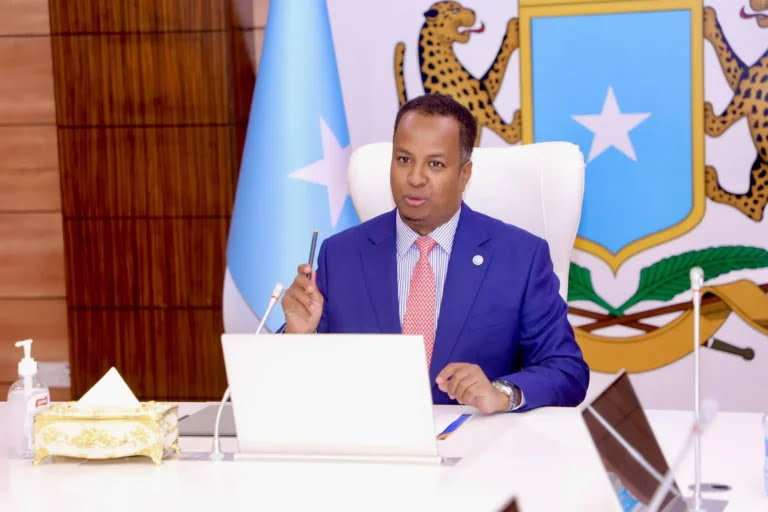
A statement issued by Somalia's Ministry of Foreign Affairs expressed solidarity with the governments and people of Saudi Arabia, Qatar, and the UAE. The federal government also supported measures already taken by the gulf states to protect their sovereignty and safety of their citizens and residents.
“There is an urgent need for de-escalation and dialogue,” the statement said, with Somalia underscoring the importance of safeguarding global energy routes, given its strategic position along key maritime corridors.
The Federal Government reaffirmed its commitment to working with regional and international partners to promote peace and protect critical energy infrastructure.
The statement comes amid rising tensions in the Middle East, which is already impacting global energy markets and security of international trade routes.
Iran has launched drone attacks targeting energy infrastructure in the Gulf states, which it terms as a response to US-Israel strikes on its infrastructure.
Oil Surges on Iranian Attacks
Global oil markets surged on Thursday, with prices breaking past $110 (KSh 16,500) per barrel, as escalating tensions in the Middle East reignited fears of a supply shock and sent traders scrambling to reassess risk.
By early trading on Thursday, Brent crude was trading between $112 and $116 per barrel (KSh 16,800 – KSh 17,400), marking one of the sharpest upward moves in recent months. The rally reflects a market increasingly driven not by current shortages, but by the growing threat of disruption in one of the world’s most critical energy corridors.
At the centre of the spike is a fresh wave of attacks targeting key energy infrastructure in the Gulf.
According to reports, Israel struck Iran’s South Pars gas field, the largest natural gas reserve globally, prompting swift retaliation from Tehran. Iranian forces are said to have targeted strategic installations across the region, including Qatar’s Ras Laffan industrial hub, a key node in global energy exports.
Iranian state media reported damage to parts of the South Pars facility, raising alarm over the vulnerability of major supply assets and the risk of prolonged instability in the region.
Energy analysts say the market is entering a phase where perception is as powerful as actual disruption. “This is a risk-driven rally,” said one analyst. “Prices are reacting to what could happen next, not just what has already happened.”
That uncertainty is beginning to ripple across the industry. Energy firms operating in the Gulf have reportedly started scaling down operations and evacuating non-essential staff from refineries and petrochemical plants as a precaution against further escalation.
The Middle East remains a cornerstone of global oil supply, and even limited disruptions or credible threats can send shockwaves through international markets.
Tensions have been further heightened by strong rhetoric from Iran’s military leadership. Following recent strikes on its infrastructure, officials linked to the Islamic Revolutionary Guard Corps warned that any additional attacks would trigger “powerful counterattacks,” extending beyond direct adversaries.
“We consider targeting the source of aggression a legitimate right,” the command said in a statement, signalling that energy infrastructure across allied nations, including Saudi Arabia, Qatar, and the United Arab Emirates, could become targets.
Subsequent reports suggest that Iranian forces have already begun striking US-linked interests and energy-related assets tied to Washington and its allies, raising fears that the conflict could widen into a broader regional confrontation.