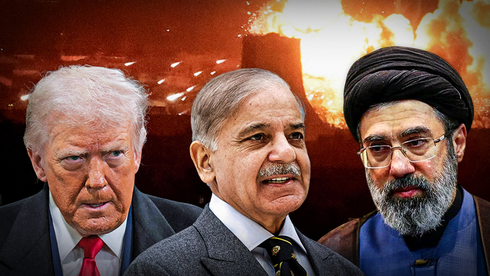
Pakistan has offered to host talks between the United States and Iran aimed at ending the Middle-East war that has rattled global energy markets. The proposal comes amid reports that Pakistan has been relaying messages between the two sides and could potentially host discussions if they progress to that stage.
Pakistan’s prime minister said on Tuesday he was willing to host talks between the US and Iran on ending the war in the Gulf, a day after President Donald Trump postponed threats to bomb Iranian power plants, saying there had been “productive” talks.
In a post, Prime Minister Shehbaz Sharif said Pakistan welcomed and fully supported ongoing efforts to pursue dialogue to end the war.
“Subject to concurrence by the US and Iran, Pakistan stands ready and honoured to be the host to facilitate meaningful and conclusive talks for a comprehensive settlement,” he said.
Pakistan’s role as a possible host of talks aimed at ending the Iran war builds on its courtship of US President Donald Trump and its reputation as a relatively neutral player with long-standing ties to neighbouring Iran’s Islamic Republic.
If talks happen, it could raise Pakistan’s global prominence to heights not reached since Pakistan helped mediate the secret diplomatic opening that led to US President Richard Nixon’s visit to China in 1972.
It would cap over a year of relationship building with Trump that has involved astute diplomacy and crypto deals.
Pakistan, which maintains direct contact with both Washington and Tehran at a time when such channels are frozen for most other countries, would also benefit directly from an end to the war.
The South Asian nation is home to the world’s second-largest Shia Muslim population after Iran, and faced nationwide protests the day after US and Israeli strikes killed Ayatollah Ali Khamenei at the start of the conflict on February 28.
The risk of a prolonged war in Iran spilling over into Pakistan is among Islamabad’s biggest fears, analysts and security officials say. Pakistan, which has been engaged in a conflict with the Afghan Taliban, has also suffered from fuel disruptions caused by the Iran war.
Pakistan’s army chief Field Marshal Asim Munir has built a close relationship with Trump to repair years of mistrust. Pakistan joined Trump’s Board of Peace just after Munir flew to Davos to meet Trump in January.
Pakistan has been involved in diplomacy to end the Iran conflict since it started, including shuttling at least half a dozen messages between the US and Iran, according to five official Pakistani sources.
Before Sharif confirmed the offer of talks on Tuesday, one of the Pakistani sources and a foreign source said that officials from both countries could hold talks in Islamabad as soon as the end of this week. The Pakistani source said US Vice President JD Vance, Witkoff and Trump’s son-in-law Jared Kushner were expected to take part.
According to official press releases, over the past month, Sharif and Pakistan’s foreign minister have held over 30 conversations with counterparts in the Middle East, including half a dozen with Iranian officials. Two took place on Monday, the same day the US said mediation efforts were underway, and came alongside a phone conversation between Munir and Trump that was confirmed by the White House.
Iranian officials have publicly insisted that no negotiations with Washington are taking place. The White House has also avoided confirming any talks, saying it will not negotiate through the media.
Israel has meanwhile signaled that its military operations against Iran will continue regardless of diplomatic developments.
Pakistan’s proposal therefore represents a potential diplomatic channel rather than a confirmed breakthrough. Whether talks materialize will depend on whether Washington and Tehran conclude that diplomacy offers a way to limit the conflict.