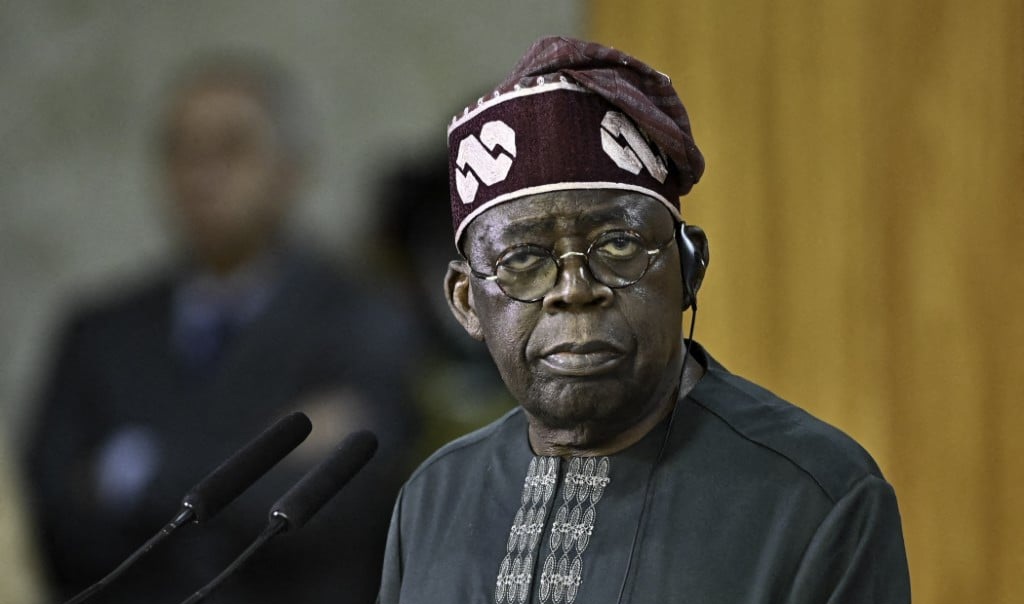
Nigeria’s President Bola Ahmed Tinubu has jumped from a frying pan into the fire, after his remarks urging citizens to endure 'suffering' caused uproar across social media platforms.
Mr. Tinubu is facing widespread backlash after urging citizens to endure the country’s worsening economic hardship, while stating that Nigerians are “better off” than people in Kenya and other African nations.
Speaking during a state visit to Bayelsa State on Friday, April 10, 2026, where he inaugurated several development projects, Tinubu acknowledged that rising fuel prices were “biting hard” but urged Nigerians to remain hopeful and to “thank God” for their situation.
“Look around, let us thank God together, that you are better off than those in Kenya and other African countries,” the President told a crowd in Yenagoa.
He said Nigeria’s economic difficulties were part of broader global pressures, including geopolitical tensions and market instability, and insisted that reforms introduced by his administration would eventually ease the burden on citizens. He called for patience, saying the hardship would not last forever.
However, the remarks have sparked widespread criticism, with many Nigerians arguing that they do not reflect the reality of rising fuel prices and their impact on transport and food costs. Others said comparing Nigeria with Kenya and other African countries was inappropriate, given the severity of the domestic economic situation.
Online reactions have also been largely negative, with users questioning the timing and tone of the President’s comments amid ongoing economic pressure on households.
The controversy adds to the growing public debate over the cost of living in Nigeria, particularly as fuel prices continue to strain citizens’ purchasing power.
Like a leaking roof dripping persistently, eroding the joys of family life, the rising cost of living in Nigeria has become an unrelenting burden. Nigerians are grappling with skyrocketing rents, transport fares, and food prices, created by economic reforms introduced by President Tinubu’s administration.
For many families, housing costs have spiraled out of control. In cities like Lagos, Abuja, and Port Harcourt, landlords are exploiting the high demand for accommodation and limited supply. Rent hikes have become common.
Food prices have soared to unprecedented levels, driven by rising production costs, agricultural disruptions, and inflation. Staple items like rice, once a daily meal for many Nigerians, are now out of reach for the poor. Families are cutting back on essentials, and hunger is becoming a grim reality.
The World Bank reports that more than 129 million Nigerians are now classified as poor, a dramatic increase from 104 million in 2023. The ongoing Middle East war has compounded global supply chain disruptions, further escalating costs.
The cost-of-living crisis is more than an economic issue; it is a profound social crisis that erodes trust in governance and widens the chasm of inequality. For Nigeria’s most vulnerable, the consequences are dire. Children, already bearing the brunt of widespread poverty, are increasingly facing malnutrition that stunts their growth and compromises their future potential. Schools that should be safe havens for learning have become out of reach for many, as parents struggle to prioritise survival over education.
Low-income families are cornered into making heartbreaking decisions—choosing between meals and medication or between keeping a roof over their heads and sending their children to school. The recent stampedes at overcrowded aid distribution centres, which tragically claimed over 50 lives, starkly highlight the desperation simmering across the country. This desperation is not merely about scarcity but about the human toll of a system that fails to provide even the most basic safety nets.
Addressing this crisis requires urgent and coordinated action. The government must implement policies to regulate rents, stabilise food prices, and subsidise transportation. Public-private partnerships can help increase housing supply and improve agricultural productivity. Additionally, social safety nets must be expanded to cushion the most vulnerable from the worst effects of inflation.
While the Tinubu administration’s reforms aim to stabilise the economy in the long term, immediate measures are needed to alleviate the suffering of millions of Nigerians. Without decisive action, the cost-of-living crisis risks becoming a full-blown social catastrophe, further undermining the nation’s fragile stability. That's why the President’s remarks have irked not only Kenyans but Nigerians and Africans at large - A log in his eye while removing the 'spec in neighbours.