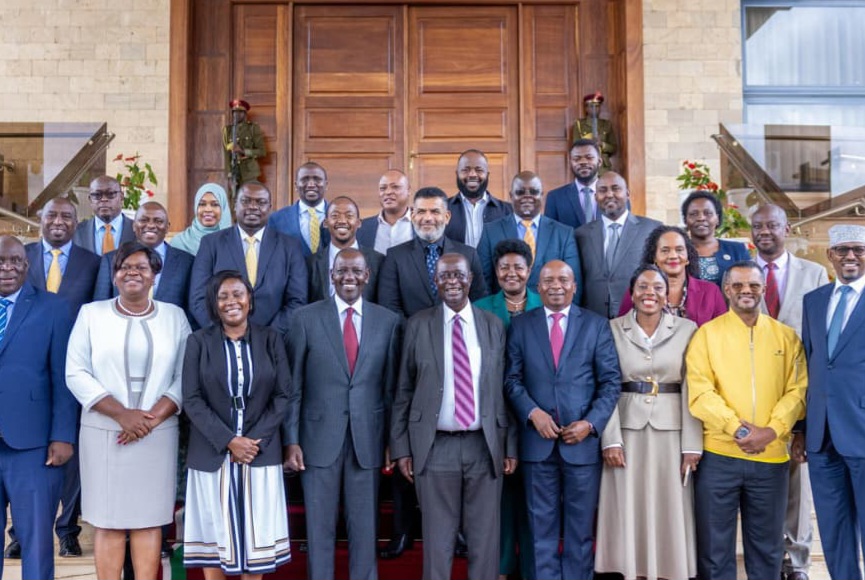
President William Ruto’s United Democratic Alliance (UDA) and the Orange Democratic Movement (ODM) have taken a decisive step toward a potential political realignment after holding a high-level consultative meeting that could reshape Kenya’s power landscape.
In a joint statement released Thursday, the two parties signaled intentions to deepen cooperation and lay the groundwork for what they described as a “formal coalition of equals,” marking a significant shift in the country’s political dynamics.
“The meeting focused on strengthening collaboration and exploring areas of mutual interest between the two parties,” the statement read, adding that party chairpersons had been tasked to “continue structured and regular consultations across party organs.”
The consultations, according to the statement, are aimed at building consensus on key national priorities while gradually aligning the two parties’ political agendas.
In a move that underscores the seriousness of the engagement, President Ruto and ODM leader Oburu Oginga agreed to establish a powerful Broad-Based Management Committee to coordinate both legislative and executive functions of government.
“The committee will be tasked with coordinating and synchronizing the legislative and executive agenda of government to ensure coherence, efficiency, and effective service delivery,” the statement noted.
The proposed committee will bring together top political actors, including party leaders, selected Cabinet ministers, as well as Majority and Minority leaders in Parliament—an arrangement that signals a deliberate effort to bridge political divides and streamline governance.
In addition to the formation of the Committee, the two parties agreed to sustain structured and continuous consultations across their respective party organs.
These engagements will be led by party chairpersons and are intended to build consensus on priority national issues while fostering a more collaborative political environment.
The statement further indicates that the ongoing engagements are expected to lay the foundation for deeper political alignment between ODM and UDA, with discussions pointing toward a broader framework described as a “coalition of equals.”
This arrangement is anticipated to guide future cooperation in governance and national decision-making processes.
The emerging pact between the ruling party and one of the country’s largest opposition outfits points to a potential reconfiguration of alliances, with implications for both governance and future elections.