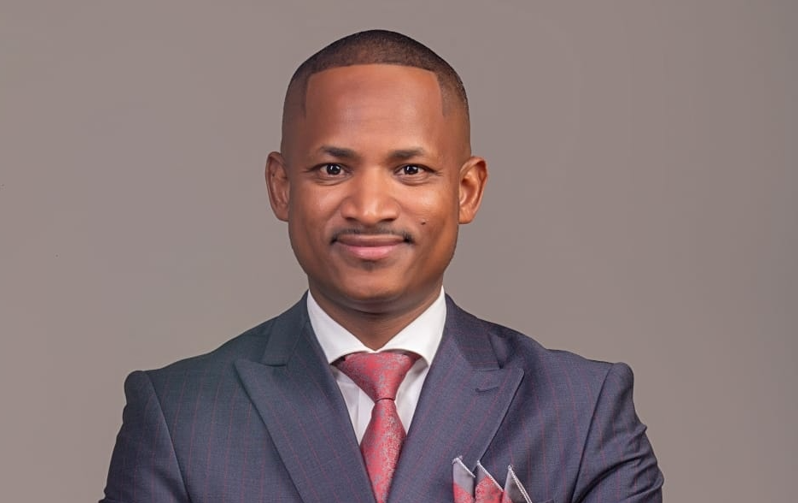
Embakasi East Member of Parliament Dr. Paul Ongili Owino popularly known as Babu Owino, has signaled a seismic shift, announcing his impending departure from the Orange Democratic Movement (ODM) party, to pursue the Nairobi gubernatorial seat under a new political vehicle. The declaration marks a critical turning point in the capital's electoral dynamics.
The move, anchored within the emergent Linda Mwananchi movement, threatens to fracture the opposition's traditional stronghold in the capital ahead of the 2027 General Election. As the current administration faces mounting economic discontent, Owino's departure underscores a growing revolt among younger leaders who accuse the established opposition of complicity with the ruling Kenya Kwanza coalition. The stakes for control of City Hall have never been higher.
The Linda Mwananchi faction has rapidly positioned itself as a potent third force in Kenyan politics, driven by a coalition of senior and youthful leaders who are staunchly opposed to ODM's ongoing cooperation with the national government. Key figures aligning with the movement include Nairobi Senator Edwin Sifuna, Siaya Governor James Orengo, Vihiga Senator Godfrey Osotsi, and Kisii Senator Richard Onyonka. This formidable alliance represents a direct challenge to the established political orthodoxy.
For Owino, the movement offers a platform untethered from the historical baggage of legacy parties. Speaking in a recent television interview, the lawmaker emphasized that the faction's primary objective is to restore dignity to ordinary citizens grappling with unprecedented economic hardship. He criticized the current opposition framework as compromised, asserting that a new crop of leadership is essential to combat systemic poverty and targeted political marginalization.
Political analysts note that third-force movements historically struggle to gain national traction, but the intense concentration of urban frustration in Nairobi provides fertile ground for an insurgent campaign. The capital's electorate has consistently demonstrated a willingness to punish incumbents and embrace populist disruptors.
By officially declaring his intent to contest the Nairobi gubernatorial seat, Owino sets the stage for a bruising confrontation with the incumbent, Governor Johnson Sakaja. Sakaja benefits from the backing of the broader government coalition. However, his administration has faced intense scrutiny over urban service delivery, revenue collection, and infrastructure maintenance.
Owino has already begun framing his campaign around an anti-corruption and anti-cartel narrative. He has publicly vowed to dismantle deeply entrenched procurement networks that he claims have captured City Hall's financial systems. Promising rapid judicial conclusions for corruption cases, Owino invoked the decisive leadership style of former Tanzanian President John Magufuli as his operational blueprint.
Over 2.5 million registered voters in Nairobi County will determine the outcome of the 2027 gubernatorial race. Six major political factions are currently vying for structural influence within the capital's administrative wards. A projected KES 40 billion annual county budget remains the ultimate prize for the victorious political coalition.
Central to Owino's strategy is the mobilization of Kenya's vast, unemployed youth demographic. He has consistently argued that the nation's economic crisis is a direct consequence of leadership that is disconnected from the realities of the streets. Drawing historical parallels, he cited global leaders like Fidel Castro and Muammar Gaddafi, who assumed national leadership in their late twenties, as proof that youth is not a barrier to effective governance.
Economic data from the Kenya National Bureau of Statistics reveals that urban youth unemployment in Nairobi hovers at critically high levels. For these marginalized constituencies, Owino's aggressive rhetoric and promises of systemic upheaval hold significant appeal. His campaign seeks to transform this latent frustration into a structured voting bloc capable of overwhelming traditional ethnic voting patterns.
Critics point to Owino's polarizing past, including highly publicized legal battles, as a ceiling to his gubernatorial ambitions. Yet, in a political climate defined by extreme economic distress, his brand of unapologetic, combative populism is resonating loudly with the desperate masses.
If successful, Owino's bid could establish a new paradigm for urban electoral politics in Sub-Saharan Africa. It would demonstrate that highly organized, digitally native campaigns can effectively dismantle entrenched political machines. Conversely, a failure would likely reinforce the dominance of established ethnic coalitions and deep-pocketed party structures.
"I want you to observe, and I'm saying it in public today, observe how I will lead Nairobi and the first people I'm going for are the cartels," Owino warned, setting the stage for what promises to be Nairobi's most bruising electoral contest in recent history.
As Babu Owino prepares to launch his new political armada, he is not merely leaving a party; he is attempting to hijack the entire opposition narrative. The establishment is watching with a mixture of disdain and genuine terror.
The battle for Nairobi will not be fought in boardrooms. It will be decided on the streets, and the drumbeats of war have already begun.