The hum of an unmanned aerial vehicle above the skies of Khartoum is no longer a sign of reconnaissance, it is the primary harbinger of a lethal strike. As the conflict between the Sudanese Armed Forces and the paramilitary Rapid Support Forces (RSF) enters its third year, the theater of combat has shifted.
A fresh wave of drone attacks has shattered months of relative calm in Sudan’s capital, Khartoum, marking a dangerous escalation in the country’s ongoing conflict and raising new concerns over regional stability.
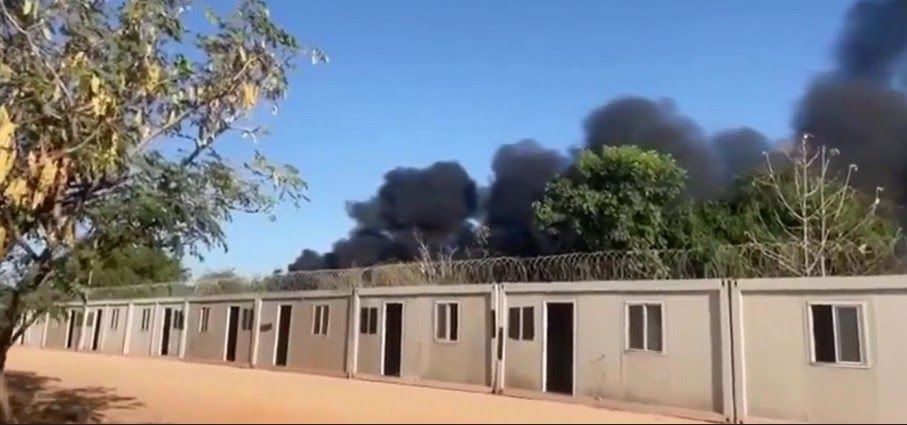
Drones struck key areas including the airport and military positions in Khartoum, signalling a shift in tactics in the war between the Sudanese Armed Forces and the Rapid Support Forces (RSF).
The strikes underscore how the conflict is evolving, with both sides increasingly relying on advanced weaponry to gain strategic advantage.
Witnesses reported explosions and fires near critical infrastructure, including areas around Khartoum airport, which has been a focal point in previous fighting. The renewed violence disrupts what had been a fragile lull, raising fears of intensified clashes in the coming weeks.
The use of drones highlights a broader transformation of the conflict, where precision strikes are being deployed to target supply routes, military bases, and strategic facilities.
This escalation could prolong the war and deepen the humanitarian crisis, which has already displaced millions and strained neighbouring countries.
Amid the rising tensions, the conflict has taken on a regional dimension, with Sudanese authorities making accusations against neighbouring Ethiopia. Sudan has recalled its ambassador to Ethiopia, El-Zein Ibrahim Hussein, after accusing Addis Ababa of orchestrating the drone attacks.
Sudan's Foreign Minister Mohi El-Din Salem said in a statement on Tuesday that the ambassador would be recalled for consultations and that his country is "ready to enter into an open confrontation with Ethiopia."
"The drones that attacked Sudanese facilities yesterday (Monday) were launched from Ethiopia's Bahir Dar Airport," he said.
Sudan has the legal right to respond to the "aggression" in the manner it deems appropriate, he added. "We do not seek to initiate aggression against any country, but whoever attacks us will be responded to."
Asim Awad Abdelwahab, spokesperson of the Sudanese Armed Forces, said in a statement that the armed forces "will respond twice as hard," noting that the army has "confirmed information regarding Ethiopia's participation in the aggression against Sudan."
"Our armed forces are fully prepared to deal with any threat in a manner that preserves the dignity, sovereignty and security of the nation," he said.
Meanwhile, Addis Ababa has firmly rejected the claims. In a strongly worded statement, Ministry of Foreign Affairs of Ethiopia dismissed the allegations as unfounded. “Ethiopia has strongly rejected what it described as ‘baseless accusations’ made during a recent joint press conference by the Sudanese Armed Forces, Sudan’s Foreign Minister, and military spokesperson,” the statement said.
Ethiopia reiterated that it maintains longstanding ties with Sudan and has no interest in destabilising its neighbour.
Instead, it accused Sudanese military actors of ignoring other dynamics within the conflict, including the alleged presence of Tigray People’s Liberation Front (TPLF) elements operating within Sudan.
According to the statement, such activities are “a matter of public record,” adding that there is what it described as credible evidence suggesting Sudan has become a base for anti-Ethiopian forces. Addis Ababa further claimed that the accusations levelled against it are being driven by external actors pursuing what it termed a “nefarious agenda.”
Despite the diplomatic tensions, Ethiopia sought to strike a conciliatory tone, emphasising its commitment to peace and regional stability. The government called for an immediate end to hostilities in Sudan, stressing that “there is no military solution to the ongoing civil war.”
It urged all parties to agree to a humanitarian truce, followed by a ceasefire and an inclusive political process. The statement emphasised the need for “an independent, inclusive, and transparent civilian-led political dialogue aimed at restoring peace and civilian rule in Sudan.”
The developments point to a conflict that is not only intensifying internally but also beginning to draw in regional actors through accusations and counter-accusations.
With drone warfare adding a new layer of complexity and diplomacy becoming increasingly strained, the risk of broader instability in the Horn of Africa is rising.
For now, the situation in Khartoum remains volatile, with the latest attacks serving as a stark reminder that the path to peace in Sudan remains uncertain, and increasingly entangled in regional geopolitics.
Since mid-April 2023, the Sudanese Armed Forces and the Rapid Support Forces have been engaged in a war that has killed tens of thousands and displaced millions of people inside Sudan and abroad, according to international estimates.
Until the international community and regional bodies move beyond issuing statements of concern and address the supply chains fueling this high-tech slaughter, the skies above Sudan will continue to rain terror upon those simply trying to live their lives.