The Independent Electoral and Boundaries Commission has told Parliament it needs Ksh74 billion to run a free, fair, and credible 2027 General Election, setting up a funding standoff with the National Treasury.
IEBC says the figure is the minimum required to overhaul technology, register new voters, and secure ballot materials, but Treasury has only approved Ksh41 billion, leaving a Ksh22.9 billion hole.
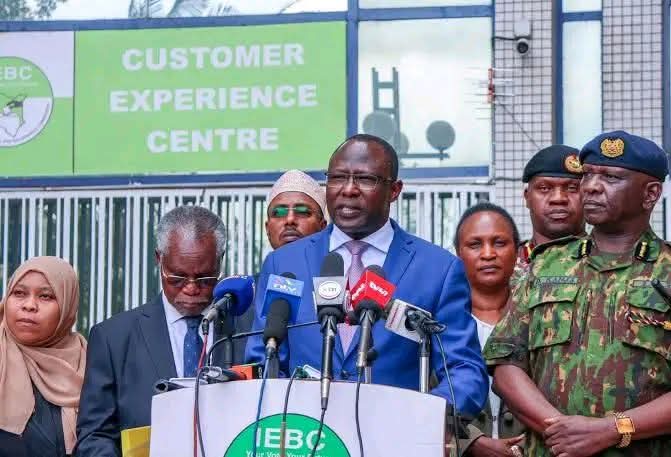
Speaking before the National Assembly’s Justice and Legal Affairs Committee in Naivasha, IEBC Chairperson Erastus Ethekon said timely and sufficient funding is critical to protecting the integrity, efficiency and credibility of Kenya’s electoral process as preparations begin for the 2027 polls.
Acting CEO Moses Sunkuli broke down the budget, saying it is anchored on the Commission’s 2026/27 to 2028/29 Medium Term Expenditure Framework and covers five sub-programmes: administrative support, voter registration and operations, voter education, ICT, and delimitation of electoral units.
The single largest item is Ksh7.04 billion to buy 45,352 new Kenya Integrated Election Management System kits, plus Ksh2.6 billion to upgrade and maintain election technology.
IEBC says the current KIEMS kits, procured for the 2017 elections, will be 10 years old by 2027 and are obsolete.
Ballot papers need Ksh4.6 billion and other election materials another Ksh2 billion.
Parliament pushed back. JLAC Chair Hon. George Murugara, MP for Tharaka, questioned why the Commission had not prioritised ballot papers in its first tranche of requests.
"When you get money you don’t allocate it to critical areas,” Murugara said.
MPs also flagged Kenya’s rising election costs: the 2022 poll cost Ksh44.18 billion, or Ksh2,200 per voter, compared to a global average of Ksh646. Ghana spends $0.07 per voter, Rwanda $0.5, Uganda $4, and Tanzania $5.16. Sunkuli insisted Ksh63 billion is the bare minimum and the commission cannot go below that.
Beyond money, the Commission wants Parliament to amend the Elections Act and Elections Offences Act to have more teeth to bite those who breach the code of conduct. It is also seeking changes to the Elections Campaign Financing Act to restrict foreign donations and clarify permissible donors.
Ethekon said the proposals came from the 2022 Post-Election Evaluation report after stakeholder engagements on what worked, what did not work well and generate proposals for legal review.
CEO Marjan Hussein Marjan previously noted IEBC will work with the National Police Service, Treasury, Parliament, and Judiciary to deliver credible polls, adding that results announced at polling centres will be final. With 2026 set to lock in political alliances, institutional reforms, voter behaviour and the economic mood before the 2027 vote, IEBC says underfunding risks credibility.
For now, the Commission has a plan but not the cash. Whether MPs bridge the Ksh22.9 billion gap will determine if 2027 repeats 2022’s logistical scramble — or sets a new standard for cost and credibility.