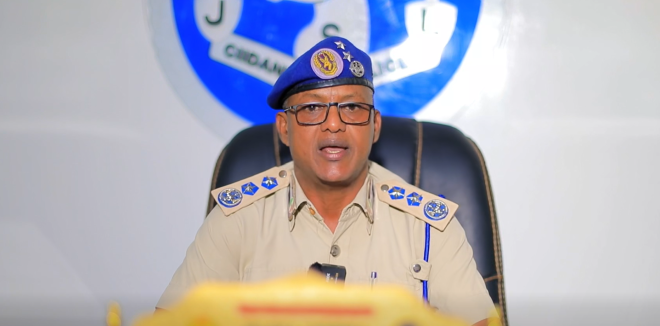
Somaliland police have intensified monitoring of social media users posting content authorities describe as harmful to public security and stability.
Police Spokesman Abdiasis Sheikh Ismail in a statement posted on facebook, stated that “There are people spreading things on social media that are not good for security, and we are specifically monitoring them,”.
The self-proclaimed state of Somaliland recorded the second-highest number of press freedom violations in the Horn of Africa during Q2 2025, according to the International Press Institute. Most cases involved arbitrary arrests and detentions of journalists for content published on personal Facebook pages.
On May 29, 2025, police in Erigabo arrested journalist Warsame Kaafi for a May 14 Facebook post interviewing a woman who alleged assault by the chairman of the local Appeals Court. Kaafi was detained for four days and released without charge.
In Laascaanood, journalist Abdiqani Abdirahman Mohamed was arrested on March 26, 2026, for publishing an interview on political tensions. He was later released after being forced to apologize. Another journalist, Abdirisaq Abdirahman “Kobciye”, was detained in February 2026 and compelled to delete a video report.
Somaliland officials have justified the actions under national security grounds. In June 2025, authorities suspended two privately-owned TV stations, Horyaal 24 and Eryal TV, for allegedly “airing information that is a threat to national security”. The ban was lifted after what authorities called a “mutual understanding” with the stations.
Police say the monitoring is aimed at controlling narratives around insecurity, avoiding public embarrassment, and concealing security weaknesses amid Al-Shabaab attacks. Critics argue the real goal is to limit debate on politically sensitive issues like constitutional changes and election models.
The Somali Journalists Syndicate documented 36 journalists detained in Somaliland in 2025, particularly in Erigabo, Sanaag, and Awdal where inter-clan tensions were high. Nearly 90% of those arrested were released without charge after spending hours or days in detention.
SJS says police were responsible for about 91.2% of all recorded media freedom violations in 2025 across Somalia and Somaliland. The group notes that violations spike during politically sensitive periods, such as May and September 2025.
Amnesty International and local press groups say the crackdown violates Somaliland’s constitution, which guarantees freedom of expression.
“The increase in harassment and intimidation of government critics we are witnessing underscores the intolerance that the current government displays towards diverse opinions, and their lack of regard for human rights protections,” said Joan Nyanyuki, Amnesty International’s Director for East Africa.
SJS has called for an end to arbitrary arrests, equipment confiscation, and forced deletion of journalistic material, and urged human rights training for police.
The latest remarks by Somaliland police may raise debate over the balance between protecting public security and safeguarding freedom of expression on social media.
So far, Somaliland police have not released new names or the number of people specifically being monitored in connection with social media posts.
For Somaliland authorities, social media monitoring is framed as a security measure in a volatile region. For journalists and rights groups, it’s part of a pattern of censorship that chills free expression. With elections and constitutional debates ongoing, the tension between security and press freedom is unlikely to ease soon.