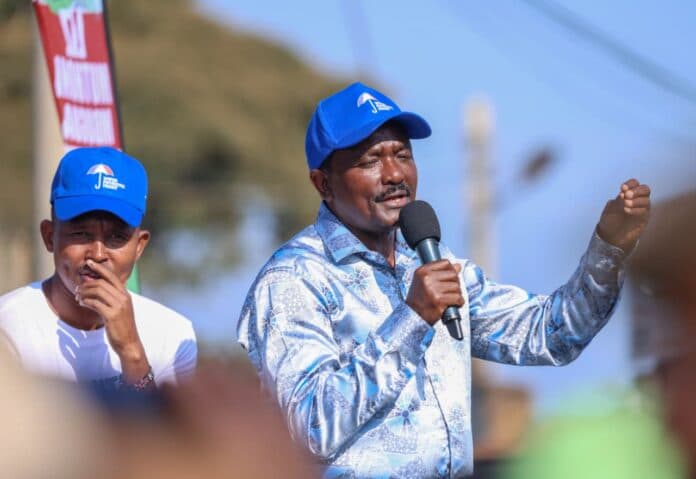
People’s Liberation Party leader Martha Karua has thrown her weight behind the nationwide matatu strike, framing it as a legitimate response to what she calls an “unmitigated disaster” in Kenya’s cost of living.
Her statement on Monday, May 18, 2026, came as matatu operators, boda boda riders and truck drivers kept vehicles off the road to protest EPRA’s May 14 fuel review that pushed diesel to KSh 242.92 per litre and petrol to KSh 214.25 in Nairobi.
Karua said transport operators and commuters are not striking to cause chaos, but because they “can no longer afford to breathe under this administration’s punitive fuel levies.” She accused the Kenya Kwanza government of abandoning its mandate to shield citizens from economic collapse, arguing that excessive taxation, poor fiscal discipline and misplaced priorities have left ordinary Kenyans bearing the brunt of global oil shocks.
Her remarks directly linked the strike to broader failures in economic management, noting that rising fuel prices are now spilling into food costs, household essentials and the cost of running small businesses.
The strike has paralyzed public transport across Nairobi, Mombasa, Nakuru and Kisumu. Thousands of commuters were stranded as matatus stayed parked and protesters barricaded roads with stones and burning tyres.
In Kiambu, clashes between protesters and police were captured on video, while in Nairobi the city center sat unusually quiet compared to the usual morning congestion. Schools advised parents to keep children home, and many switched to online learning to avoid the risk of learners being stranded.
Karua’s backing gives political weight to a protest that began as an industry action by the Transport Sector Alliance. The Alliance called the shutdown after EPRA raised diesel by 23.5% and petrol by 8% following weeks of volatility in the Strait of Hormuz.
Kenya imports nearly all its fuel from the Gulf, and the Iran-Israel conflict has raised freight and insurance costs while weakening the shilling against the dollar. Without the April and May subsidies, diesel would have traded at KSh 279.58 per litre, according to EPRA data.
Treasury CS John Mbadi has been the government’s public face during the crisis. He told NTV the strike was “completely uncalled for” even though petroleum prices had risen, arguing that the government must balance relief with macroeconomic stability.
Mbadi said the Petroleum Development Levy fund is depleted and the state is carrying over KSh 20 billion in debts to retailers, leaving little room for another round of subsidies. He confirmed that the finance and energy ministries hoped to meet operators on Monday, but warned that fiscal constraints limit what can be offered.
Karua took aim at that position, questioning why citizens are asked to wait for relief while taxes are collected without delay. She urged authorities to engage stakeholders in the transport sector and implement immediate policy interventions to stabilize fuel prices and restore normalcy.
For her, the crisis reflects a governance problem as much as a global one. “Our transport operators and daily commuters are not striking because they want to disrupt the peace,” she said, “they are striking because they can no longer afford to breathe under this administration’s punitive fuel levies.”
Her statement also pointed to the wider political context. Karua described the situation as a national economic crisis driven by excessive taxation and lavish public spending, and said peaceful mass action remains a legitimate democratic tool when citizens face prolonged distress. She called on institutions to act with urgency and empathy, warning that failure to address the fuel crisis risks deepening inequality and public frustration.
The opposition’s support comes as inflation hit 5.6% year-on-year in April, the fastest increase in seven years, with fuel identified as the main driver. Fitch has raised Kenya’s 2026 inflation forecast to 5.5%, citing the Middle East conflict. For matatu owners, the math is stark. Association chairman Albert Karakacha has said repeatedly that any sharp increase in diesel is passed directly to passengers through higher fares, and that without subsidies the common mwananchi suffers.
Karua’s intervention places the PLP squarely alongside the protesters at a moment when the government is under pressure to show it is listening. Whether that translates into policy shift will depend on what comes out of the talks Mbadi promised and whether the administration is willing to revisit VAT relief or the fuel levy structure before the next EPRA review.