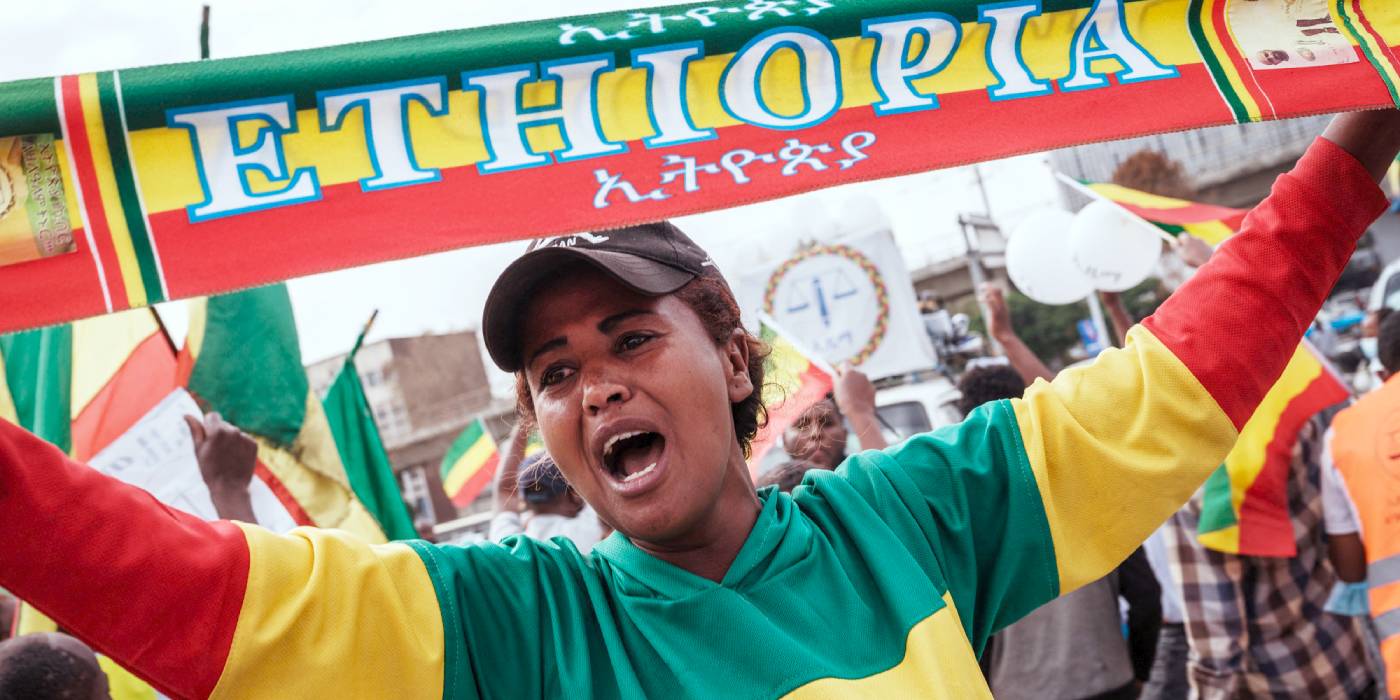
Africa’s second most populous country, Ethiopia, has completed preparations for its seventh general election, with the National Election Board of Ethiopia (NEBE) confirming that all logistics, training, and security arrangements are in place ahead of voting day.
The election on Monday June 1, 2026, will see approximately 50.5 million Ethiopians cast ballots for federal and regional parliament seats in a poll that will test the country’s democratic institutions, its ethnic federalism model, and Prime Minister Abiy Ahmed Ali’s reform agenda.
NEBE Chairwoman Birtukan Mideksa said the board has distributed materials to polling stations nationwide and trained over 200,000 election officials to manage the process. More than 50.5 million eligible voters were registered, with biometric verification systems installed at polling stations to reduce fraud. Over 40,000 polling stations have been set up across Ethiopia’s 12 regional states and two chartered cities. The federal government, in coordination with regional authorities, has deployed security forces to protect voters, polling centers, and ballot transport.
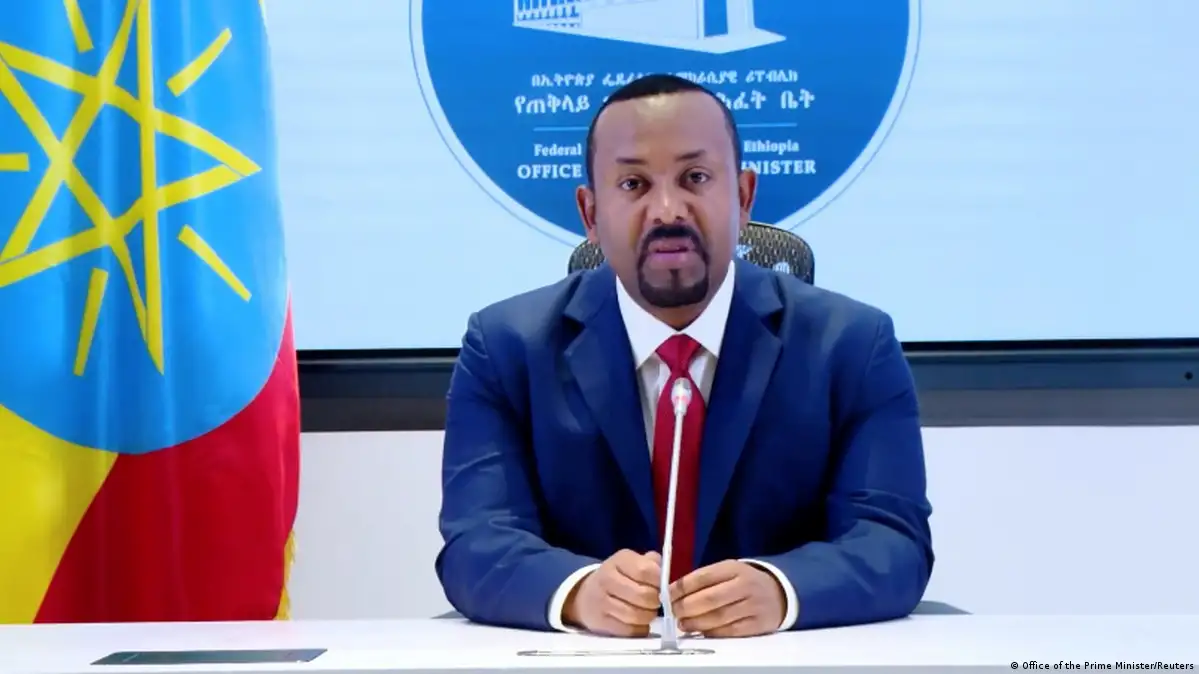
Prime Minister Abiy Ahmed is seeking to extend his leadership through these elections by maintaining a parliamentary majority with his Prosperity Party. Ethiopia’s Federal Parliamentary Assembly is bicameral. The 547-member House of People’s Representatives (HPR) is directly elected and selects the prime minister. The 112 members of the House of the Federation (HoF), Parliament’s upper house, are indirectly elected by regional councils.
While Abiy was re-elected in 2021 in a landslide, that process was undermined by conflict, delayed elections, and restricted political competition. The 2026 vote is framed by his government as a consolidation of reforms, but also takes place against a backdrop of lingering instability in several regions.
Abiy has fashioned an image as a reformer and modernizer to his supporters. Upon taking office in 2018, he facilitated the release of thousands of political prisoners and opened political and civic space in a country that had known only various versions of authoritarian government. The Ethiopian Human Rights Commission was established to provide independent oversight and has issued reports critical of the administration, including during the Tigray conflict. The Ethiopian National Dialogue Commission, created in 2021, was tasked with facilitating broader dialogue on identity, state formation, and the federal system.
On the economic front, Abiy has championed privatization of state-owned enterprises in telecommunications, aviation, and energy. The completion of the 6,450 MW Grand Ethiopian Renaissance Dam (GERD) in 2025 dramatically expanded the country’s energy capacity. Macroeconomic reforms, including freeing the exchange rate, have helped stimulate exports and attract foreign direct investment. Per capita incomes have grown by 22 percent since 2018, though they remain under $1,000 per year.
Critics contend that political space under Abiy has diminished in recent years. Journalists regularly face intimidation or arrest for critical reporting. The Ethiopian Media Authority revoked the license of prominent outlet Addis Standard ahead of the elections. An estimated 43 journalists were detained over the past year, mostly while reporting from conflict-affected regions of Tigray, Amhara, and Oromia. Several international media outlets have been prevented from reporting on conflict-related matters.
In April 2025, the Prosperity Party-dominated Parliament passed legislation that increased journalists’ liability for inaccuracies and shifted media oversight from a semi-autonomous regulator to a political appointee of the prime minister. The World Press Freedom Index ranks Ethiopia 148th out of 180 countries.
Parliament also adopted draft legislation in June 2025 for a Civil Society and Media Act that would grant the government sweeping powers to limit civil society organizations, especially those focused on governance oversight. Over the past year, authorities suspended five prominent human rights groups. At times, even the work of the Ethiopian Human Rights Commission has been sidelined.
Despite these challenges, 48 opposition parties are accredited for the 2026 elections. A revision to the Electoral, Political Parties Registration and Electoral Code of Conduct law passed by the HPR in July 2025 lowered the threshold for party participation in parliament from 15 percent to 10 percent, creating more opportunity for opposition representation. Numerous opposition parties have formed coalitions to expand national reach as they attempt to grow beyond 55 seats in the HPR.
Their platforms focus on strengthening democratic processes, elevating peacebuilding, and deepening national unity. But their ability to compete is constrained by the security environment and media restrictions.
Meanwhile, the electoral body announced that elections would not take place in 46 electoral districts in conflict-affected Amhara and Tigray regions, citing insecurity and political tensions.
NEBE said voting would not occur in eight of 138 districts in northwestern Amhara because of “unfavorable conditions” amid clashes between militia groups and the army. The board also suspended voting in 38 districts in Tigray, where tensions remain high between the federal government and the Tigray People’s Liberation Front (TPLF).
The exclusion of thousands of voters in the north raises questions about the election’s legitimacy and leaves unresolved grievances that could fuel future instability.
Ethiopia’s 2026 elections are also shaped by complex regional dynamics. With East Africa’s largest economy at roughly $150 billion, Ethiopia is seeking to diversify reliance on Djibouti’s ports, through which 90 percent of its trade flows. Concerns that Ethiopia may establish a port in Berbera, Somaliland, or seek access to Assab in Eritrea have raised tensions. Eritrea, which still has troops in Tigray, has made overtures to the TPLF. Egypt, unhappy about GERD, has elevated support to Somalia.
Gulf rivalries also play out in Addis Ababa. The United Arab Emirates has committed $2.3 billion in financial support, renewable energy, and infrastructure, including a $400 million road project to the Port of Berbera. Reports suggest Ethiopia has become a staging ground for Sudan’s Rapid Support Forces, while ties deepen between the Sudan Armed Forces and Eritrea. Saudi Arabia is increasing its presence in neighboring Djibouti.
Ethiopia’s 2026 elections represent a multitiered balancing act. With limited experience in competitive elections, the practices employed will shape electoral norms for years. Persistent fighting in parts of the country creates opportunities for spoilers and could suppress turnout. The vote must balance greater enfranchisement within an ethnic federalism model that simultaneously accentuates polarization.