Former Deputy President Rigathi Gachagua has called for a major overhaul of the 2026/27 Budget Estimates and Finance Bill, urging Parliament to reject the proposals in their current form.
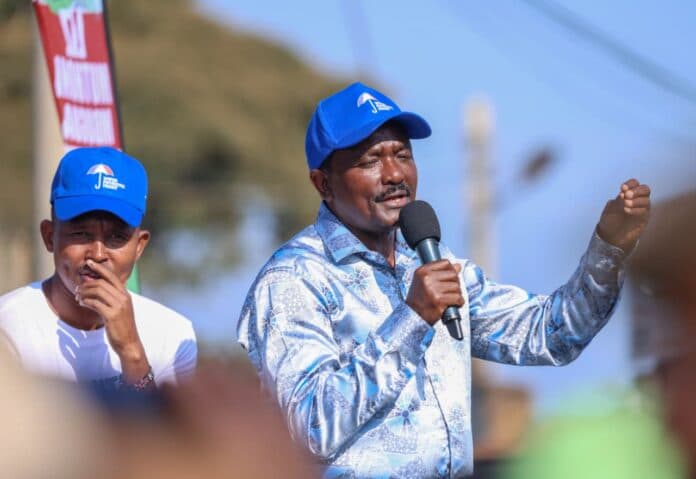
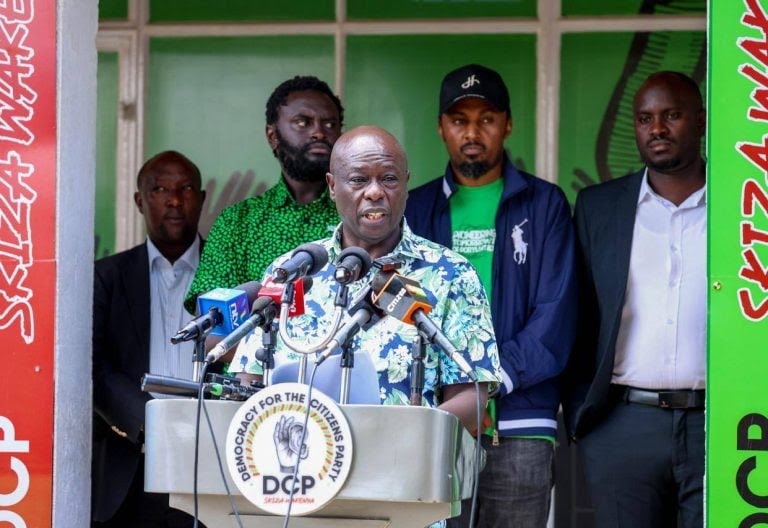
Speaking Friday, June 5, 2026 during a “State of the Nation Address: The People’s Budget Estimates & Finance Bill” forum under the Democracy for the Citizens Party, Gachagua said the fiscal plan fails productive sectors and ordinary Kenyans, and must be rewritten to prioritize agriculture, healthcare, realistic revenue targets and deep cuts in administrative spending.
His intervention comes as MPs prepare to debate the Sh4.78 trillion estimates. With Kenya’s public debt at about Ksh 13 trillion and a fiscal deficit of roughly Ksh 1.144 trillion, Gachagua argues the budget should shift money from bureaucracy to farms, hospitals and jobs.
“Agriculture receives only 2.0 percent of the national budget, despite employing the majority of Kenyans and driving food security,” he noted.
He wants that share raised gradually to at least 6 percent, about Ksh 300 billion, as a step toward the 10 percent Maputo Declaration target African leaders committed to in 2003. The money, he said, should go to irrigation, extension services, fertilizer access, value addition, storage facilities, aggregation centers and better market systems.
For a country where farming employs most households, he argued, underfunding agriculture keeps food prices high and rural incomes low.
Health got the same treatment. Gachagua said the sector receives about 3.5 percent of the budget, well below the 15 percent Abuja Declaration target. He demanded an increase to at least 9.5 percent to strengthen county hospitals, improve staffing and ensure essential medicines are available.
With counties still struggling with drug stock-outs and doctor shortages, he framed higher health funding as non-negotiable.
The former DP also attacked what he called excessive administrative expenditure. Public administration consumes about Ksh 354.9 billion in the current estimates, he said.
Gachagua proposed a minimum 30 percent reduction in non-essential costs including travel, hospitality, consultancies and duplicated agencies.
“Those savings should be redirected to agriculture, health, education and employment creation,” he said.
The proposed cuts target the “soft” side of the budget that rarely delivers visible services but consumes large sums annually. If Parliament adopts the 30 percent cut, billions would shift from State House travel and consultant fees to productive sectors Gachagua says actually grow GDP.
Gachagua also questioned Treasury’s revenue projections, noting that for three consecutive years actual tax collection has averaged about 80 percent of targets while budgets keep relying on higher estimates. That mismatch, he said, forces government to introduce new taxes and levies mid-year to fill the gap, piling pressure on households and businesses.
He called for more realistic revenue forecasting aligned with economic performance to improve budget credibility and transparency.
“Budgets should be based on verifiable economic data,” he said, echoing earlier criticism that inflated targets are used to justify fresh taxation in the Finance Bill.