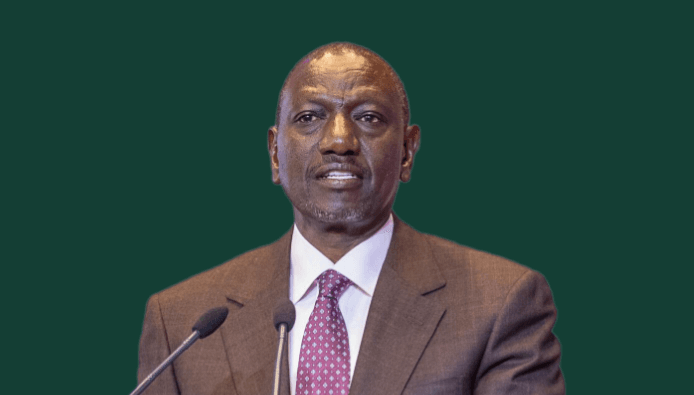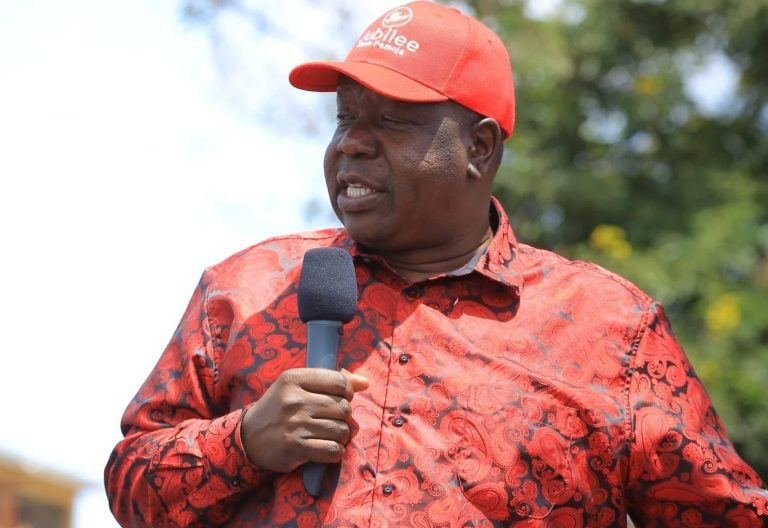
Former Interior Cabinet Secretary Fred Matiang’i has come out strongly against the High Court’s decision in former Deputy President Rigathi Gachagua’s impeachment case, calling the judgment logically inconsistent.
In a statement on Tuesday, Matiang’i went straight to the core contradiction he sees in the judgment, arguing that a court cannot declare constitutional rights were violated and in the same ruling allow the flawed process to produce a binding outcome.
“The ruling in Hon. Gachagua’s impeachment case makes no sense to me. If the court finds that his constitutional rights were infringed, it cannot, in the same breath, allow the outcome of that flawed process to stand,” Matiang’i said.
The former CS framed the issue as one of legal principle rather than politics. His argument is, if a process is defective because it breaches the Constitution, then any product of that process should be invalidated. To do otherwise, he suggests, sets a dangerous precedent where procedural rights can be acknowledged but ignored when it’s politically inconvenient.
His remarks came after a three-judge bench of the High Court ruled on Monday that the impeachment process undertaken by the National Assembly and Senate was lawful and that the outcome remained valid under the Constitution.
Justices Eric Ogola, Freda Mugambi, and Antony Murima held that although concerns had been raised regarding parts of the process, the Constitution does not permit courts to reverse an impeachment once it has been completed and a new Deputy President has been lawfully appointed.
"The Constitution is the grundnorm, and where that grundnorm deliberately and clearly limits the power of the court, that limitation must be respected," the court said.
The court, however, found that Gachagua's rights to a fair hearing had been infringed during the Senate proceedings when his request for an adjournment on medical grounds was declined.
Despite the finding, the court said the violation could not invalidate the impeachment, arguing that doing so would create constitutional uncertainty and potentially result in two individuals claiming the office of Deputy President. As a remedy for the violation of his rights, the court awarded Gachagua Sh50 million in damages but declined to overturn the impeachment.
“We find that His Excellency Gachagua’s rights were infringed when the Senate refused to allow an adjournment. This violation constitutes both a vindication of his rights and a recognition of the constitutional infirmity in the process, but does not undo the impeachment itself, given the finality of Article 145(7) and the constitutional absurdity that would arise from dual incumbency,” the court ruled.
The court’s reasoning has now become the focal point of public debate. Legal analysts are split with some saying courts must defer to Parliament on political questions unless the breach is so grave it destroys the entire process, others argue that once a rights violation is proven, the remedy must be to undo the tainted outcome, not just note the error.
The former DP has announced he will challenge the decision at the Appeal Court and escalate the matter to the Supreme Court if need be.
“While we respect the ruling of the High Court, we totally and fundamentally disagree with the interpretation of the law and application of facts.” Gachagua said, adding that the court had ignored key constitutional protections, especially the right to a fair hearing.