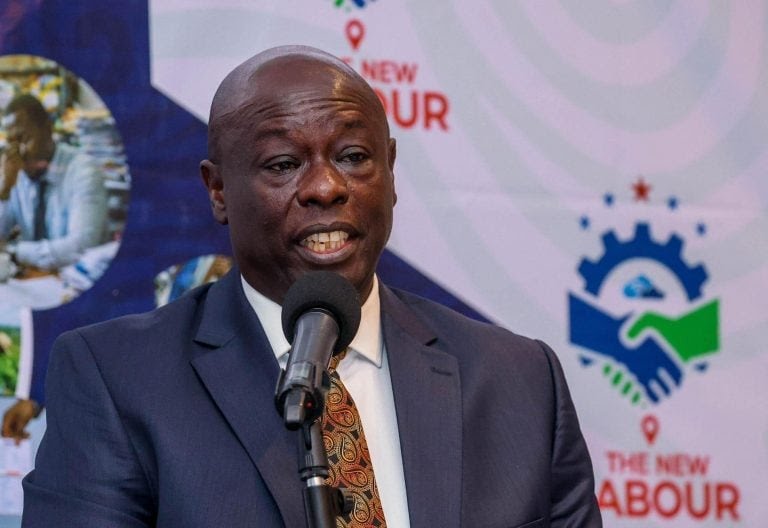
Former Deputy President Rigathi Gachagua has warned that the Social Health Authority (SHA) is on the verge of collapse, claiming that the scheme has not been working for the past four days.
Speaking during a press briefing on Wednesday, June 10, 2026, the former DP stated that the looming SHA failure could trigger a nationwide crisis in service delivery.
“I just want to say that a few months ago, I said SHA will collapse in six months, for the last four days the systems are down, that is a sign of collapse,” Gachagua stated.
His reference was to earlier remarks he made while speaking during a church event in Murang’a on April 19, 2026.
Back then, Gachagua alleged that the health scheme is financially unstable, citing liabilities of up to KSh98 billion.
“SHA will collapse in the next five months, and when it does, it will be one of the biggest corporate losses in Kenya’s history,” he said.
He further described the scheme as being in critical condition, stating that it was “in the ICU” last year and is now “a walking zombie”, raising concerns about its sustainability and ability to deliver services to Kenyans.
Gachagua urged key groups, including teachers and police officers, to reconsider their participation in the scheme. He claimed that some workers were compelled to join. He specifically called on teachers to push their union leaders to facilitate an exit from SHA, while urging police officers to consider returning to their previous cover under APA.
It wasn't his first criticism of the scheme either. A month earlier, he alleged large-scale financial mismanagement in the establishment of the scheme, claiming that up to Sh103 billion may have been lost during its rollout.
Speaking on March in Wote, Makueni County, Gachagua said he had obtained documents detailing what he described as a “carefully orchestrated scheme” to divert public funds. He further accused Health Cabinet Secretary Aden Duale of being linked to companies involved in the programme.
Gachagua also argued that the transition from the National Hospital Insurance Fund (NHIF) to SHA created an opportunity for misuse of funds. According to him, while the NHIF had proposed a budget of Sh800 million for reforms, the introduction of SHA saw expenditure rise dramatically.
“Only about Sh1 billion went into setting up the system,” he claimed. “The remaining Sh103 billion was lost through irregular dealings.”
However, Duale has strongly denied the accusations, insisting that no evidence links him to the companies in question. In a statement issued to newsrooms, he challenged Gachagua to produce official records to support his claims.
“I have repeatedly asked him to present a CR12 document from the Business Registration Service,” Duale said. “That document would clearly show the ownership of the company he alleges I have shares in. His failure to provide it speaks volumes.”
Duale further rejected suggestions that individuals associated with the firms were acting on his behalf, dismissing the claims as baseless and discriminatory. He criticised what he described as attempts to link him to businesses purely on ethnic grounds.
“There are legitimate Kenyan entrepreneurs involved,” he stated. “To suggest otherwise without evidence is both misleading and harmful.”
The Social Health Authority is part of the government’s broader healthcare reform agenda aimed at expanding access to medical services. However, the transition has faced criticism from sections of the public and leaders, with concerns raised over implementation challenges, funding, and service delivery.