United States President Donald Trump has refuted reports that the federal government plans to disburse financial support to Iran as part of the recent peace settlement.
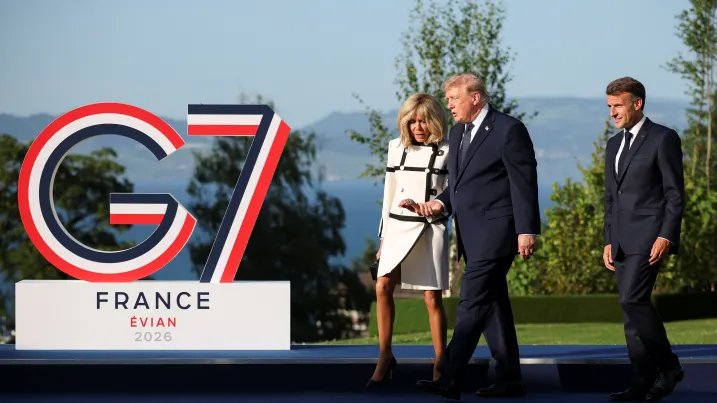
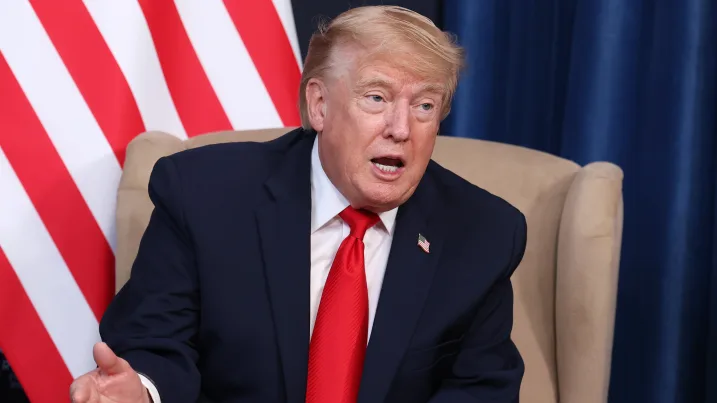
Speaking on Tuesday, June 16, from the G7 summit in France, Trump ruled out the transfer of American taxpayer funds to Tehran.
Earlier on Monday, reports emerged that Iran could potentially gain access to a $300 billion reconstruction fund as part of its peace agreement with the U.S.
However, Trump dismissed the possibility of Iran receiving the large sum of money from the U.S. under the peace agreement reached Sunday.
“We are not investing any money in Iran, by the way, and with that rumor got out there yesterday was ridiculous,” Trump told reporters.
“We have the right to go in some day and do, if I want to do something, or if somebody wants to do something, but we are not investing any money.” he added.
The New York Times reported the memorandum of understanding signed on Sunday included a $300 billion reconstruction fund for Iran, citing an Iranian official and a diplomat.
Vice President Vance said the “Gulf Coast Coalition” would be responsible for its funding, apparently referring to the Gulf Cooperation Council, which includes Bahrain, Kuwait, Oman, Qatar, Saudi Arabia, and the United Arab Emirates.
According to multiple reports on the deal, the U.S. will waive sanctions on Iran’s oil exports as part of the initial deal to reopen the Strait of Hormuz, providing a badly needed economic lifeline before negotiations begin over the future of its nuclear program.
Iran could also gain access to funds frozen in overseas accounts if nuclear talks make progress.
Prior to the agreement reached Sunday, Vance insisted Iran would not receive any financial rewards up front.
“I’m seeing a lot of fake information about a potential deal to reopen the Strait and end Iran’s nuclear weapons program,” he wrote in a post on the social platform X on Friday.
“First, the Iranians are not receiving any cash, and no funds are being released for simply signing a deal or attending a meeting,” he continued.
“The deal is structured to ensure that the US and its allies concerns are prioritized, and that if the Islamic Republic of Iran meets its obligations, then economic benefits will flow to them and to the entire region.”
Iran and the situation in the Middle East will be one of the dominant talking points at the G7 summit, along with security for Ukraine, balancing economic growth disparity and the future of artificial intelligence.
Leaders from the wealthy Group of Seven countries, the U.S., the U.K., France, Germany, Canada, Italy and Japan, are gathering in the Alpine town for the summit, with representatives from the European Union also among those invited to attend.
European leaders have welcomed the agreement reached between Washington and Tehran, and will use the summit to push for clarity on the reopening of the Strait of Hormuz.