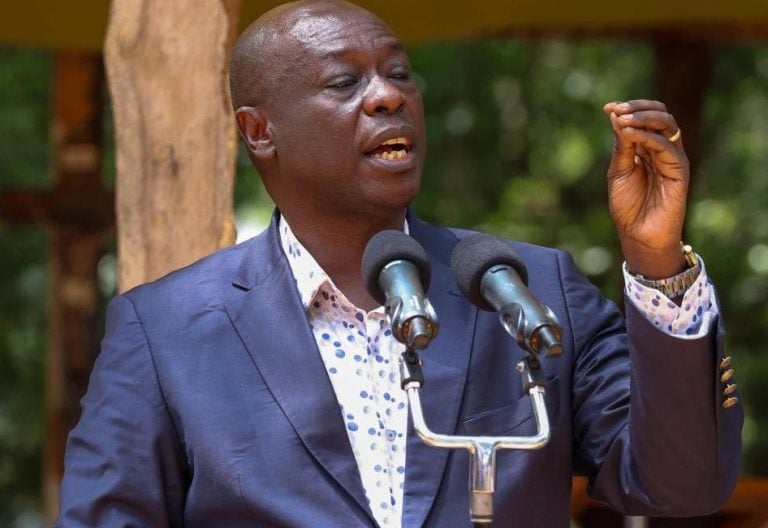
Former Deputy President Rigathi Gachagua has stepped up pressure on Members of Parliament ahead of the crucial vote on the Finance Bill 2026, calling the debate a defining political moment for the country and warning lawmakers against sitting out the decision.
In a statement posted on his official X account on Thursday, June 18, 2026, Gachagua urged MPs to reject the Bill and remain in the chamber to force a formal division vote.
“Today’s vote at the National Assembly for or against the 2026 Finance Bill is a defining moment for the people of the Republic of Kenya,” he stated.
Gachagua said the outcome would reveal where each legislator stands.
“At the end of the day, the people of Kenya will know whether their elected representative supports measures that oppress them more or cares for them.”
He warned that avoiding the vote amounted to taking a side.
“Those members who keep away from the vote and sit on the fence must be deemed to be against the people of Kenya,” he said.
“They must make up their mind to be with the people or against them. There is no neutral position when the welfare of the people of Kenya is at stake.”
The Finance Bill 2026 has already cleared Second Reading amid heated exchanges between Kenya Kwanza and opposition MPs.
Supporters describe it as a reform-driven law to improve tax administration and seal revenue leakages.
Critics argue it introduces hidden taxes that will quietly raise the cost of living, pointing to provisions on mitumba imports, rental income, mobile phones, and expanded data powers for the Kenya Revenue Authority.
The debate has revived memories of the 2024 anti-tax protests that forced President William Ruto’s administration to withdraw the Finance Bill 2024 after weeks of demonstrations led largely by Gen Z activists.
Several opposition leaders, including Gachagua and Wiper leader Kalonzo Musyoka, have tied the current debate to the anniversary of those protests, set to be marked on June 25.
Inside Parliament, opposition MPs have been vocal. Kathiani MP Robert Mbui opposed the Bill outright.
“I rise to oppose this draconian, punitive, knee-on-the-neck-of-Kenyans Finance Bill 2026,” Mbui said.
He criticized proposals that would allow KRA to use third-party data to determine tax liabilities, arguing the move could unfairly target businesses and inflate assessments without due process.
Kiharu MP Ndindi Nyoro questioned why promises made by the President had not been written into law.
“We have seen the Head of State talking about the exemption of PAYE for Kenyans earning below Ksh30,000; that has not been captured here,” Nyoro said.
Mbui raised the same concern, asking why the pledge had been left out of the Bill.
Another flashpoint is the treatment of mitumba. Critics say shifting second-hand clothes from zero-rated to tax-exempt VAT status would deny traders the ability to claim input VAT, passing higher costs to consumers.
Bumula MP Wanami Wamboka warned that the changes bury price increases in technical language.
“My single biggest problem with this Bill is that it hides price increases inside technical tax language,” he said.
Gachagua’s push for a division vote follows complaints during Second Reading that a request for a recorded vote was declined, leaving no official tally of who supported or opposed the Bill.
A division would force a headcount, putting MPs on record ahead of the 2027 election cycle.
Kenya Kwanza leaders maintain that detailed scrutiny happens at the Committee of the Whole House, where amendments are introduced and each clause is voted on.
Majority Leader Kimani Ichung’wah has insisted the process is following Standing Orders and that Second Reading dealt only with the Bill’s general principles.