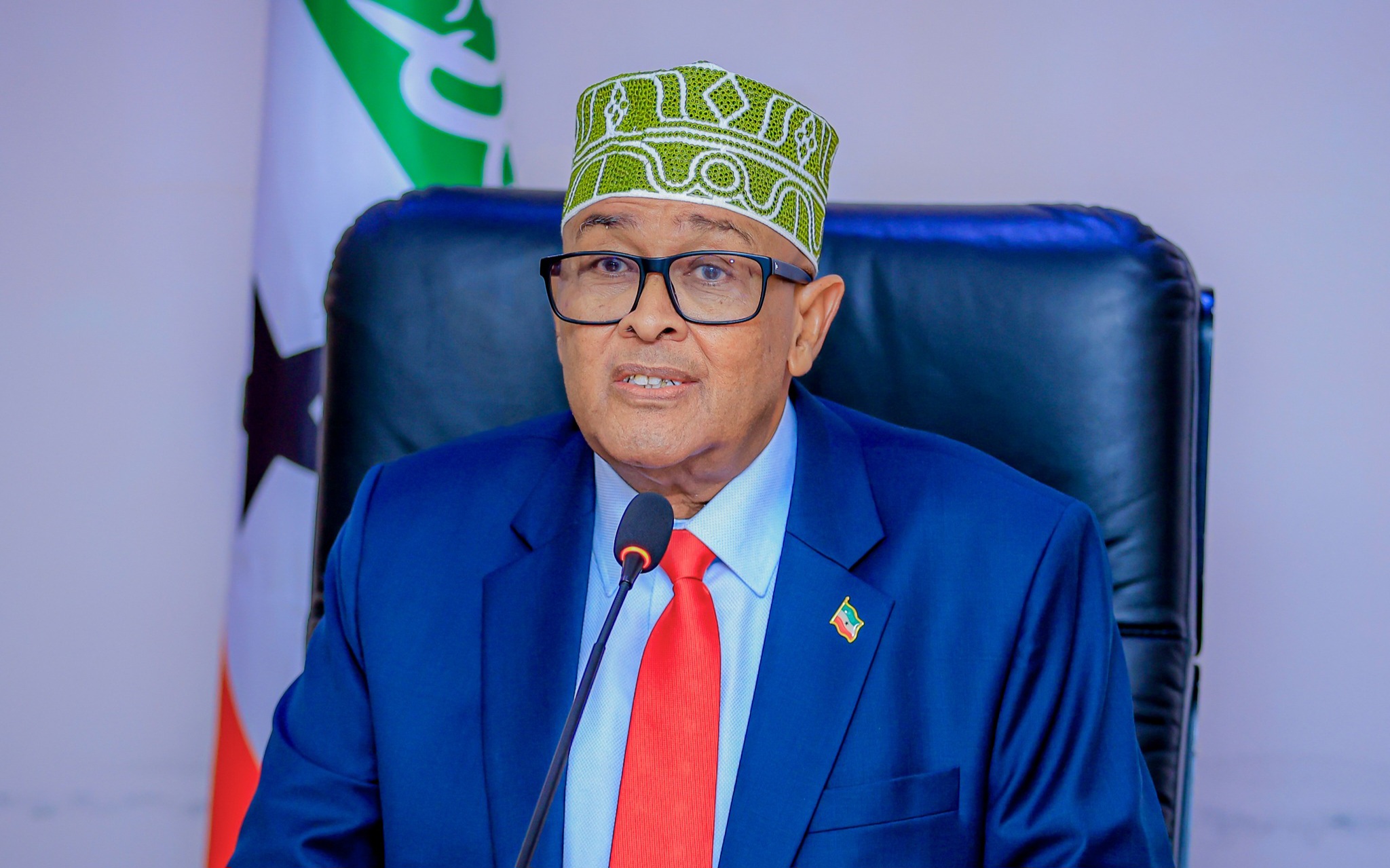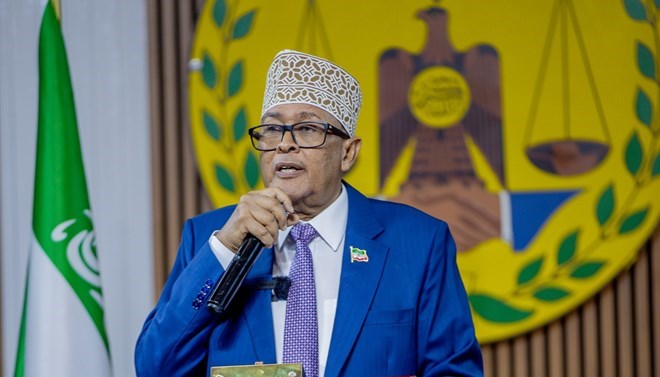
Somaliland President Abdirahman Mohamed Abdullahi Irro says there are no plans at present for Israel to establish a military base in Somaliland, but he is not closing the door on the possibility in the future.
In an interview with a local station, President Irro was asked directly about the prospect of an Israeli base in Somaliland. “Not now… I cannot rule it out,” he said, summarizing his position. The remarks have reignited debate over Somaliland’s foreign policy trajectory and its potential role in Red Sea security.
The president’s comments stop short of confirming any negotiations, but the refusal to dismiss the idea outright has drawn attention from regional governments, analysts, and security experts given Somaliland’s strategic position on the Gulf of Aden.
Much of the focus is on the Port of Berbera, which sits along vital shipping lanes linking the Red Sea, the Gulf of Aden, and the Indian Ocean. Berbera occupies a strategically important position for maritime security, trade, and naval logistics. The port has been modernized in recent years under a concession with DP World, and it already hosts a UAE military facility at the adjacent airport.
Since late 2023, Yemen’s Houthi movement has launched multiple attacks on vessels it claims are linked to Israel, raising the stakes for security along the Red Sea corridor. The Bab el-Mandeb Strait, a chokepoint just north of Somaliland, handles roughly 12% of global trade. Any foreign military presence near the strait is viewed through the lens of that threat environment.
Analysts say Berbera offers deep-water access, a long runway, and proximity to key sea lanes, assets that would appeal to any external power seeking to protect shipping or project influence.
“The geography speaks for itself,” said a Horn of Africa security researcher. “Whoever has a footprint in Berbera has leverage over Red Sea traffic.”
The Somali federal government and several regional experts have previously warned that an Israeli military base in Somaliland could create new security tensions and instability in the Horn of Africa. Mogadishu does not recognize Somaliland’s 1991 declaration of independence and views any separate security deals as a violation of Somalia’s sovereignty.
Officials in Mogadishu have not formally responded to Irro’s latest remarks, but past statements have cautioned external actors against entering bilateral defense arrangements with Hargeisa. Neighboring states, including Djibouti and Ethiopia, are also monitoring developments closely. Djibouti already hosts bases for the U.S., China, France, and Japan, and any shift in the regional security balance would affect them directly.
Security analysts warn that an Israeli presence could draw Somaliland into the broader Israel-Iran rivalry playing out in the Red Sea, potentially making it a target for Houthi attacks or proxy actions. Others argue that international partnerships could bolster counter-piracy, counter-smuggling, and maritime domain awareness in a corridor that has seen repeated disruptions.
Somaliland has not announced any official plans to host an Israeli military base so far. President Irro’s statement that the idea is not being considered now, but cannot be ruled out in the future, has intensified discussions about Hargeisa’s foreign policy direction.