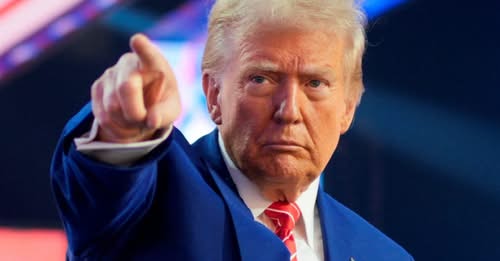
United States President Donald Trump and Iranian President Masoud Pezeshkian have signed a 14-point interim Memorandum of Understanding (MoU) aimed at halting the conflict between the two countries, even as President Trump warned that military action would resume if Tehran failed to honor the agreement.
The deal, signed digitally on June 17, 2026, seeks to de-escalate the regional war that erupted in February 2025 and create space for negotiations on a lasting peace settlement.
Both sides have agreed to a 60-day ceasefire window, but the accord remains fragile, with ongoing Israeli strikes in Lebanon and sharp rhetoric from Washington testing its durability.
Under the framework, both parties have agreed to a 60-day ceasefire period during which negotiations on a comprehensive treaty will take place. The agreement calls for the immediate cessation of military operations on all fronts, including hostilities involving Lebanon.
The memorandum also provides for the dismantling of the United States naval blockade on Iranian ports within 30 days.
In return, Iran has committed to guaranteeing safe passage through the Strait of Hormuz and waiving transit fees during the negotiation period.
The 14-point MoU covers troop disengagement, maritime access, and verification mechanisms, though the full text has not been released. Oil markets reacted quickly, with Brent falling as traders priced in restored Gulf shipping lanes.
Speaking in France after attending the G7 Summit, President Trump stressed that the agreement was conditional and dependent on Iranian compliance.
“If they don’t behave, we’ll go right back to dropping bombs right smack in the middle of their head,” Trump said.
He further explained that the agreement does not provide immediate permanent sanctions relief. Instead, Washington will issue temporary waivers to facilitate Iranian oil exports while closely monitoring Tehran’s adherence to the deal.
The U.S. will use the 60-day period to assess Iran’s conduct on Hormuz transit, proxy activity, and nuclear-related steps before discussing any broader sanctions rollback.
In a notable shift in policy, Trump softened his earlier position on Iran’s ballistic missile capabilities, saying it would be “unfair” to deny Tehran such weapons given the broader security dynamics in the region.
The comment marks a departure from long-standing U.S. demands for curbs on Iran’s missile program.
Analysts say it may be a concession to bring Tehran to the table, but it is likely to alarm Israel and Gulf states that view Iran’s missiles as a direct threat.
The MoU does not publicly ban or limit ballistic missile development, focusing instead on immediate de-escalation and maritime issues. Missile talks are expected during the 60-day negotiation phase.
Despite the signing of the agreement, tensions remain high. Israel has continued carrying out strikes against Hezbollah positions in Lebanon, prompting fresh warnings from Tehran.
Iranian authorities have cautioned that any continued Israeli military presence or attacks in Lebanon would be viewed as a violation of the U.S.-brokered arrangement, raising concerns over the durability of the fragile ceasefire.
The MoU calls for halting hostilities “on all fronts, including Lebanon,” but Israel is not a signatory.
The latest developments underscore the complex challenges facing efforts to restore stability in the Middle East as negotiators work toward a permanent settlement.