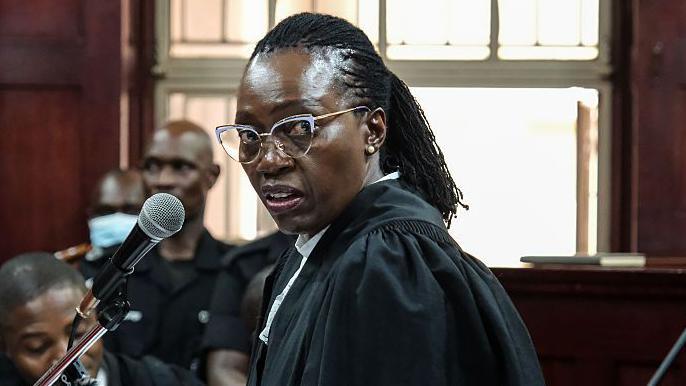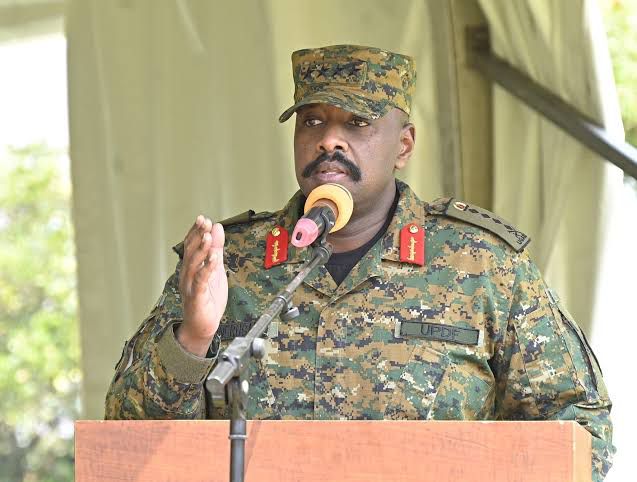
Uganda’s Chief of Defence Forces, General Muhoozi Kainerugaba, has publicly claimed responsibility for the deportation of Kenyan Senior Counsel Martha Karua, stating that the decision to bar her from Uganda was his and not President Yoweri Museveni’s.
“Do not blame my great father for this decision. I deported her myself. She's no longer allowed in our country,” Muhoozi wrote on X on Tuesday, a day after Karua was denied entry at Entebbe International Airport and flown back to Nairobi.
The statement is the first direct acknowledgment by a senior Ugandan official of the move against Karua, the People’s Liberation Party leader and former Kenyan Justice Minister.
Immigration authorities on Monday classified her as a “prohibited immigrant” and “persona non grata” without providing a public explanation at the time.
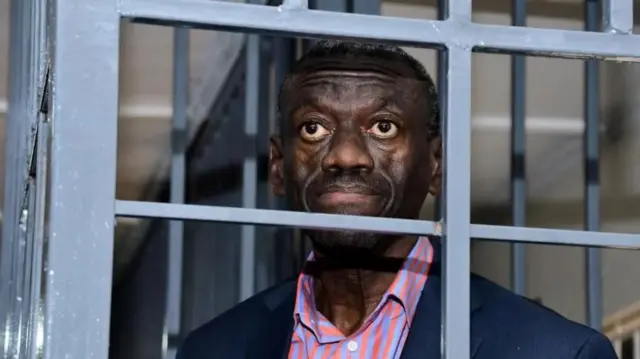
Karua had arrived in Kampala aboard a Kenya Airways flight with Law Society of Kenya President Charles Kanjama. Both were scheduled to attend court proceedings tied to the bail application of Ugandan opposition leader Dr Kizza Besigye.
She was also expected to join a legal team led by Kampala Lord Mayor Erias Lukwago, who is representing Besigye in a series of cases. Lukwago himself is facing treason-related charges and was due in court for his own bail hearing.
Kanjama was allowed into Uganda. He later questioned why one member of the legal team was admitted while another was turned away despite traveling for the same purpose.
Upon her return to Nairobi on Monday, Karua said Ugandan authorities interfered with Besigye’s legal defence. Speaking at Jomo Kenyatta International Airport, she said she was detained for several hours, had her phones confiscated, and was told she would not be allowed into the country.
“After being taken around offices, I was taken to a man who told me he's the principal immigration officer at the airport, and he told me that I would not be allowed to enter,” Karua said.
In a television interview, she recounted that she had initially been cleared through immigration before being recalled after what officials called an internal alert on her travel documents. The matter was escalated through several supervisors before a senior officer informed her that her entry had been prohibited.
She said she was kept under security watch in an airport lounge for several hours before being placed on a flight back to Nairobi.
“This is political persecution of Besigye, and it is interference with his defence,” Karua said, describing the decision as politically motivated.
Muhoozi’s claim of personal involvement marks a rare instance of Uganda’s military chief publicly asserting control over an immigration decision. Under Uganda’s Citizenship and Immigration Control Act, the power to declare a person a prohibited immigrant rests with the minister or immigration officers.
The General, who is President Museveni’s son, has previously used X to comment on regional politics and security matters. His post shifts focus from the civilian immigration directorate to the military leadership, drawing criticism from legal and political figures in Kenya and across the region.
The Law Society of Kenya had earlier called for clarity on the decision, saying it raised concerns “beyond the circumstances of a single individual.”
Regional lawyers have warned that barring counsel from observing politically sensitive trials could undermine transparency and fair trial rights.
Besigye, a four-time presidential candidate, faces multiple charges including treason. Lukwago, the Kampala Lord Mayor, is also facing treason-related charges. Both cases have drawn regional legal interest, with Kenyan advocates periodically joining Ugandan teams to observe proceedings.
Ugandan authorities have not issued an official statement beyond the immigration notice served to Karua at Entebbe. The Ministry of Internal Affairs had not responded to queries on Muhoozi’s remarks by Tuesday evening.
Regional lawyers have in recent months sought to observe high-profile political cases in Uganda, citing concerns over due process and the treatment of defence counsel. Karua has previously represented Ugandan opposition figures and appeared in East African courts on human rights matters.
The deportation raises questions about access for regional lawyers observing politically sensitive trials in East Africa. The East African Community Treaty provides for free movement of persons, but immigration laws allow states to deny entry on security or public interest grounds.
LSK warned that restricting entry for counsel involved in trial observation could undermine transparency and regional legal cooperation.
Meanwhile, Amnesty International has condemned the arrest, detention and deportation of Ms. Karua, calling the move unlawful and a violation of the East African Community Treaty.