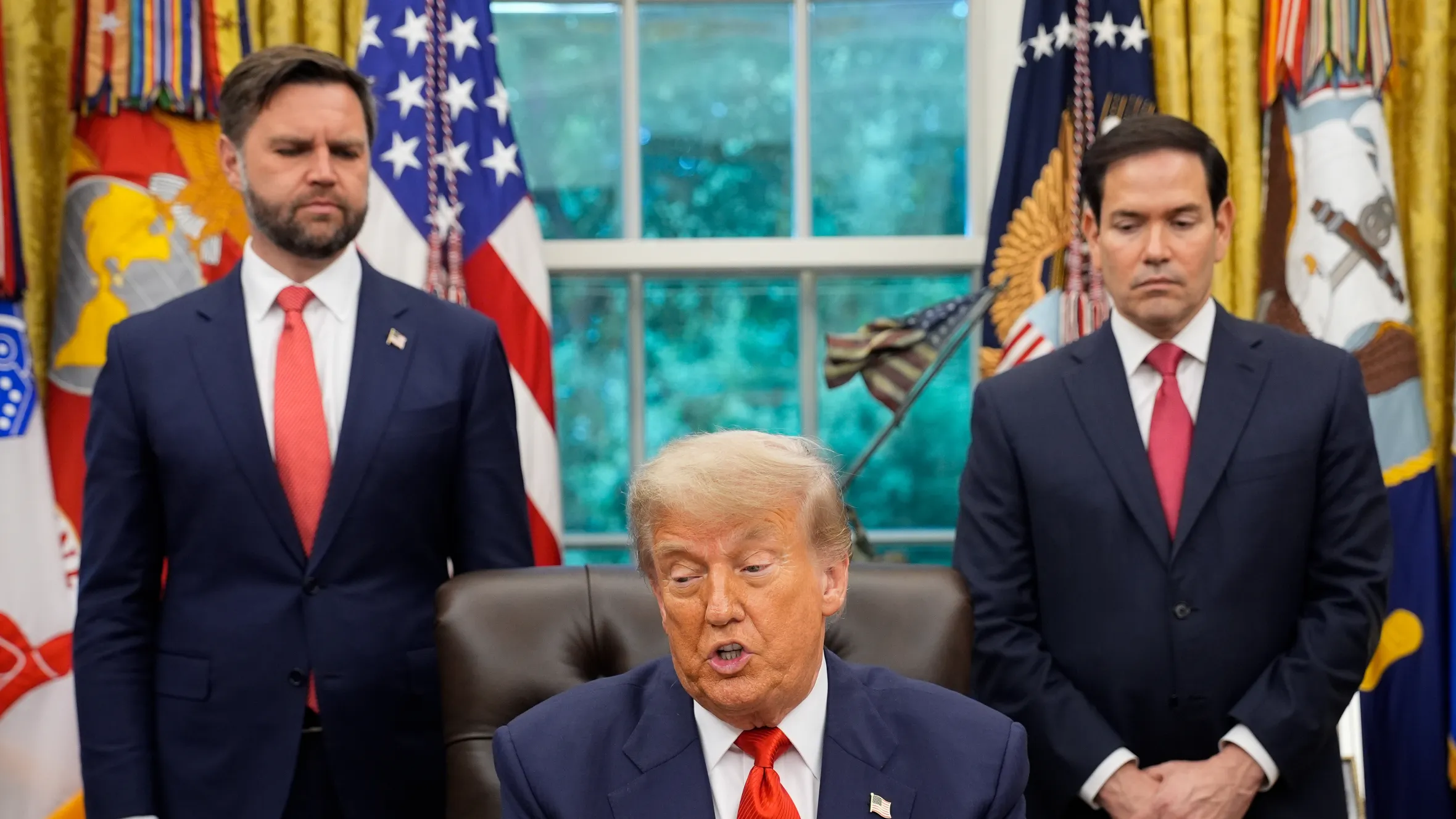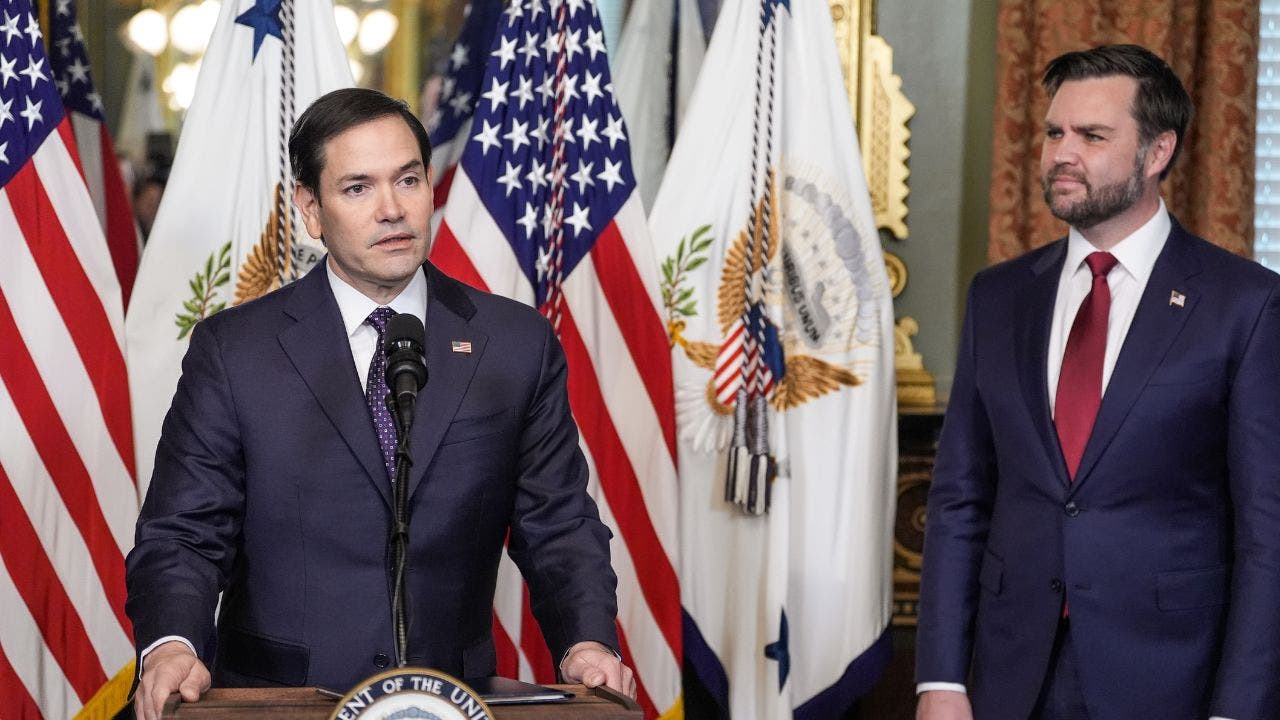
The early Republican race for the 2028 presidential nomination is tightening, with Secretary of State Marco Rubio posting significant gains while Vice President JD Vance's once-commanding lead has narrowed, a newly released University of New Hampshire Survey Center poll suggests.
According to the survey, while Vance is still leading the GOP field in New Hampshire, Rubio has surged into a much stronger second-place position, trimming what had previously been a large double-digit advantage.
The results seemingly indicate that Republican voters are beginning to take a closer look at multiple potential successors to President Donald Trump as the next White House contest slowly comes into focus.
According to the Emerson College polling data, Vance currently boasts of a 36 percent of the potential vote compared to Rubio's 26 percent. Despite the difference, Vance’s numbers have actually decreased as Rubio's rise.
Eight percent would vote for either Kentucky Senator Rand Paul or former U.N. Ambassador Nikki Haley, 6 percent would pick Florida Governor Ron DeSantis, 4 percent would vote for former Director of National Intelligence Tulsi Gabbard, and 2 percent chose Louisiana Senator John Kennedy. Other candidates landed less than 2 percent in the poll.
Rubio's rise marks one of the biggest shifts from earlier polling, where Vance consistently enjoyed a commanding lead over the rest of the Republican field.
An earlier survey in February by the pollster showed Vance landed 53 percent compared to Rubio's 7 percent. In a poll taken in October of last year, Vance had 51 percent compared to Rubio's 5 percent.
Political analysts attribute Rubio’s climb directly to his high-profile tenure as Secretary of State, particularly his handling of escalating tensions and direct negotiations with Iran.
While Vance benefits from the structural advantages of the Vice Presidency, Rubio has successfully rebranded himself from the "Little Marco" moniker of the 2016 primaries into a central, authoritative figure of the current administration’s foreign policy apparatus.
Trump has talked up both Rubio and Vance as his possible heir apparent to lead the MAGA movement, declining so far to pick one over the other. Trump, who has openly toyed with running for an unconstitutional third term in 2028, is term-limited from running again.
The Emerson College poll also surveyed the nascent 2028 Democratic field, revealing an equally competitive landscape.
U.S. Representative Alexandria Ocasio-Cortez and former Transportation Secretary Pete Buttigieg are leading the field, highlighting a potential emerging divide between the party's progressive and moderate wings.
Ocasio-Cortez has 22 percent compared to Buttigieg's 21 percent. Arizona Senator Mark Kelly landed 9 percent, California Governor Gavin Newsom has 8 percent, Vermont Senator Bernie Sanders has 6 percent and former Vice President Kamala Harris has 5 percent. No other candidate obtained 5 percent or more in the poll.
The poll surveyed 648 likely 2028 Democratic presidential primary voters with a margin of error of 3.8 percent and 579
likely 2028 Republican presidential primary voters with a margin of error of 4.1 percent from July 15 to July 20, 2026.
The New Hampshire primary is considered important because it has historically been among the first contests on the presidential nominating calendar. No candidate has formally announced their candidacy.