Kenyan Lawmakers have formally appealed to United States officials to address increasingly stringent visa regulations that are heavily penalizing Kenyan students seeking higher education in America, arguing that the immigration policies are threatening decades of educational and cultural exchange between the two countries.
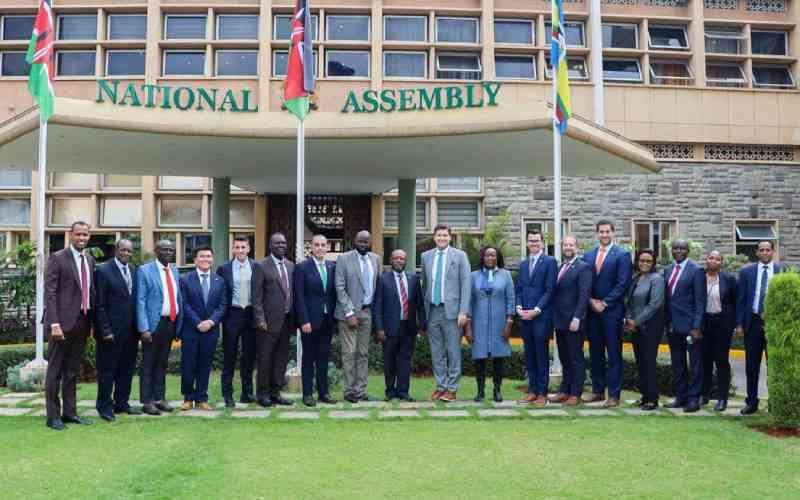
The appeal was made on Wednesday, July 29, during bilateral discussions held in Nairobi between a delegation of Members of Parliament led by Navakholo MP Emmanuel Wangwe and visiting officials from the United States Congress.
According to the legislators, many Kenyan students continue to encounter difficulties securing visas to pursue higher education in the United States, despite receiving admission offers from accredited institutions. This comes after recent policy shifts in Washington that have driven up costs and complication rates for prospective African scholars.
Recent fee structures implemented by the US Department of State have significantly raised the financial barrier to entry. Under the revised fee schedule, a Kenyan student applying for an F-1 or M-1 visa must now pay upwards of USD 250 (approximately KES 32,250) in non-refundable application fees, separate from the mandatory Student and Exchange Visitor Information System (SEVIS) fees, which can add another USD 350 (KES 45,150) to the upfront costs.
Furthermore, lawmakers highlighted the distressingly high rejection rates and extended wait times for consular appointments at the US Embassy in Gigiri. Despite possessing valid admission letters from accredited American universities and proof of funding, many Kenyan applicants face arbitrary denials under Section 214(b) of the US Immigration and Nationality Act, which presumes immigrant intent unless the applicant can unequivocally prove strong ties to their home country.
The parliamentary delegation urged their American counterparts to view student visas not merely through a strict immigration enforcement lens, but as a critical tool of soft power and bilateral diplomacy.
During the meeting, Wangwe acknowledged the longstanding partnership between Kenya and the United States, saying educational exchanges had played a significant role in strengthening institutions and building professional networks between the two countries.
"Our partnership has contributed significantly to the development of our parliamentary institutions through training programmes, institutional exchanges and technical cooperation," Wangwe said.
The legislators appealed for increased scholarship opportunities and expanded educational exchange programmes to strengthen people-to-people relations.
Trade also emerged as one of the key issues during the discussions, with Kenyan lawmakers calling for increased market access for locally produced goods in the United States.
They urged U.S. officials to support the timely renewal of the African Growth and Opportunity Act (AGOA), the preferential trade arrangement that allows eligible African countries duty-free access to the U.S. market.
"There is still a need to expand market access for Kenyan products in the United States by improving awareness of U.S. trade requirements and ensuring the timely renewal of AGOA," Wangwe said.
The Kenyan delegation further highlighted youth employment and entrepreneurship as critical priorities, citing government initiatives such as the Affordable Housing Programme and the establishment of the State Department for Micro, Small and Medium Enterprises (MSME) Development to create employment opportunities for young people.
Wangwe commended the United States for supporting Kenya's democratic institutions through parliamentary capacity-building programmes, institutional exchanges and technical cooperation.
He said the partnership had played a significant role in strengthening Kenya's bicameral Parliament since the promulgation of the 2010 Constitution and had enhanced collaboration between the two countries.
"Our partnership has contributed significantly to the development of our parliamentary institutions through training programmes, institutional exchanges and technical cooperation," Wangwe said.
The U.S. congressional delegation reaffirmed its commitment to sustaining parliamentary exchanges and strengthening cooperation in governance, trade, investment, education and youth empowerment.
Both delegations agreed that strong democratic institutions and continued dialogue remain central to addressing common challenges and promoting sustainable development.