Guinea-Bissau has approved a new constitution that significantly expands presidential powers ahead of December’s general election, with 70 per cent of votes cast backing the changes, according to provisional results released by the National Electoral Commission.
The referendum, proposed by the military government that seized power in a coup last November, was held as the West African nation prepares for elections aimed at returning the country to civilian rule after months of military-led transition.
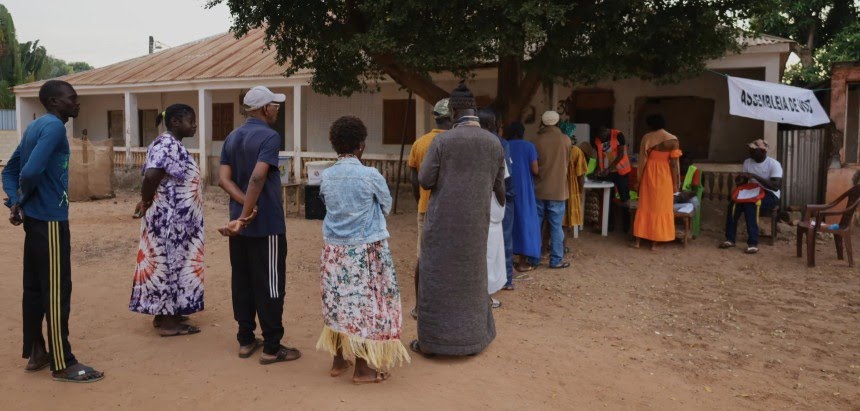
The National Electoral Commission said about 544,060 people voted, representing nearly 60 per cent of registered voters, with 70 per cent supporting the constitutional changes and 30 per cent opposing them.
The commission said the high approval margin gives the new charter legitimacy to replace the existing constitution, which has governed Guinea-Bissau’s semi-presidential system since independence.
However, turnout and awareness figures have been contested. The main opposition PAIGC and civil society groups had urged a boycott, while polling stations in the capital, Bissau, were reported to be largely empty on voting day. Some residents told local media they were unaware the referendum was taking place or did not understand its purpose, raising questions about civic education and information dissemination ahead of the vote.
Under the new constitution, the president will have powers to appoint and dismiss the prime minister and Cabinet, create or abolish ministries and dissolve Parliament under certain conditions.
The changes significantly weaken Guinea-Bissau’s existing power-sharing system, known as semi-presidentialism, under which the prime minister oversees day-to-day government affairs and is elected by Parliament, providing a check on presidential authority.
The new framework centralises executive authority in the presidency, allowing the head of state to shape government structure, direct policy and, in defined circumstances, dissolve the legislature and call fresh elections. Supporters say this will end persistent deadlocks between president and prime minister that have contributed to chronic instability since independence.
Critics argue it dismantles a key institutional balance in a country that has experienced multiple coups and attempted coups since 1974.
The new charter will also reduce the number of parliamentary seats from 102 to 65 and cut electoral constituencies from 29 to 12.
The government says the reduction will lower the cost of running Parliament and streamline legislative decision-making. The consolidation of constituencies from 29 to 12 is also presented as a measure to simplify electoral administration and reduce regional fragmentation.
It also requires presidential candidates to have lived continuously in Guinea-Bissau for the five years preceding an election, a provision that could disqualify prominent diaspora opposition figures and reinforce residency-based eligibility.
Analysts say the smaller Parliament could concentrate representation but may also reduce local-level representation in a highly diverse country where regional and ethnic balancing has historically been sensitive.
However, the referendum has been rejected by the main opposition PAIGC, the African Party for the Independence of Guinea and Cape Verde, and several civil society groups, which argue that the changes threaten the country’s transition to democracy.
PAIGC, which led the independence struggle and remains the dominant opposition force, had urged its supporters to boycott the vote, arguing that a military government has no mandate to rewrite the constitution.
PAIGC leader Domingos Simoes Pereira criticised the process, saying supporters of the constitutional changes sought to “kill our freedom and bury our democracy.” Opposition leaders said the process lacked broad consultation, independent oversight and adequate voter education.
The empty polling stations observed in parts of Bissau have been cited by the opposition as evidence that the 60 per cent turnout figure does not reflect participation in urban centres, although official results aggregate national data.
The military government says the reforms are intended to stabilise key state institutions ahead of December’s election, when both the presidency and parliamentary seats will be contested.
Military rulers argue that Guinea-Bissau’s previous constitution created two competing centres of power, leading to paralysis, frequent dismissal of prime ministers, and justification for military intervention. By clarifying that the president is the sole head of the executive, they say the new charter will provide stability and prevent future institutional crises.
The government has also linked the reforms to anti-corruption and state rationalisation, pointing to the reduced size of Parliament and streamlined ministries as cost-saving measures.
Critics, however, accuse the military rulers of seeking to concentrate power and reshape the political system in their favour ahead of the polls.
Observers warn that expanding presidential powers, dissolving power-sharing, cutting Parliament and imposing a five-year continuous residency requirement could be used to entrench incumbents and limit competition in December.